
Hex
Continuo Foundation grantee
Supported by Continuo Foundation
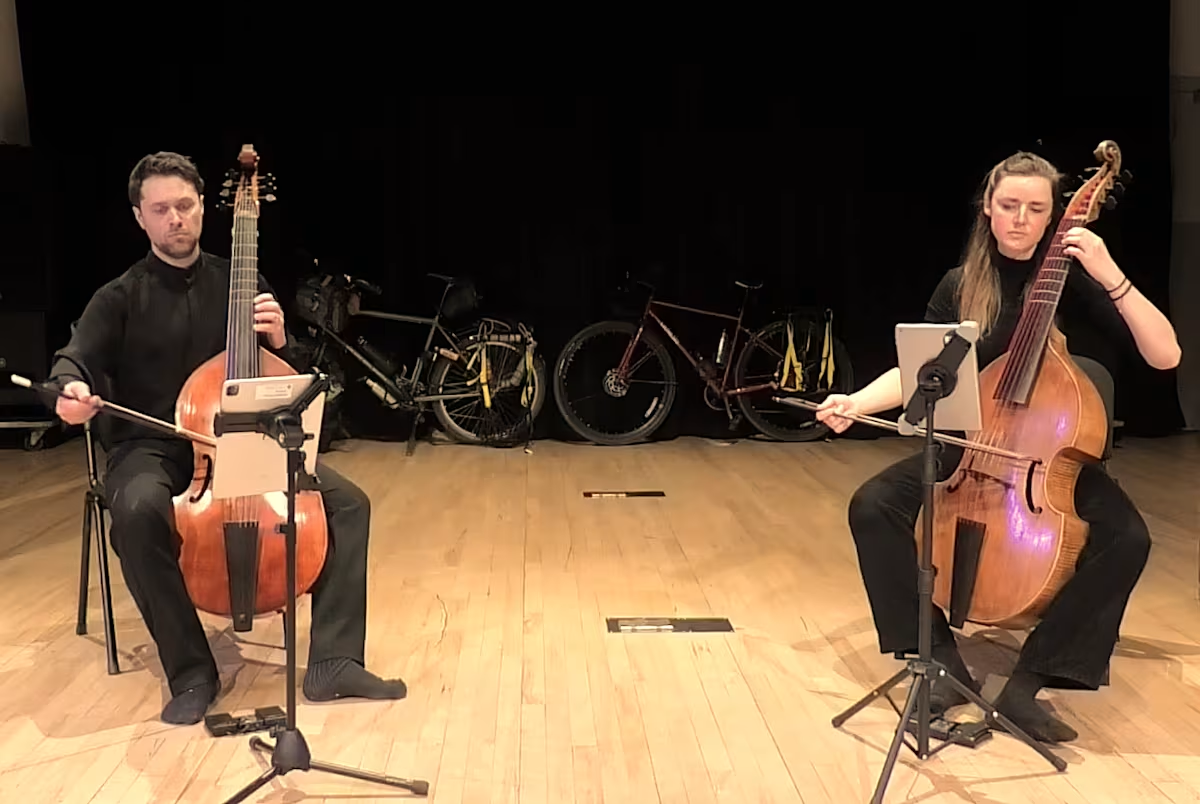
Responding to today’s changing world through the beguiling sounds of the viol and meaningful touring, Hex connects with audiences by presenting programmes rooted in nature to provoke thought, reconnection and reimagination.
Hex blends historical repertoire with improvisations and traditional tunes discovered through immersive touring, alongside original compositions reflecting the places and communities travelled through.
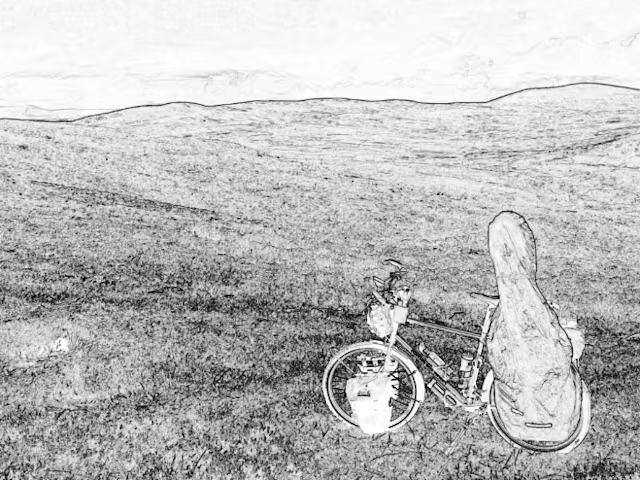
Performances are delivered by bicycle wherever possible, with venues carefully chosen to accommodate cycles and public transport connections.
Sarah Small is a viola da gamba player based in the UK and the founder of Hex. She first came across the instrument whilst studying recorder at the Royal College of Music and instantly fell in love with its beguiling sound. Recent projects include Good Again?, a 10-week, 31-venue, 4,500km self-supported concert tour by bicycle around the UK, drawing attention to musicians’ unsustainable touring practices and the role of live music during a time of multiple crises. As a committed environmentalist and passionate advocate for cycling, Sarah has been recognised in The Independent Climate 100 List and Cycling UK’s 100 Women in Cycling. Continuing to travel and tour almost exclusively by bicycle, she gives lecture recitals, workshops in schools, and concerts with programmes including original compositions responding to the environmental changes experienced on her travels. Sarah performs and records with various ensembles across the UK and Europe and holds a Master of Performance with Distinction, having studied with Reiko Ichise in London and Hille Perl in Bremen, Germany, during which time she was generously supported by the Linda Hill Scholarship, the Robert McFadzean Whyte Award, the Countess of Munster Trust, and Help Musicians UK.
Emily Ashton is a baroque cellist and viol player, and has played with most of the UK’s leading period instrument ensembles, including the Orchestra of the Age of Enlightenment, Dunedin Consort and Academy of Ancient Music. Emily studied music at Clare College, Cambridge and subsequently baroque cello and viola da gamba with Jonathan Manson at the Royal Academy of Music. In 2015 she joined the viol consort Fretwork, performing and recording with them extensively. Emily was a founder of ‘XR Baroque', a network of early music professionals who played at environmental protests, helped to shape Fretwork's sustainable travel policy, and has given talks and run workshops with school and University students about sustainability in the arts and musicians' roles and responsibilities in these times. She was interviewed on the podcast ‘Things Musicians Don’t Talk About’, discussing her arrests with Extinction Rebellion and her work drawing together environmental activism and music, and after giving up flying in 2019, she was interviewed on BBC Radio about travelling over land as a musician.
A viol player, cellist and musicologist, Sam Stadlen has been a member of Fretwork since 2015, appearing regularly with the group around the world, including sold-out performances at Carnegie Hall. He also plays with viol consort Chelys, with whom he has recorded albums with Dame Emma Kirkby and Fieri Consort. With his Canadian trio with Michael Jarvis and Paul Luchkow he has released two albums of late-Eighteenth Century music by composers such as Giordani, Abel, Lates, and Kammel. Sam is Professor of Viol Consorts at the Royal College of Music and has been an associate and guest lecturer at the University of York and the Royal Academy of Music. He holds a PhD in the influences of poetry and declamation on the pièces de viole in late seventeenth- and early eighteenth-century France. Sam is also a filmmaker and regularly records and produces concert and promotional videos for ensembles and groups. His online ‘music-minus-one’ service, created during the covid pandemic, continues to thrive, serving hundreds of viol players around the world.
Lucia Capellaro's musical language is rooted in historically informed performance, and in recent years she has also been exploring her own voice as an artist, taking influences from beyond this realm by weaving in Scottish folk, improvised practices, world music, and electronic elements into her performances.
Praised for her ‘rich-toned viola da gamba and cello’ playing, she has performed across the globe with Early Music ensembles such as Dunedin Consort, Early Opera Company, English Touring Opera’s Old Street Band, Academy of Ancient Music, Irish Baroque Orchestra, Ex Cathedra, Concerto Caledonia and Hanover Band. She regularly performs and records with Dunedin Consort, with multiple guest principal appearances, including live recordings on BBC Radio 3, and a tour to the USA.
During the pandemic Lucia received a Creative Scotland Open Fund grant to create her debut album, OMOW, which uses her skills as a performer and sound engineer to collaborate with talented musicians from across the globe, who specialise in a breadth of different genres. The driving force was to explore the possible depth of connection with her fellow musicians, who were spread out across the globe, and only being able to communicate remotely. It explored this connection through both physical space and time, as she reconnected with musicians who were inspirational to her at different moments throughout her life.
Lucia has been described by those closest to her as obsessive about saving the world one eco sponge at a time. Although this approach might not be particularly effective, she believes in keeping her carbon footprint down by using public transport, using natural products, and eating organic where possible.
Lucia teaches at the Royal Conservatoire of Scotland andis the Head of Learning & Participation at Dunedin Consort, where she delivers an annual programme of school workshops, relaxed performances, choral workshops, performance classes and clinics, open rehearsals, two emerging artist schemes, and other bespoke opportunities throughout Scotland and beyond. Growing up in challenging circumstances, and being inspired by the unwavering support she had from her music teachers, school, and music service, she has dedicated much of her career to widening access to the arts for all and supporting young musicians of the next generation.
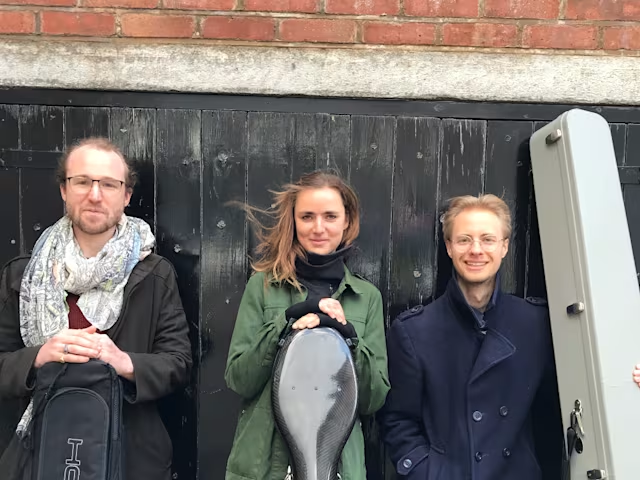
Musicians:
Sarah Small
Jonathan Rees
Emily Ashton
Sam Stadlen
Lucia Capellaro


Biography

Founded by Sarah Small in 2022, Hex has evolved into a collective of early musicians brought together by a shared passion for environmental advocacy through music.
Responding to today’s changing world through the beguiling sounds of the viol and meaningful touring, Hex connects with audiences by presenting programmes rooted in nature to provoke thought, reconnection and reimagination.
Hex blends historical repertoire with improvisations and traditional tunes discovered through immersive touring, alongside original compositions reflecting the places and communities travelled through.
Performances are delivered by bicycle wherever possible, with venues carefully chosen to accommodate cycles and public transport connections.
Sarah Small is a viola da gamba player based in the UK and the founder of Hex. She first came across the instrument whilst studying recorder at the Royal College of Music and instantly fell in love with its beguiling sound. Recent projects include Good Again?, a 10-week, 31-venue, 4,500km self-supported concert tour by bicycle around the UK, drawing attention to musicians’ unsustainable touring practices and the role of live music during a time of multiple crises. As a committed environmentalist and passionate advocate for cycling, Sarah has been recognised in The Independent Climate 100 List and Cycling UK’s 100 Women in Cycling. Continuing to travel and tour almost exclusively by bicycle, she gives lecture recitals, workshops in schools, and concerts with programmes including original compositions responding to the environmental changes experienced on her travels. Sarah performs and records with various ensembles across the UK and Europe and holds a Master of Performance with Distinction, having studied with Reiko Ichise in London and Hille Perl in Bremen, Germany, during which time she was generously supported by the Linda Hill Scholarship, the Robert McFadzean Whyte Award, the Countess of Munster Trust, and Help Musicians UK.
Emily Ashton is a baroque cellist and viol player, and has played with most of the UK’s leading period instrument ensembles, including the Orchestra of the Age of Enlightenment, Dunedin Consort and Academy of Ancient Music. Emily studied music at Clare College, Cambridge and subsequently baroque cello and viola da gamba with Jonathan Manson at the Royal Academy of Music. In 2015 she joined the viol consort Fretwork, performing and recording with them extensively. Emily was a founder of ‘XR Baroque', a network of early music professionals who played at environmental protests, helped to shape Fretwork's sustainable travel policy, and has given talks and run workshops with school and University students about sustainability in the arts and musicians' roles and responsibilities in these times. She was interviewed on the podcast ‘Things Musicians Don’t Talk About’, discussing her arrests with Extinction Rebellion and her work drawing together environmental activism and music, and after giving up flying in 2019, she was interviewed on BBC Radio about travelling over land as a musician.
A viol player, cellist and musicologist, Sam Stadlen has been a member of Fretwork since 2015, appearing regularly with the group around the world, including sold-out performances at Carnegie Hall. He also plays with viol consort Chelys, with whom he has recorded albums with Dame Emma Kirkby and Fieri Consort. With his Canadian trio with Michael Jarvis and Paul Luchkow he has released two albums of late-Eighteenth Century music by composers such as Giordani, Abel, Lates, and Kammel. Sam is Professor of Viol Consorts at the Royal College of Music and has been an associate and guest lecturer at the University of York and the Royal Academy of Music. He holds a PhD in the influences of poetry and declamation on the pièces de viole in late seventeenth- and early eighteenth-century France. Sam is also a filmmaker and regularly records and produces concert and promotional videos for ensembles and groups. His online ‘music-minus-one’ service, created during the covid pandemic, continues to thrive, serving hundreds of viol players around the world.
Lucia Capellaro's musical language is rooted in historically informed performance, and in recent years she has also been exploring her own voice as an artist, taking influences from beyond this realm by weaving in Scottish folk, improvised practices, world music, and electronic elements into her performances.
Praised for her ‘rich-toned viola da gamba and cello’ playing, she has performed across the globe with Early Music ensembles such as Dunedin Consort, Early Opera Company, English Touring Opera’s Old Street Band, Academy of Ancient Music, Irish Baroque Orchestra, Ex Cathedra, Concerto Caledonia and Hanover Band. She regularly performs and records with Dunedin Consort, with multiple guest principal appearances, including live recordings on BBC Radio 3, and a tour to the USA.
During the pandemic Lucia received a Creative Scotland Open Fund grant to create her debut album, OMOW, which uses her skills as a performer and sound engineer to collaborate with talented musicians from across the globe, who specialise in a breadth of different genres. The driving force was to explore the possible depth of connection with her fellow musicians, who were spread out across the globe, and only being able to communicate remotely. It explored this connection through both physical space and time, as she reconnected with musicians who were inspirational to her at different moments throughout her life.
Lucia has been described by those closest to her as obsessive about saving the world one eco sponge at a time. Although this approach might not be particularly effective, she believes in keeping her carbon footprint down by using public transport, using natural products, and eating organic where possible.
Lucia teaches at the Royal Conservatoire of Scotland andis the Head of Learning & Participation at Dunedin Consort, where she delivers an annual programme of school workshops, relaxed performances, choral workshops, performance classes and clinics, open rehearsals, two emerging artist schemes, and other bespoke opportunities throughout Scotland and beyond. Growing up in challenging circumstances, and being inspired by the unwavering support she had from her music teachers, school, and music service, she has dedicated much of her career to widening access to the arts for all and supporting young musicians of the next generation.
Musicians:
Sarah Small
Jonathan Rees
Emily Ashton
Sam Stadlen
Lucia Capellaro
Musicians
- Sarah SmallViola da Gamba
- Jonathan ReesCello, Viola da Gamba
Share this

Upcoming Concerts
Past programmes
Dancing with the Angel and the Devil
 Sun, 9 Jun 2024
 Ship Studio, Dartington Hall
 3:00pm
 £18
£18
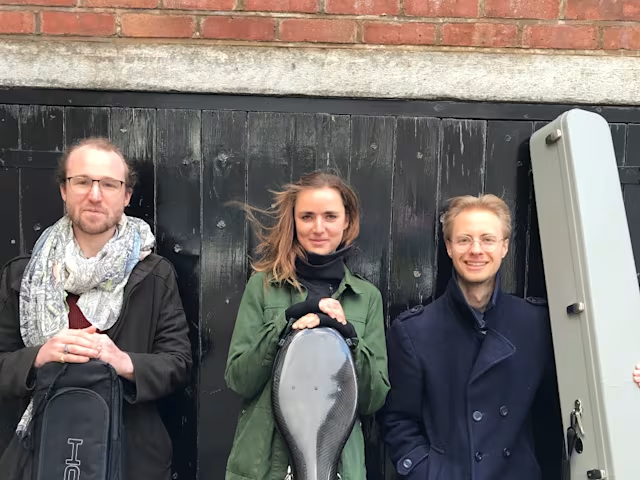
Highlights from ‘Festival of the Sun King’
- Wed, 5 Jul 2023
- St Olave, London
- 1:00pm
- Free - Retiring collection
 Festival of the Sun King
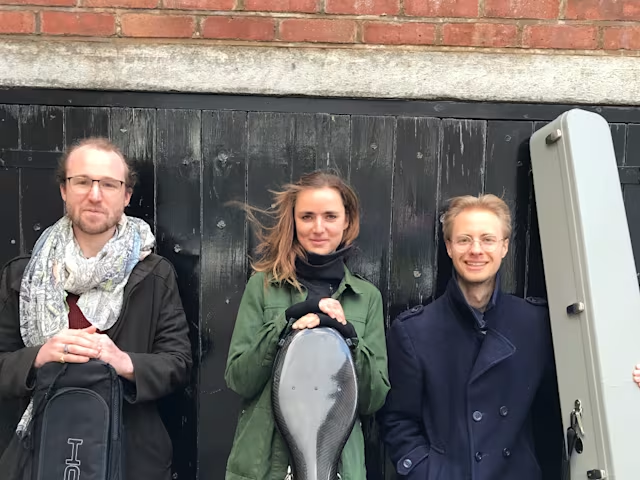
Concert: Grand Ballet
- Thu, 22 Jun 2023
- Sands Films Studio, London
- 8:00pm
- Pay what you can
- Festival of the Sun King
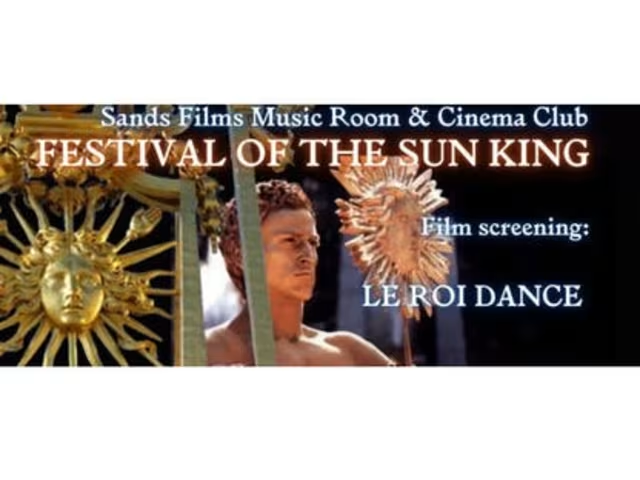
Film Screening: Le Roi Danse
- Tue, 20 Jun 2023
- Sands Films Studio, London
- 8:00pm
- Pay what you can
- Festival of the Sun King
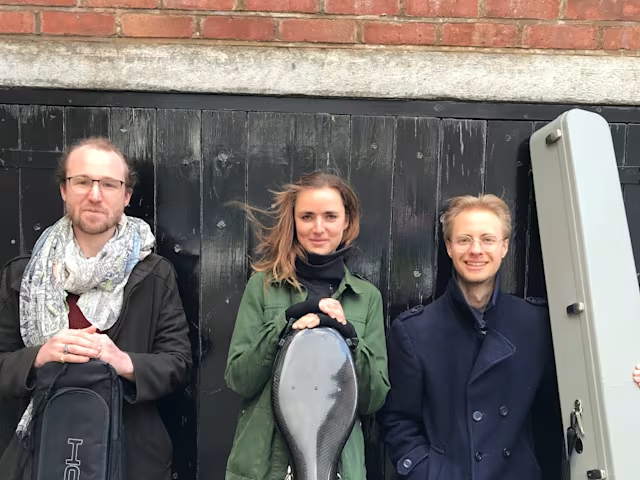
Concert: Music for the Sun King's Sleep
- Thu, 8 Jun 2023
- Sands Films Studio, London
- 8:00pm
- Pay what you can
- Festival of the Sun King
Concert: Tous les Matins du Monde
- Thu, 1 Jun 2023
- Sands Films Studio, London
- 8:00pm
- Pay what you can
- Festival of the Sun King
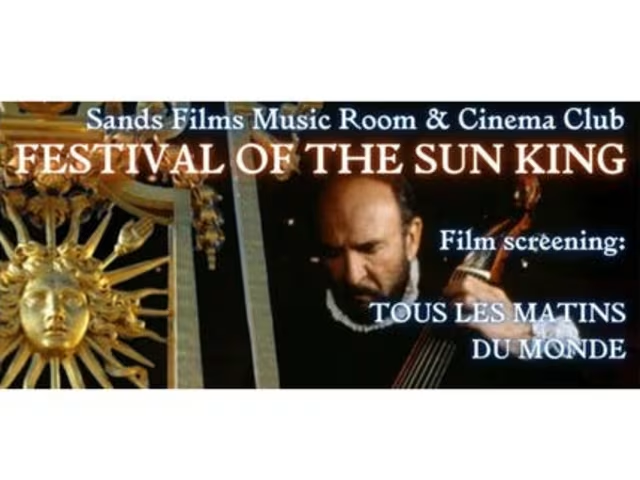
Film Screening: Tous les Matins du Monde
- Tue, 30 May 2023
- Sands Films Studio, London
- 8:00pm
- Pay what you can
- Festival of the Sun King