
Feature
From kitchen to cathedral: the accidental art of festival-making
Share this

BY ASHUTOSH KHANDEKAR | FIRST PUBLISHED 2 OCT 2026
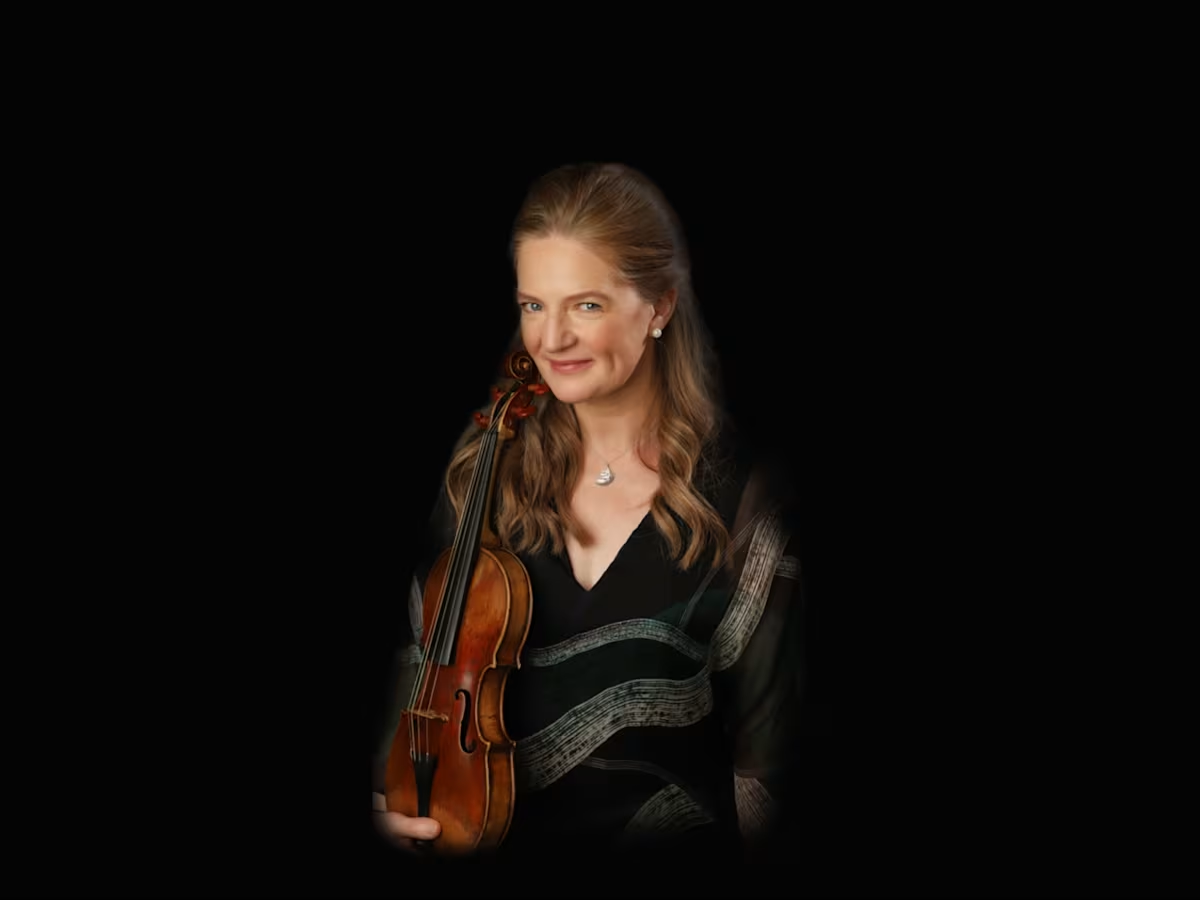
Distinguished violinist, teacher and advocate for Early Music Rachel Podger, a Patron of Continuo Foundation, has spent two decades creating a festival as open-hearted and inquisitive as her own music-making. She tells Ashutosh Khandekar how the Brecon Baroque Festival evolved almost by chance.
Rachel Podger did not consciously set out to found a festival. There was no strategy document, no carefully plotted ascent from promising local weekend to a much-anticipated fixture of the international Early Music calendar. There were friends, children, photocopied leaflets and a willingness to see what would happen next. Which is probably the reason why Brecon Baroque has lasted 20 years.
‘I'm not that kind of person,’ Podger says cheerfully when I ask whether she had ever imagined a festival stretching decades into the future. ‘I'm a little more chaotic than that – more “artistic”, I suppose people might say. I'm interested in seeing what emerges rather than aiming for a result, as is often the case in music. Life definitely doesn't happen in a straight line – but then music doesn't either!’
The beginnings were appropriately accidental. Podger had recently moved to Brecon with her partner, Tim Cronin, and their two young daughters when a musician friend, Sophia McKenna, invited them into a Georgian-flavoured festival inspired by the town's architecture and history. Cronin was involved with South Powys Youth Music; Podger brought together young players and professional friends. One concert led to another, and, after a couple of years, the couple took on the running of the festival.
Podger admits she was not immediately keen. Touring as a soloist of increasing renown came with all the intensity and responsibility of being the visiting celebrity. Back at home in Brecon, she wanted to be ‘a normal person, just a mum at the school gate’. Saying she was a violinist tended to require too much explanation. ‘I would have liked to have said, “I run a café,” or “I'm a hairdresser” – so much more straightforward!’ she laughs. But the prospect of artistic freedom proved irresistible. ‘Promoters often say, “We need this in the programme, we've got this theme, and we need something well known to sell it – not too many weird composer names.” It’s quite limiting. With your own festival, you get to decide. You have artistic freedom, which is amazing. It's such a luxury.’
‘Luxury’, at the outset, meant spending hours at the kitchen table folding photocopied flyers. The first years of programming brought a lively mix of elements: Vivaldi, professional musician friends, youngsters and education projects. Soon came a Baroque Ball, walks and pop-up performances. ‘We learned by doing and by responding to the town and what it has to offer,’ Podger says. ‘Brecon Cathedral invited choral and larger-scale projects; Theatr Brycheiniog offered a box office, bar and social hub, if a relatively dry acoustic; and the intimate, wooden Plough Chapel, with its encircling gallery, gave us something completely distinctive – it looks like a boat from above.’
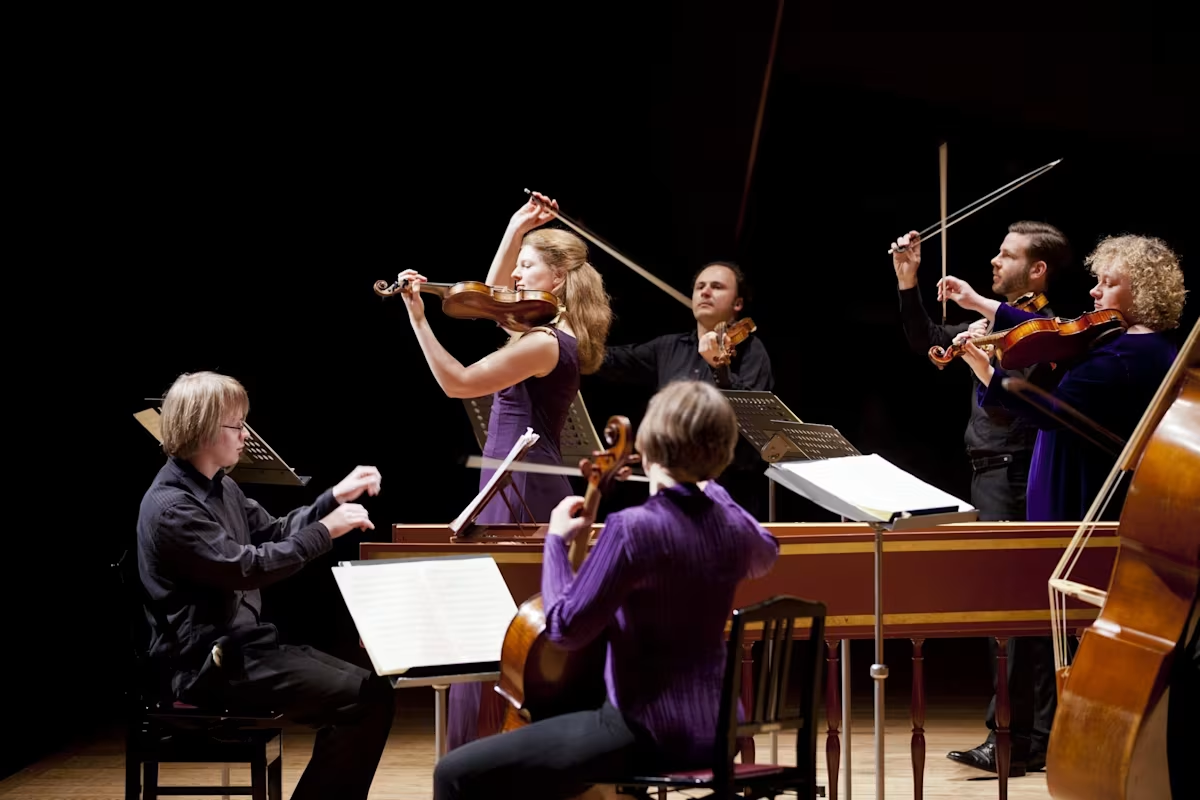
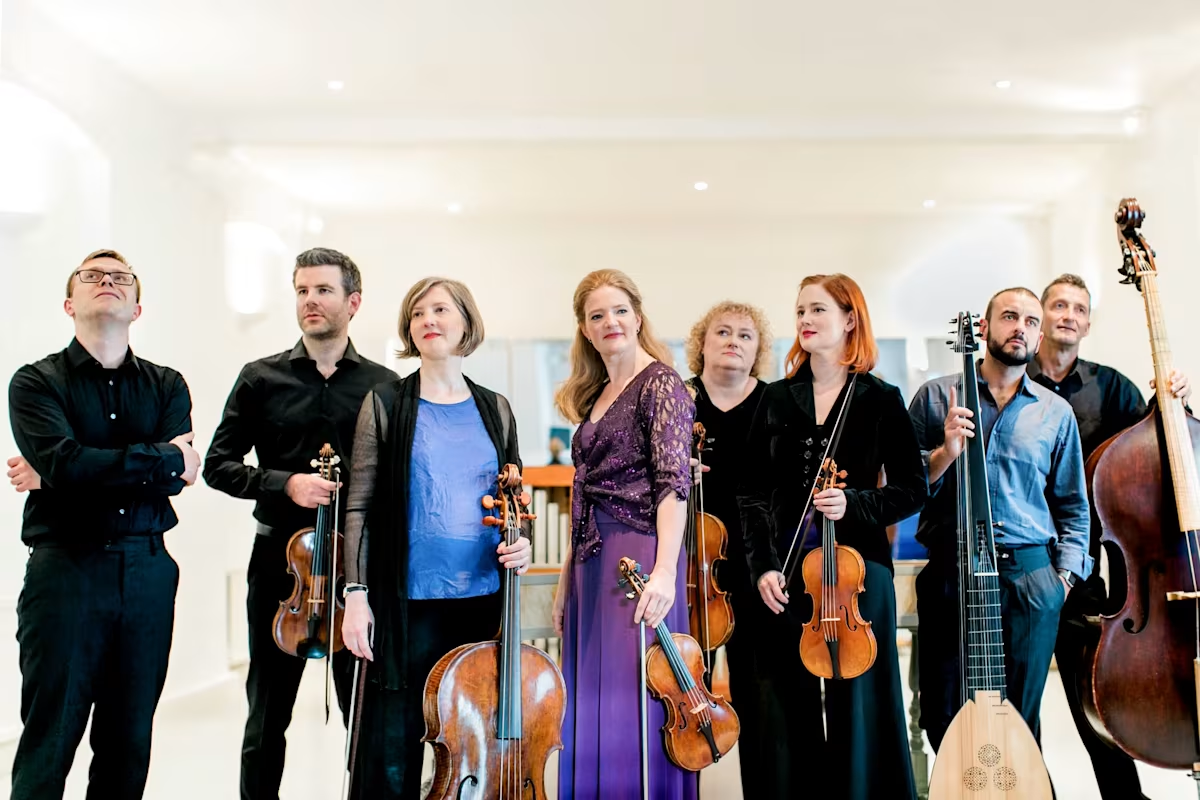
The resident ensemble, Brecon Baroque, grew out of the festival rather than preceding it. ‘It wasn't a case of thinking, “I need to form a group based in Brecon”,’ Podger explains. ‘It emerged naturally from the programmes that we wanted to perform together. One thing led to another, and eventually we made our first recording of the Bach concertos, which I had wanted to do for a long time.’ The ensemble has since travelled far beyond Brecon. Podger's international standing has drawn exceptional players into its orbit, but the founding principle remains: a compact group of unique musical talents who love to work together.
At the other end of the scale is the Festival Orchestra, conceived as a mixture of professionals, students, former students, local musicians and members of South Powys Youth Music. Some arrive as seasoned modern-instrument players curious about gut strings and Baroque bows; others have been as young as ten. ‘Every year it's a different orchestra,’ Podger says. ‘Sometimes you think, “How is that ever going to sound homogeneous?” But it's always a very joyful event, bringing together people of different ages and walks of life.’
For Podger, playing on a period instrument is not a rigid musical ethos: ‘It's often simply a necessity,’ she says, ‘a way of making the music speak very naturally. Changing pitch is already a big deal; then comes the lighter, differently shaped bow and the physical behaviour of gut strings. The gut string is porous: you sink into it. Compared to the modern violin, it’s like playing a different instrument. The technique changes, but so do a player's mentality and expressive instincts – it shifts the rhetoric, colour and imagination in your playing.’
The Brecon buzz
Brecon's audience encompasses Early Music devotees who return annually from across Britain and as far afield as America and Australia, alongside curious locals asking, ‘What's on in town this weekend? Oh, there's something in the Cathedral – let's go!’ Podger relishes the mixture. ‘In the end, it's for enjoyment. A newcomer might recognise the names Bach or Vivaldi, or encounter Purcell and a small forest of unfamiliar composers. What matters is that, for an hour or two, they sit and listen. They find they enjoy the beauty of it and the fact that they get to do one thing, with their phones hopefully switched off, and be contemplative for a moment. There isn't enough of that in our lives, and music has such an important part to play in providing it.’
The festival’s local value is also practical. Young players encounter international specialists at close quarters, while community musicians are invited to learn more about period practice and its practical applications to music-making. Podger, who holds senior teaching posts at the Royal Academy of Music and Royal Welsh College of Music & Drama, calls herself a facilitator – a word that catches both her teaching and her manner of programming. ‘We always have a young-artist slot: someone up and coming who deserves to be featured. I want to facilitate as much as possible, because that creates its own energy for the future.’
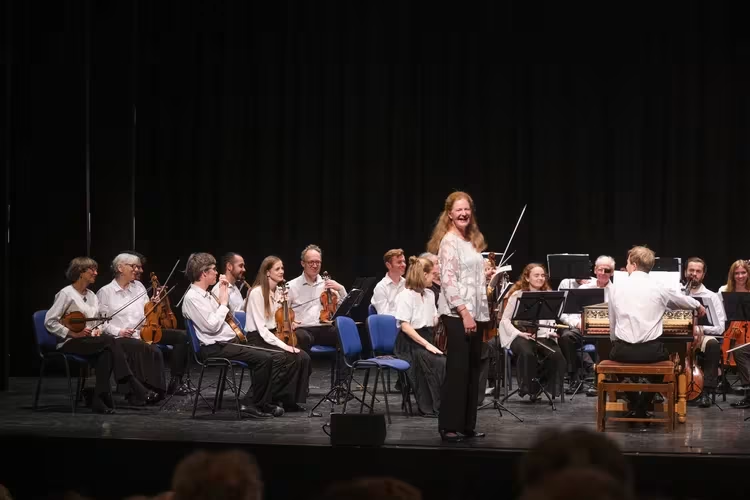
The 20th-anniversary programme, From Dowland to Bach, is less a victory lap than a demonstration of how Podger’s curiosity operates. Familiar pillars – Bach cantatas and three Brandenburg Concertos – act as landmarks along paths into less frequented corners of the Baroque. The Salt Road (18 Oct) retraces JS Bach’s formative journey in 1705 from Arnstadt to Lübeck to hear the celebrated organist Dieterich Buxtehude, including the final stretch along the ancient salt-trading route between Lüneburg and Lübeck. In Echo interweaves music from that northern German world with writer and broadcaster Horatio Clare's account of walking the route. ‘There is always more walking to be done,’ Podger observes – a remark that applies as readily to the repertoire as to the beautiful hills around Brecon.
Dowland, the 400th anniversary of whose death falls this year, brings Ian Bostridge together with Fretwork in Brecon Cathedral (18 Oct). Podger is delighted by the conjunction: ‘I'm a big fan of Ian, and he's one of the most erudite singers I've ever come across. He'll be delving into a lot of melancholy with Fretwork and Richard Boothby, who has played Dowland practically his whole life. That will be very special.’
The anniversary also launches Duologues, Podger’s new recording with recorder player Lucie Horsch, violist Jane Rogers and cellist Alex Rolton (17 Oct). Bach inventions, Telemann and CPE Bach duets, Boismortier and traditional tunes recover the sociability and adaptability of 18th-century music-making. The colours of violin and recorder may seem incompatible, but Podger feels that the two instruments provoke, imitate and complete one another. ‘The Duologues project has been brilliant,’ Podger says. ‘Collaboration is what music-making is all about: you listen and learn from everything you do. Telling people, “This is how it should go,” seems a very old-fashioned way of thinking now – in music and everywhere else.’
Her curiosity is fuelled by her listening to BBC Radio 3, which accompanies cooking and car journeys; Radio 4 brings other arts and ideas into the mix. ‘Getting to know music never stops. It's a continuous thing,’ she says. Her advice to students is to hear one unfamiliar piece every day: ‘It could be jazz, it could be pop… anything – provided it challenges the musical mind. I make a point of doing that, and I find I thrive on it. Everything you listen to informs what you're doing. I want to get to know as much music as I can.’ It is an uncomplicated credo, but a demanding one, and it prevents a festival devoted to old music from becoming comfortable.
Unfinished business
Podger is positive about Early Music's future, although her confidence rests less on institutions than on people. ‘In the end, so much depends on the individual support of perhaps one or two teachers, combined with the player's own determination, musical ambition and urge to communicate.’ Generous patrons, too, have a vital part to play in creating opportunities. This is Brecon's less visible work: creating the encounters from which careers and collaborations grow.
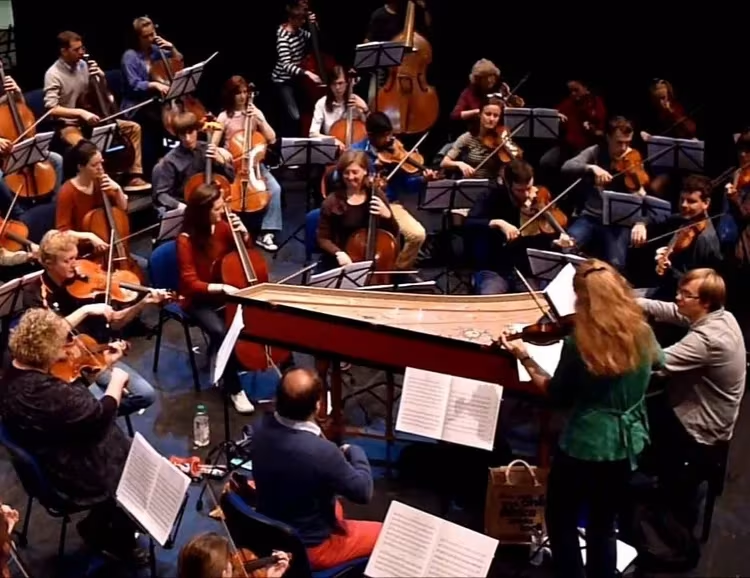
After 20 years, Podger’s ambitions for Brecon Baroque remain undimmed. There are no plans to step back, and it’s far too soon, she says, to be thinking of the festival in terms of an artistic legacy. Funding remains ‘a bit of a headache’, although she is grateful to colleagues more gifted at raising it. In her immediate sights are Bach's B minor Mass and perhaps another Handel oratorio after the 2013 performance of Theodora. Large-scale works have already been a hallmark of Podger’s programming, including Purcell's The Fairy-Queen, Bach's St John Passion and a Mass by the late-Baroque Czech composer Jan Dismas Zelenka. ‘It was really energetic, hyper… it felt like pop music, which was hilarious. There is so much unfinished business. There are so many things to do.’
She is equally clear about what she does not wish to do. She has often been asked to swap her violin for a conductor’s baton. ‘I possibly could, but why would I? There are so many good conductors around, and I would miss my violin. I think I'm best at communicating through it.’ Playing while directing keeps her inside the ensemble, responsible not only for the musical detail but also for the emotional weather of everyone involved: ‘My job is to make sure everyone feels good, everyone is together and there is a positive spirit. That’s a job I love!’
Brecon Baroque has developed through the positivity that Rachel Podger spreads around her: listening carefully and responsively, putting music from the past into fresh relationships and seeing what emerges. Twenty years after the first flyers were folded, there is still nothing resembling a formal five-year plan. Nonetheless, Brecon Baroque has evolved into an influential, significant fixture in the international Early Music calendar. And Podger’s can-do, kitchen-table spirit is still its guiding light.
Brecon Baroque Festival takes place from 16 to 19 October 2026. For futher information, visit the Brecon Baroque Festival page on Continuo Connect. Away from Brecon, hear Rachel perform her duet programme Duologues in Dunster (9 Oct, with Lucie Horsch), Oxford (25 Oct, with Alex Rolton), and London and Nottingham (28 Oct and 31 Oct, both with Lucie Horsch). Visit Rachel's Artist Profile to see a full list of her upcoming concerts in the UK.

Share this
Keep reading
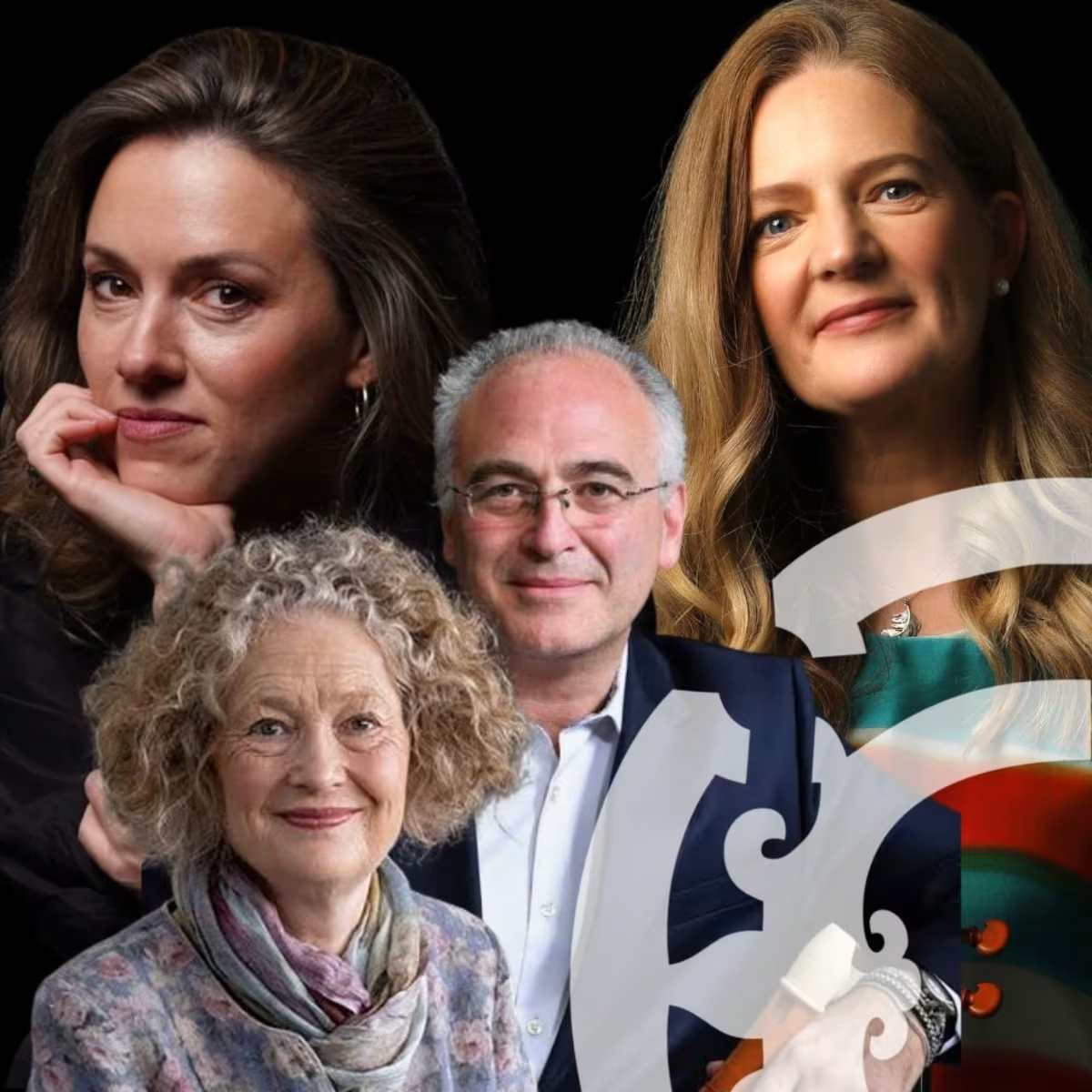
Playlist: Continuo Patrons
A playlist of tracks by Continuo Foundation Patrons Mary Bevan, Emma Kirkby, Rachel Podger and Ashley Solomon in celebration of the UN International Day of Charity.
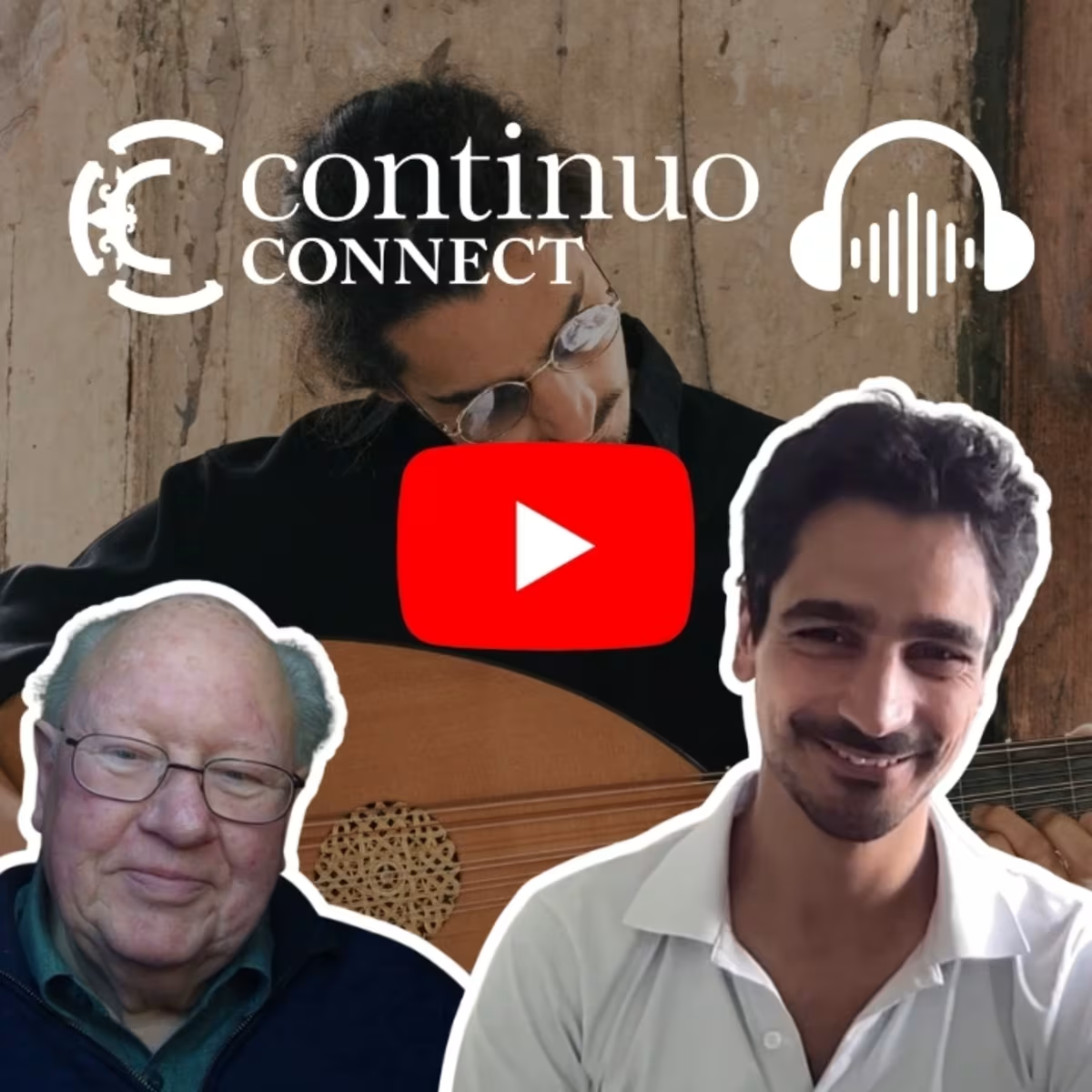
Sam Brown on Dowland and filtering history through a modern lens
Lutenist Sam Brown of Dowland's Foundry chats with Simon Mundy about how we interpret John Dowland, the formation of the ensemble around Emma Kirkby's kitchen table, and an exciting recording project in the pipeline.
In conversation: Bolette Roed
Continuo Connect talks to the Danish recorder player Bolette Roed about her group, the Elephant House Quartet, and Copenhagen Baroque Festival.