

Feature
Historical performance in a virtual space
Aural Histories: Coventry 1451–1642
Share this

BY HELEN ROBERTS | FIRST PUBLISHED 10 JAN 2026
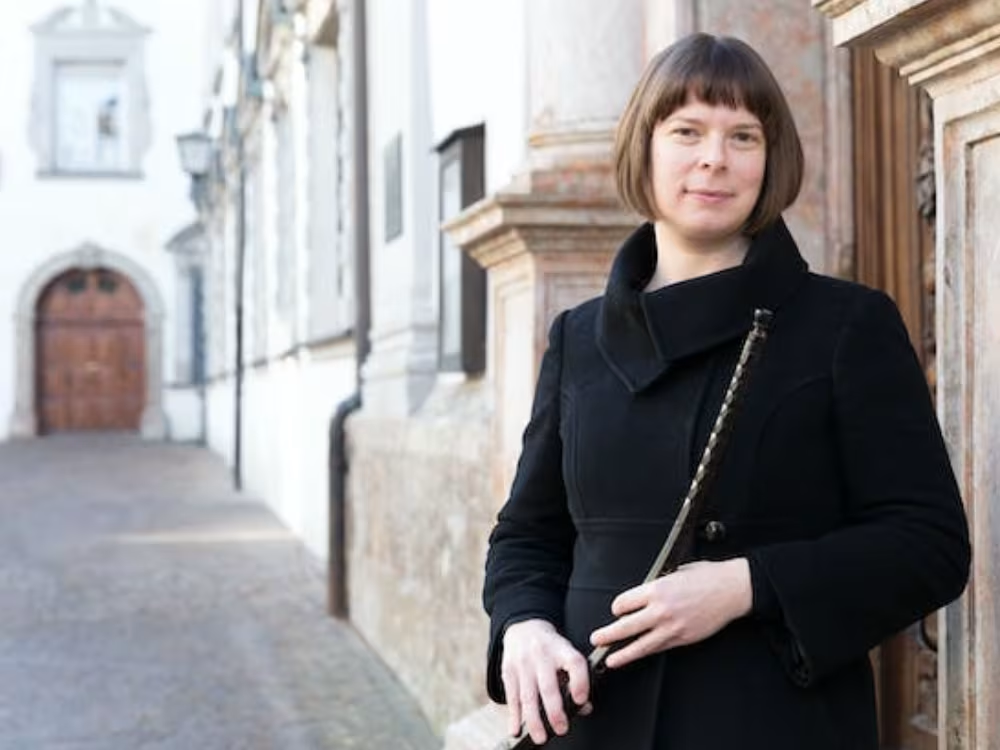
Imagine visiting historic venues in Coventry, headphones on, and hearing music from centuries past, echoing through the same churches where it was first performed. That is the idea behind Aural Histories: Coventry – a smartphone and tablet app that lets you experience historical music in the places it was originally heard. Launched in September 2025, the app offers a new way to connect with Coventry’s rich musical past, blending cutting-edge technology with centuries of history. Helen Roberts, Postdoctoral Research Associate at Royal Birmingham Conservatoire, and a member of His Majestys Sagbutts & Cornetts, takes us behind the scenes of the project.
(If you’d like to experience the music alongside your reading, The Aural Histories: Coventry app is free to download on the Google Play Store and the Apple App Store, and can be used on smartphones and tablets.)
Funded by the Arts and Humanities Research Council, Aural Histories: Coventry is the culmination of three years of research in performance practice, architectural history, acoustics, music technology and computer-game design, and represents, amongst other things, an exciting new way to experience Early Music.
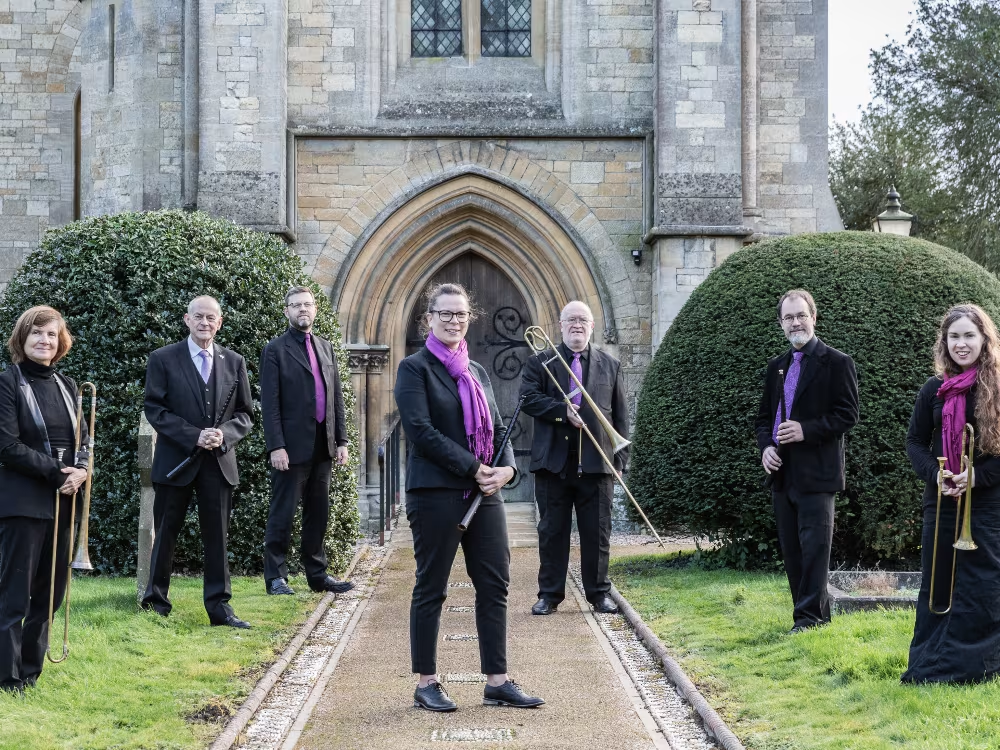
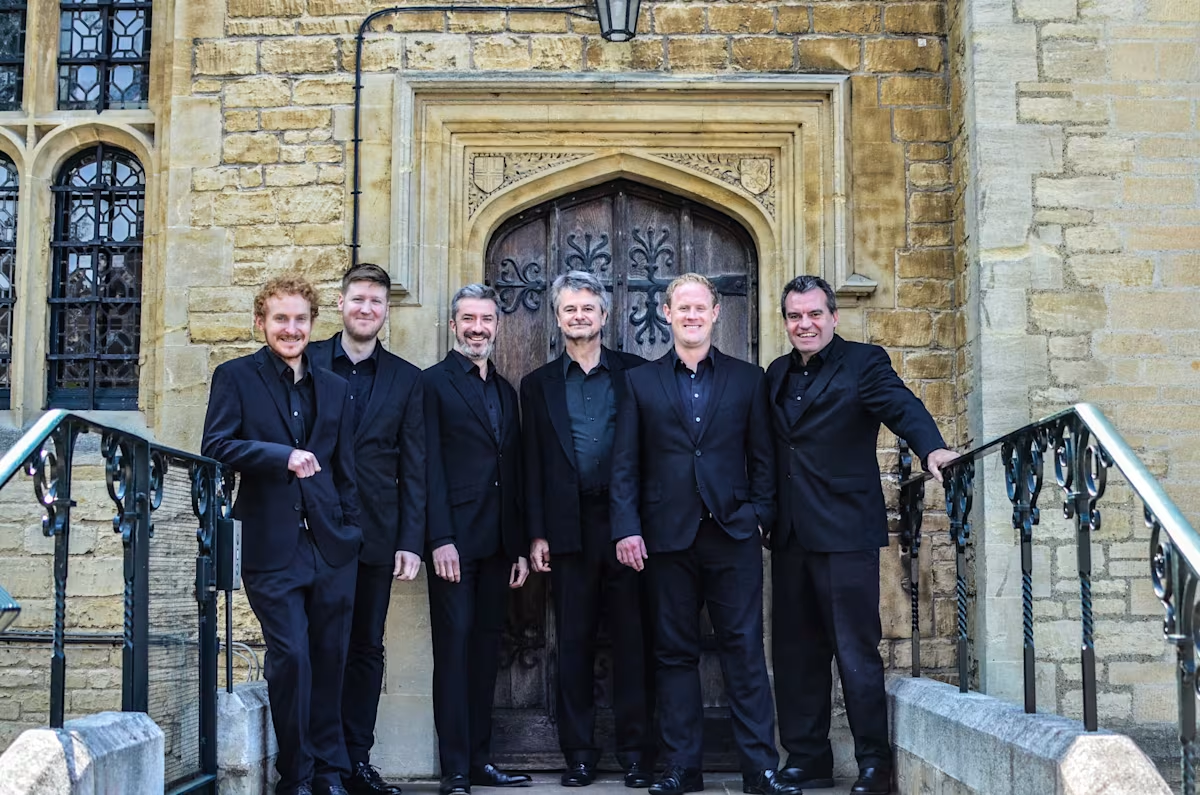
Led by Jamie Savan from the Royal Birmingham Conservatoire, the project brought together musicians from Continuo Foundation grantee His Majestys Sagbutts and Cornetts, the Binchois Consort, and community partners from Holy Trinity Church, Coventry, with academics from Newcastle, Birmingham and London Metropolitan universities. Together, we researched, performed and recorded repertoire from two turbulent centuries of English history, exploring how the experience of music for a broad cross-section of society might have changed over time, while developing new ways of experimenting with historical repertoire in spaces that no longer exist.
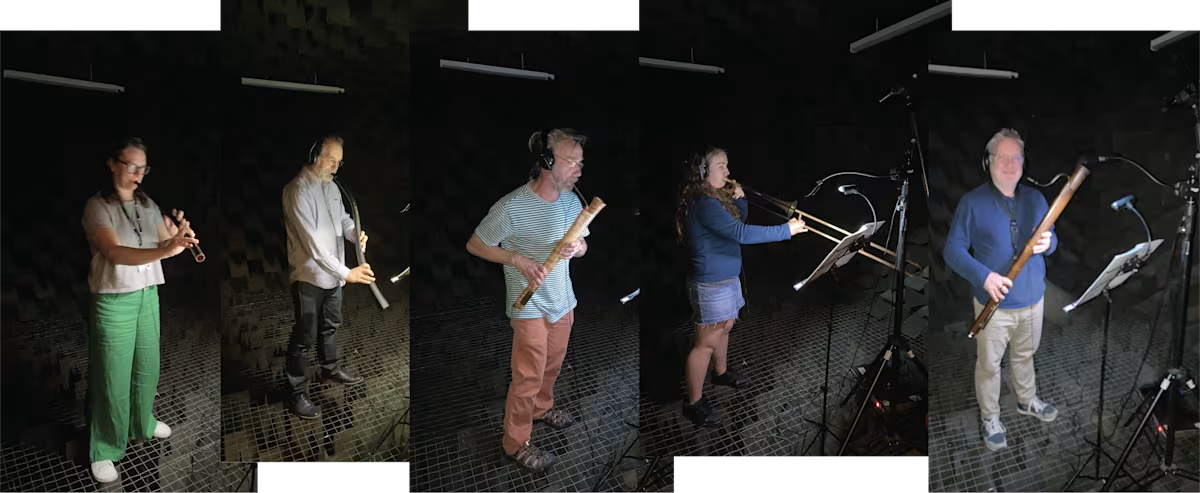
The team recorded a wide range of music from the late-Medieval period through the 17th century, experimenting with cutting-edge recording techniques to capture every detail of the sound. Using ‘anechoic’ and ‘dry studio’ methods, we prepared the music for ‘auralisation’, recreating the sound in a digital version of its original space. We then used a 3D-modelling process that incorporated LiDAR scan data, historical plans and images, and archival documentation to build computer models that could be dynamically altered depending on historical context. Different areas of each model were tagged according to their material properties, and it is these properties – along with the dimensions of the 3D space – that create the virtual acoustic.
To create the musical examples for our forthcoming book on the research, we used advanced acoustics modelling software, Odeon, to generate high-quality sound renders of our recordings. But the real magic happens in the Aural Histories app, where the music is ‘auralised’ in real time, recreating the acoustic feel of each 3D model you can see. The app is best experienced through headphones. One of the most striking acoustic effects we have modelled is the contrast between the Lenten and Eastertide performances of 1527/8, especially the way the large Lenten veil alters the sound. The app also lets users explore these spaces freely, offering different perspectives from around the church. Many of these vantage points were subject to a strict social hierarchy, enabling greater understanding of how music might have sounded differently depending on where you were sitting.
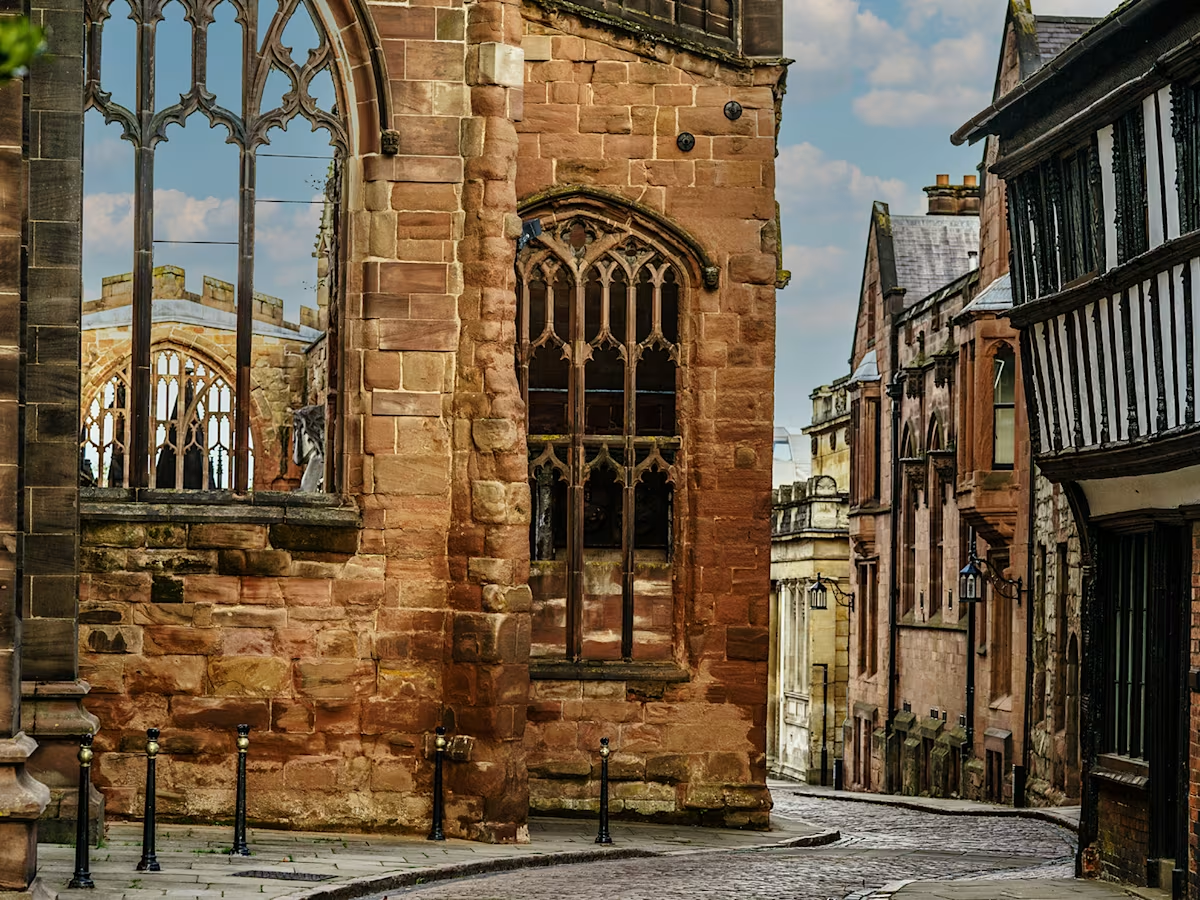
The project is divided into five chronological ‘slices’, each one exploring the intersection of key music and historical events, supported by archival sources in Coventry and beyond. One of the highlights is King Henry VI’s entrance into the city in 1451, where he is said to have attended mass at St Michael’s Parish Church (the Old Cathedral destroyed in the Blitz of 1940). To imagine how he might have been received, we have recreated the iconic anonymous Missa Caput, found in a Coventry manuscript, as the centrepiece. A processional Te Deum and trumpet fanfares after Dufay complete the aural picture inside a 3D reconstruction of how St Michael’s may have looked back in the day.
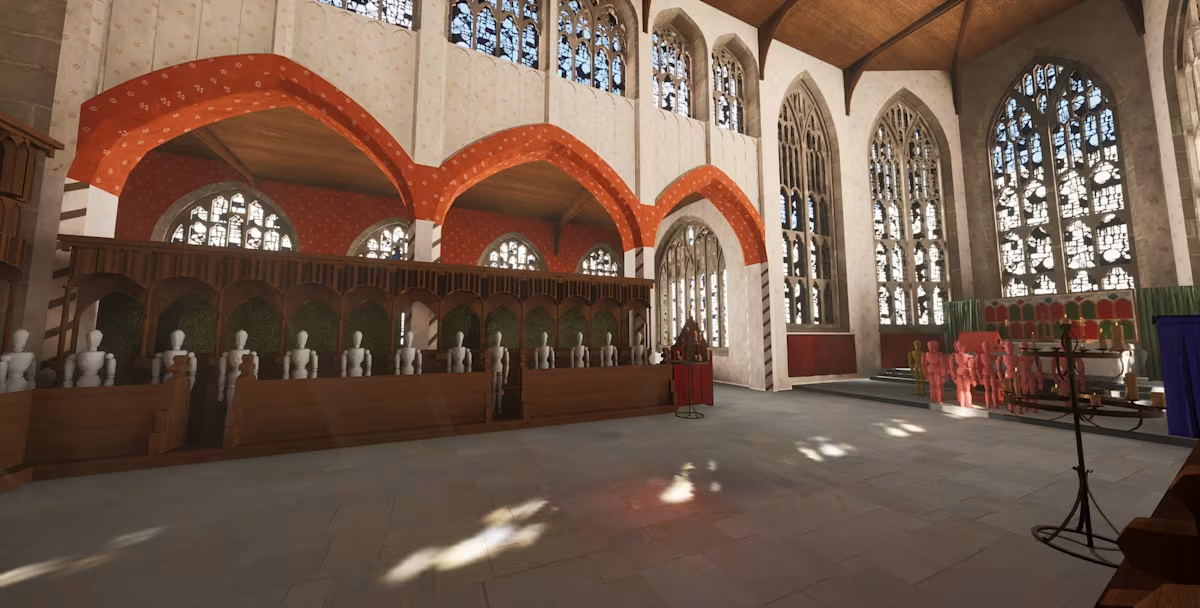
For our 1527/8 case study, we focus on the commissioning of the Howe-Clymmowe organ by Holy Trinity Church, Coventry, which gives us key insights into Tudor pitch. From there, we explore a contrasting selection of Lenten and Eastertide repertoire we imagine may have been sung by Holy Trinity’s clerks. This includes a large-scale Marian motet, Gaude virgo mater Christi, by Hugh Aston, one of the leading composers of the 1520s who may have started his career in Coventry. The contrasting seasons in this case study gave us the perfect opportunity to experiment with the acoustic effects of veiling within the space, and you can experience these effects interactively in the app.
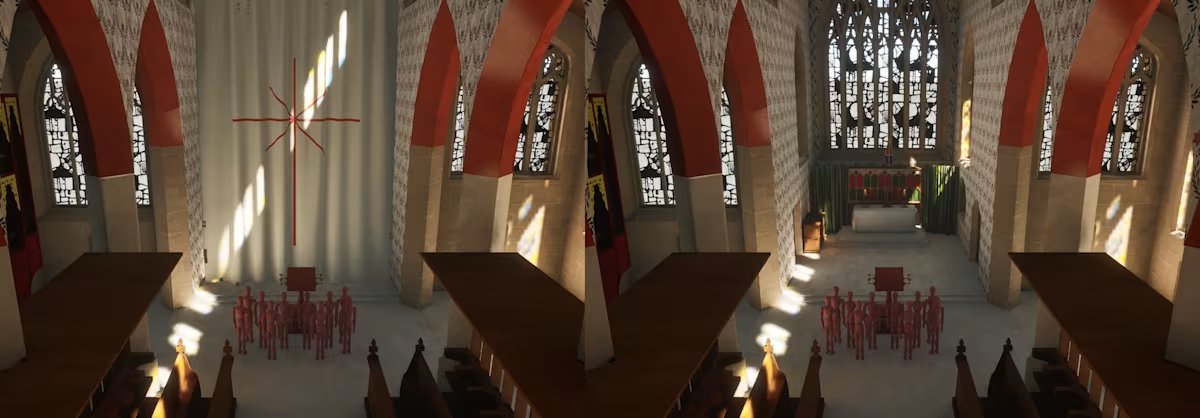
Our first post-Reformation case study takes us to 1560, back at Holy Trinity Church, where significant material changes in the church contrast with a sense of – albeit short-lived – musical renewal at the start of Queen Elizabeth I’s reign. Simple service music and an anthem (by Whitbroke and Tallis, respectively) represent the ‘modest and distinct song’ required by Elizabeth’s 1559 Injunctions. We have also taken the opportunity to experiment with congregational singing, something Holy Trinity might have been among the first to adopt. By including a metrical setting of Psalm 95 sung to a popular ballad tune, we explored how lay singing in church might have sounded in the earliest years of the practice.
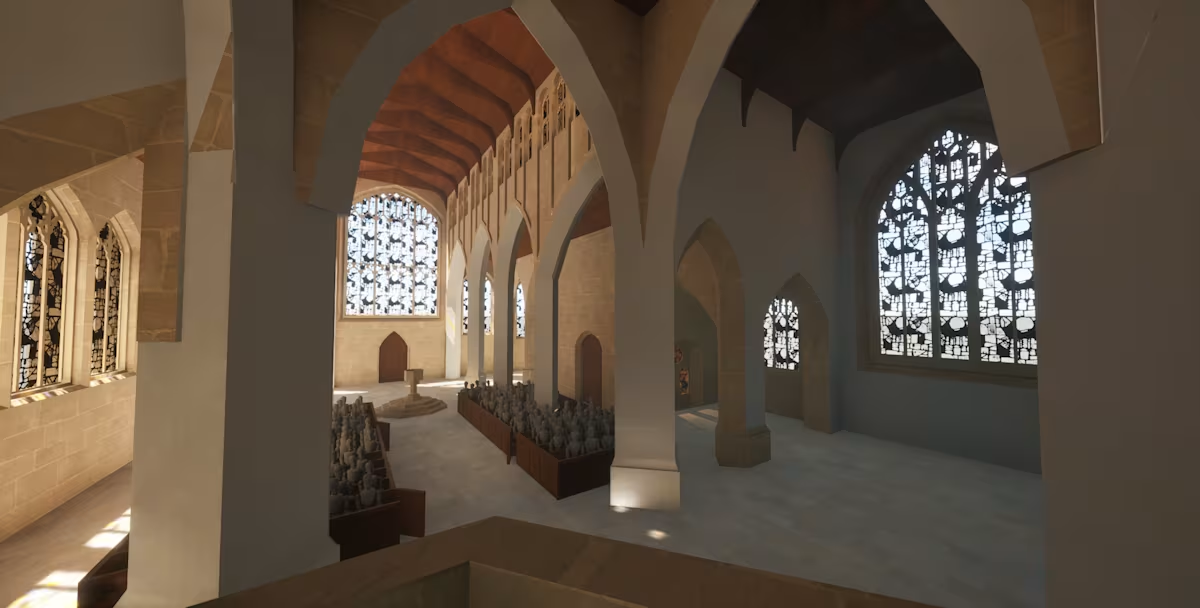
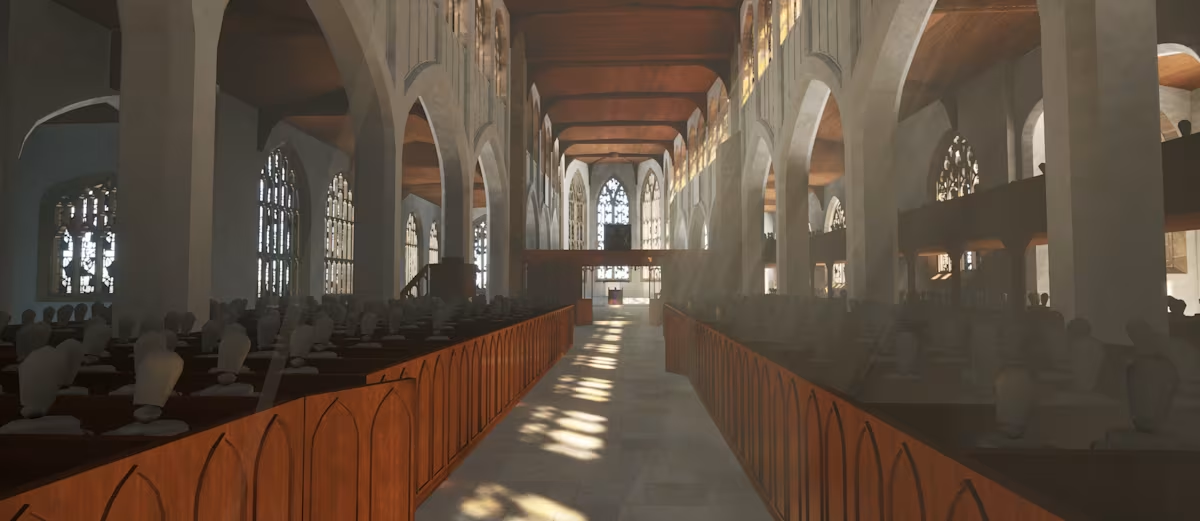
Our fourth case study, set in St Michael’s Parish Church, transports us to 1617, when James VI/I made a royal visit to Coventry on the return leg of his 1617 progress to Scotland. Very little information about musical provision at St Michael’s survived the upheavals of the 17th century, and even more material was destroyed in a fire at Birmingham Central Library in the late 19th century, but we have used evidence from similar institutions to help inform our choice of repertoire for an Evensong before the King. Our notional choir of men and boys from the local grammar school (represented in our recordings by the Ex Cathedra Scholars from the Royal Birmingham Conservatoire) sing the Magnificat from Orlando Gibbons’ Short Service and Sing Joyfully by William Byrd, and the King is welcomed by trumpets playing fanfares in the style of Cesare Bendinelli.
Evidence from Holy Trinity of whitewashing walls and building balconies has informed the interior of St Michael’s in 1617, which now looks like an altogether more Protestant space.
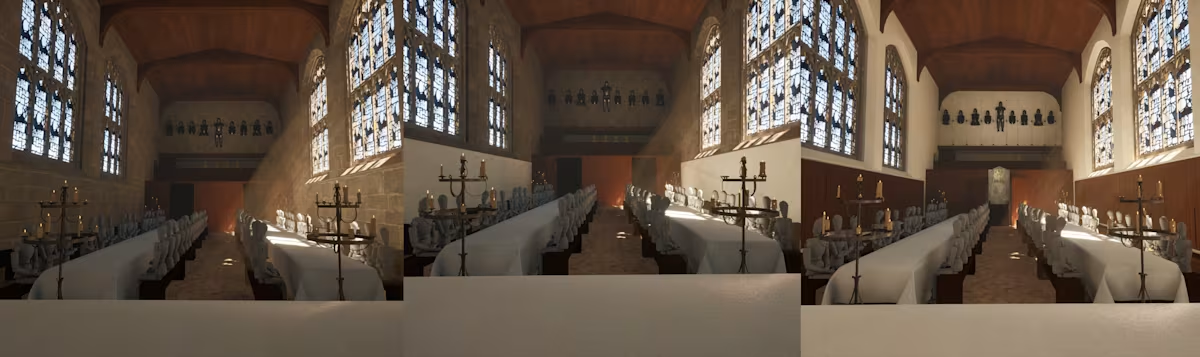
We know that, along with a visit to St Michael’s, James was ‘royally feasted’ at St Mary’s Guildhall on his stop in Coventry, to the extent that a communion table borrowed from Holy Trinity Church for the occasion was returned damaged – it must have been quite the party! Throughout our study, we have used the Guildhall as the setting for secular musical performance appropriate to each period and have altered the interior furnishings and decorations within the space accordingly. You can hear a bassedance on the tenor of the Missa Caput, realised by guest artist Ian Harrison, an instrumental performance of Hugh Aston’s famous Maske, and a pavan by Anthony Holborne in the Aural Histories app.
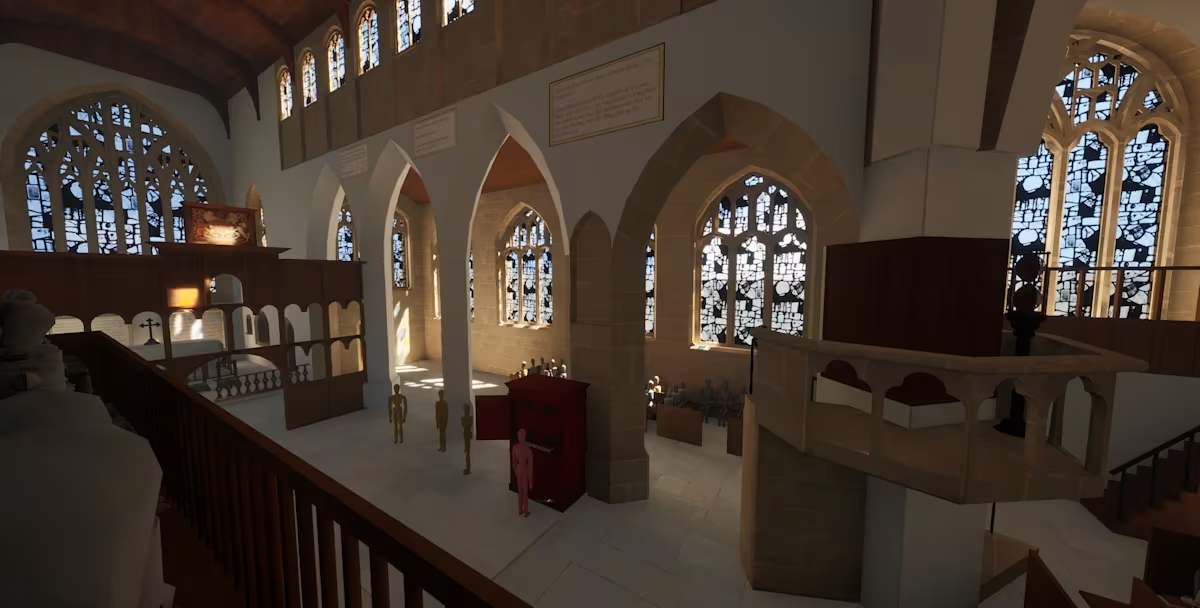
Our final case study examines parish church music at Holy Trinity in 1636, at a time when tensions between Puritan and High Church factions find their way into Coventry records.
Holy Trinity Church installed an organ in 1630 after nearly 60 years without one, and paid an organist the princely sum of £10 per year to play it until the early 1640s. We imagine, for that kind of salary, he might also have been in charge of some singers and have presented a selection of repertoire that a reasonably wealthy urban parish church of this period might have enjoyed, including a Te Deum by West Country composer Hugh Facy and a setting of Psalm 100 by John Dowland.
We have drawn on evidence from other, comparable, locations to consider how instruments might have been used in the church at this time. For instance, records from Bristol parishes tell us that wind instruments and organs were in regular use throughout the 1630s, including the unusual retention of one solitary cornettist at St John’s on the Wall from 1630 to 1636. You can hear some suggestions for how he might have been employed in devotional repertoire in our recordings.
Along with researching and recording repertoire, and developing digital assets for our acoustics work, we have been fortunate to collaborate with community partners in Coventry throughout the project and have presented a series of concerts, pre-concert talks, and special Evensong services in collaboration with the Choir of Holy Trinity Church, directed by Alexander Norman.
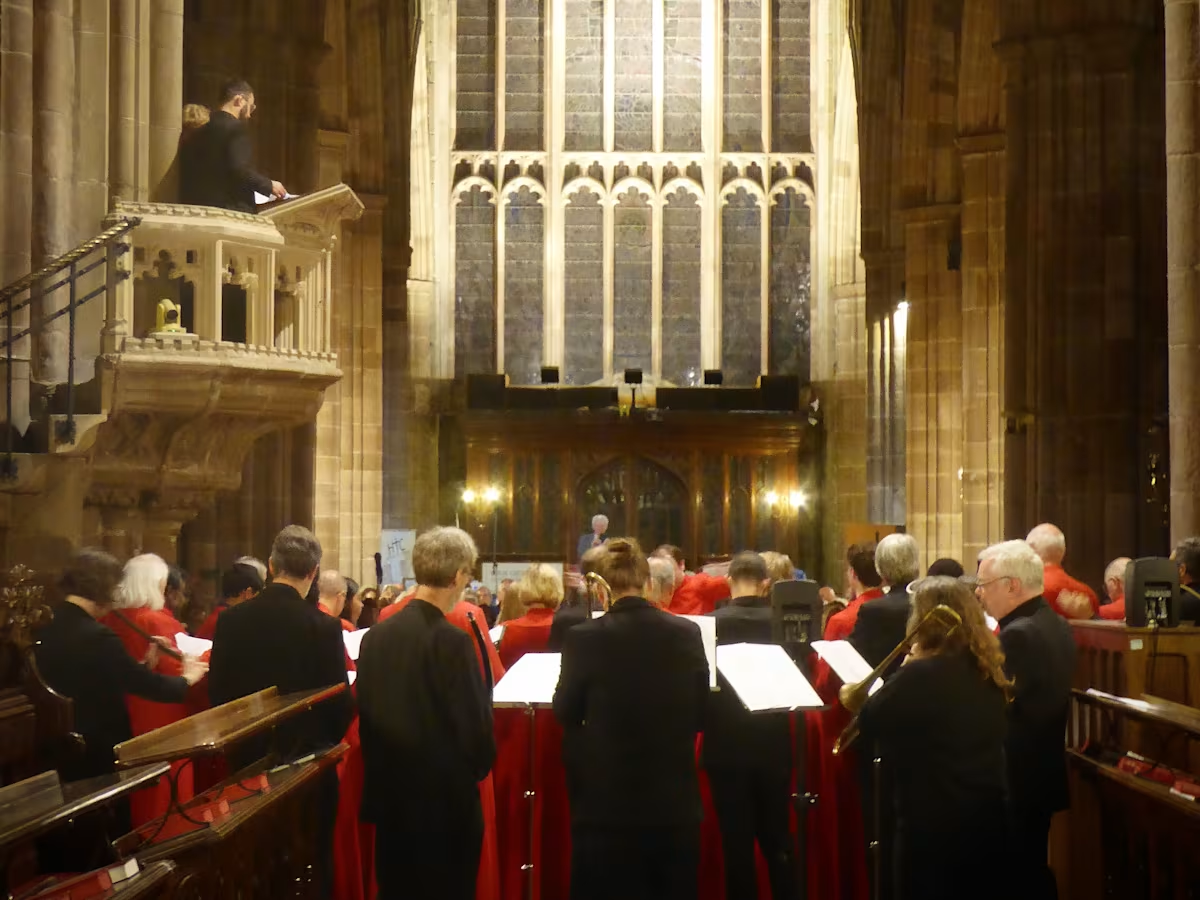
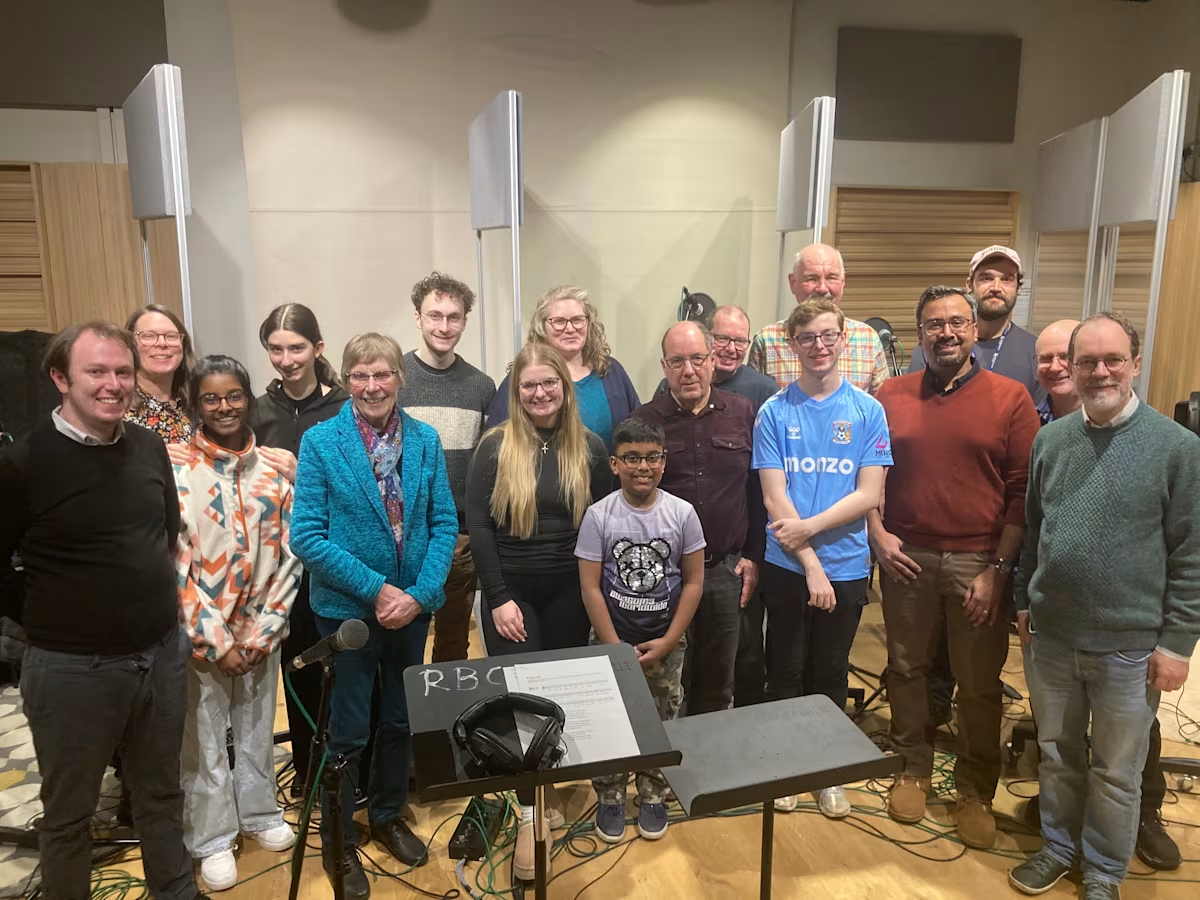
Singers from the choir participated in recording sessions at Royal Birmingham Conservatoire and feature in the Aural Histories app, representing the congregation in 1560 and 1636. Involving local people in research about the places in which they live has been an extremely rewarding aspect of this work, and we are grateful to the communities at Holy Trinity and at St Mary’s Guildhall for their ongoing support and enthusiasm.
The Aural Histories: Coventry app is free to download on the Google Play Store and the Apple App Store and can be used on smartphones and tablets. Visitors to any of the historic venues included in the app can also use it on site as an augmented reality experience. There is an opportunity to submit feedback within the app, and the project team is particularly keen to hear from users with suggestions and comments. An open-access book about the project will be published by Cambridge University Press in 2026, and anyone wanting to find out more about our work can visit the project website here.
To continue the impact of this project in Coventry, His Majesty’s Sagbutts and Cornetts will perform an hour-long family-friendly concert, ‘Meet the Coventry Waits’, funded by Continuo Foundation, at St Mary’s Guildhall, Coventry, at 2.30pm on Sunday, 25 January 2026. Tickets are included in general admittance to the Guildhall (concessions for GoCV cardholders).
Share this
Keep reading

Celebrating 300 years of Academy of Ancient Music
Three hundred years after the first Academy of Ancient Music was founded, its modern namesake is preparing a season that looks far beyond commemoration.

JS Bach, and a cabinet of curiosities: Jorge Jiménez
Violinist, director and composer Jorge Jiménez talks to Simon Mundy about his latest album Curiosa: Lost & Found Tunes, his new Bach weekend in Ipswich, and his freelance career balancing life in rural Essex with regular work in Spain.
The Best of Rachel Podger
This playlist celebrates 'the unsurpassed British glory of the baroque violin' (The Times) - that is of course Rachel Podger.