
Feature
Peter Holman: Curiosity and the making of Early Music
Share this

BY SIMON MUNDY | FIRST PUBLISHED 21 FEB 2026
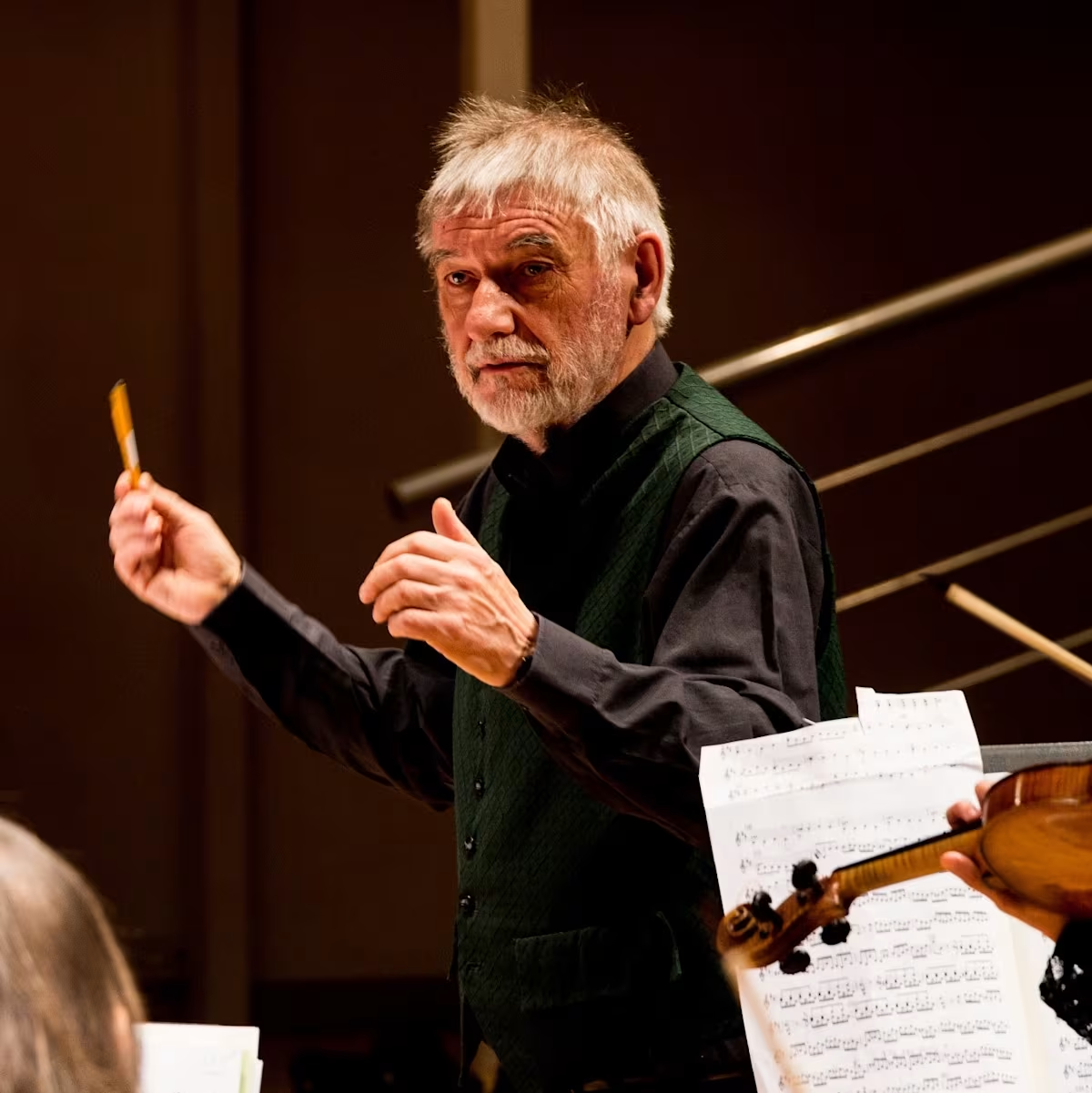
There is something about Peter Holman that has always made him seem to me the conscience of the Early Music movement: professorial in just the right way. He is academic without being pedantic, no assumption goes unchallenged or untested. If he’s curious about an aspect, he inspects, researches and usually ends up writing a book about it. Peter is an enthusiast, not in the 18th-century sense of being slightly bonkers, but in our sense of bringing huge energy to any project. I first made contact with him 30-odd years ago when I was asked to write a short book about Purcell at a time when Peter was (and still is) an acknowledged expert; his comprehensive book coming out a few months before my less scholarly attempt, about which he was generously kind. His latest book, with his Leeds colleague Bryan White, is ‘The Purcell Compendium’ (2025), published by Boydell.
Peter told me recently, ‘my interest went back to my studies at King’s College London in the 60s with Thurston Dart. He thought it would be something useful for me to do in the holidays, but he didn’t like it when I picked his subject area – he was terminally insecure. On the other hand, he was the model of how to be an academic and a performer. I learnt more from him in one class than in anyone else’s whole term. He and Christopher Hogwood particularly inspired me.’
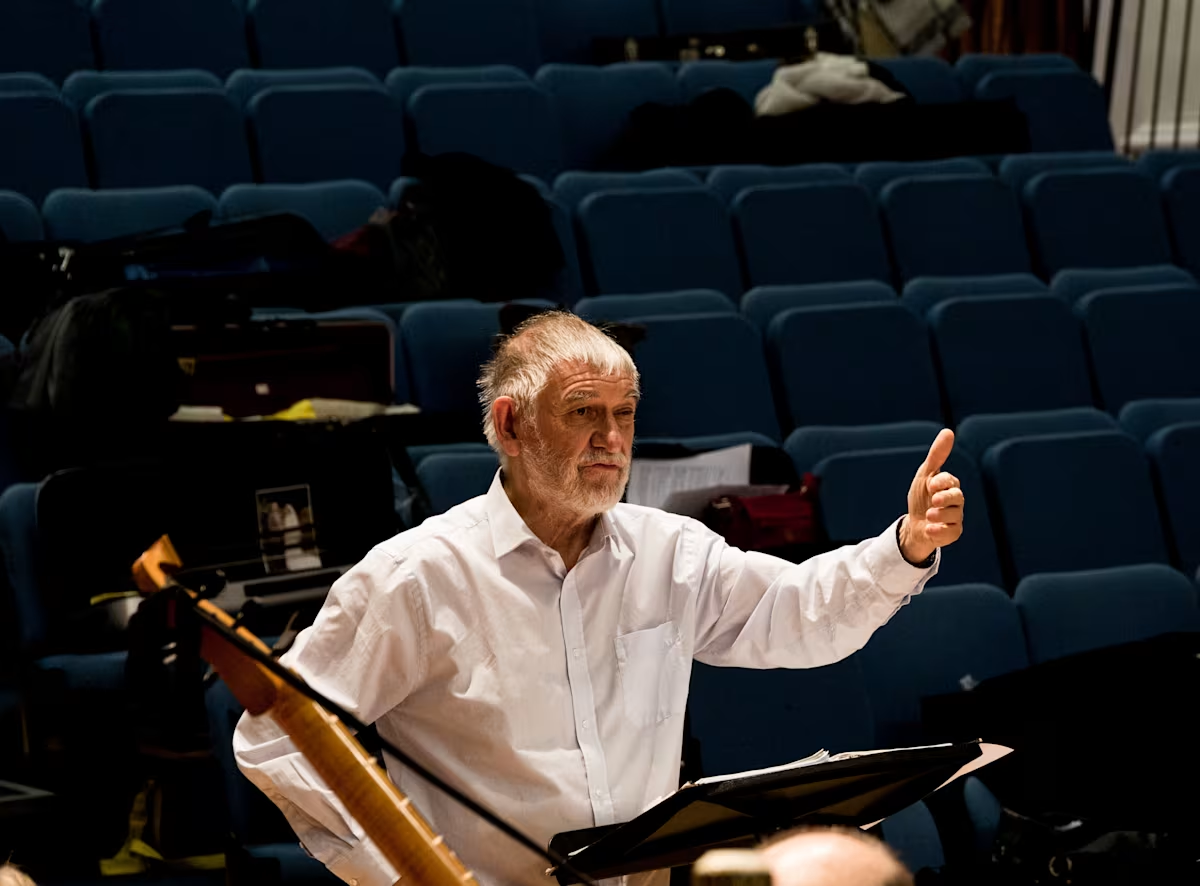
Dart’s discouragement had the opposite effect on the young Peter, and he founded his own group, Ars Nova, while still at King’s. Over the years, not only Purcell but the musicians around him in the 17th century became a consuming subject. Now he admits, ‘Purcell has become even more of an obsession as time has gone on.’ Later, in 1979, The Parley of Instruments was formed, taking its title from the concert series the violinist John Banister put on in his house in the 1670s. ‘We started the group, because Roy Goodman and I thought no-one was doing the five-part string consort music properly, rather than to perform Purcell. We then concentrated on the English consort music from Henry VIII to 1690. We retired the Parley as a group just before the COVID years.’ In the meantime, they had made a distinguished series of more than 50 recordings for the Hyperion label. Peter had also been co-director of the Boston Early Music Festival with Paul Odette during the Purcell tricentenary year of 1995.
The Parley of Instruments | Suite No. 1 from Abdelazer, Z570: I. Overture. Grave – Canzona
Peter lives in Colchester and has been as much a local as an international musical catalyst, crossing the county border to curate the Suffolk Villages Festival, with this year being the last. ‘We are all getting old,’ commented Peter, who will be 80 this year, ‘so we wanted to go out with a bang.’ Along the way, there has been an impressive string of books. Alongside the Purcell, there’s one on the violin at the English Court 1540-1690, the Cambridge Music Handbook on Dowland’s Lachrimae, the viola da gamba in 18th and 19th century Britain, and a history of conducting up to 1800. Peter grins and says, ‘having written a book on it, I am convinced people should play and conduct, rather than just conduct.’ Now he is working on the history of the Early Music movement going back to the 1850s, including performers like Charles Kensington Salaman, who was a friend of both Muzio Clementi and Franz Liszt, and who was exploring playing on early keyboard instruments almost as soon as they went out of fashion.
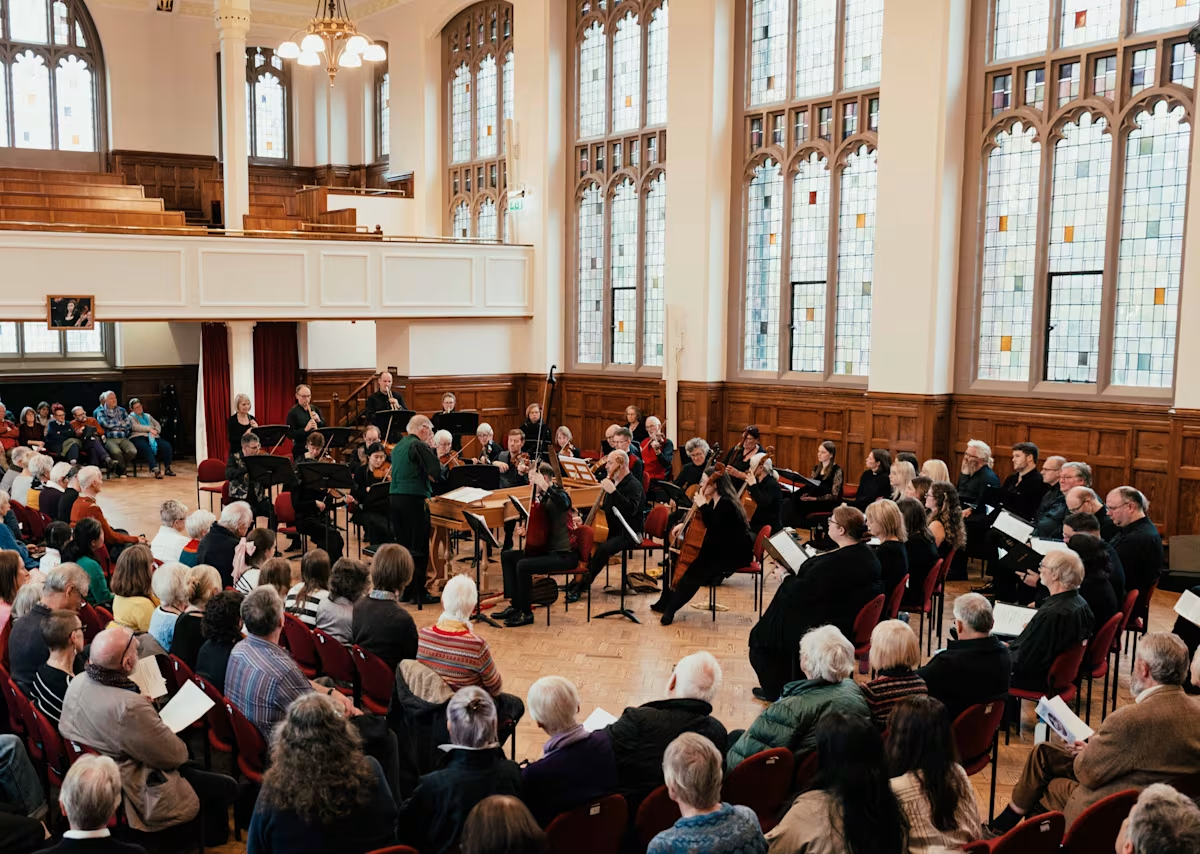
In 2000, Peter became Professor of Musicology at Leeds University. ‘When I got the job, I was commuting weekly, so starting an Early Music group was a good way to get to know people.’ The result was Leeds Baroque. ‘There were three good singers on staff. Several of the people in the choir have been there since the beginning.’ One of them is Jillian Johnson, who also plays the violone (the early bass version of both the viol and violin families) and administrates the concerts. She says, ‘I spent years working in biochemistry before moving to the music department. We bring together people who have an interest at a good amateur level. We have short-but-intense rehearsal times, so that you do not have to have a weekly meeting.’ Peter adds, ‘it has become somewhere where staff and students can try things out. We’ve found ways of making and digging out modern editions of Early Music.’
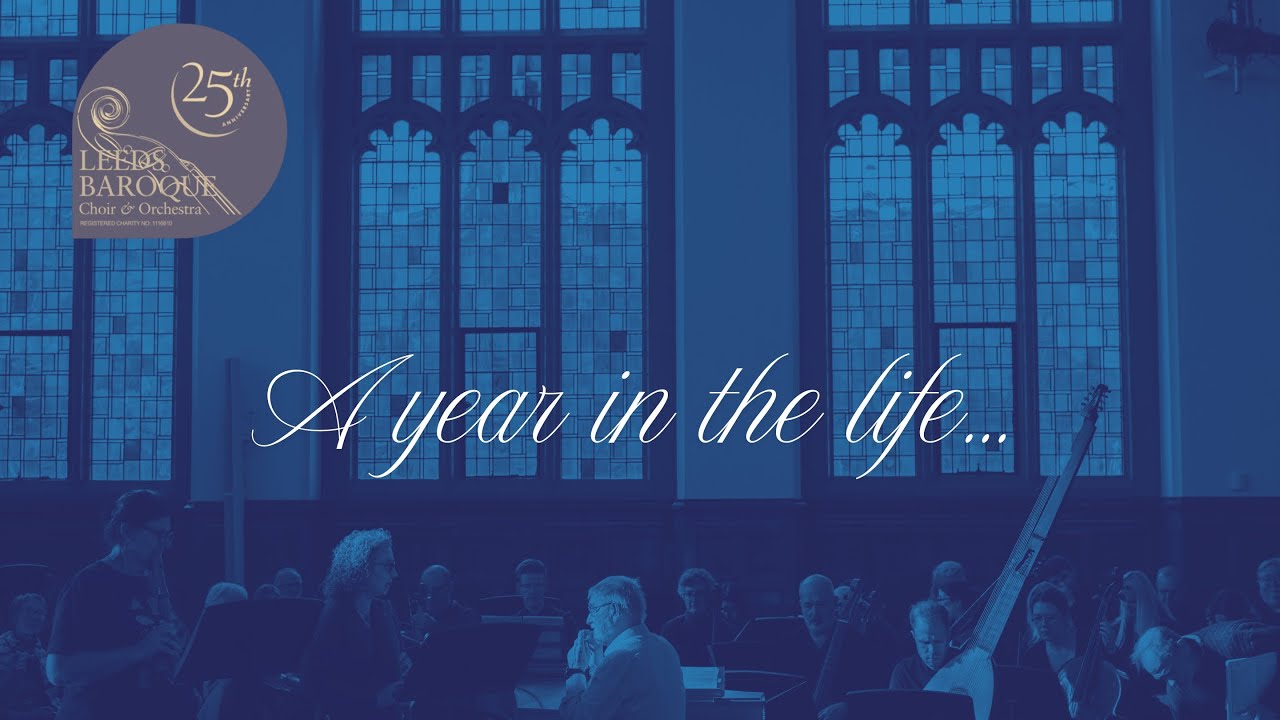 ▶
▶Leeds Baroque celebrated its silver jubilee in 2025 (video produced by Daniel Johnson Gray)
The programme consists of four or five concerts per year, in and outside of Leeds, which vary in size. The 2026 season begins on 1 March at Leeds Grammar School with ‘Music for The Sun King’ (Louis XIV), featuring Philippa Hyde who, Peter says, ‘is an ideal soprano for 17th-century repertoire.’ On the last day of May, the choir and viol consort move out to Kildwick for earlier works by Orlando Gibbons and John Dowland (‘For Voyces and Viols’). Then a month later in Sunny Bank Mills (28 June), repeated on 28 September at Temple Newsam House, they celebrate 400 years of the city of Leeds itself with ‘Masques and Triumphs’, ‘a programme of musical scenes from plays put on in London during the Restoration period, including pieces from a manuscript of Restoration theatre music now in Leeds City Library.’
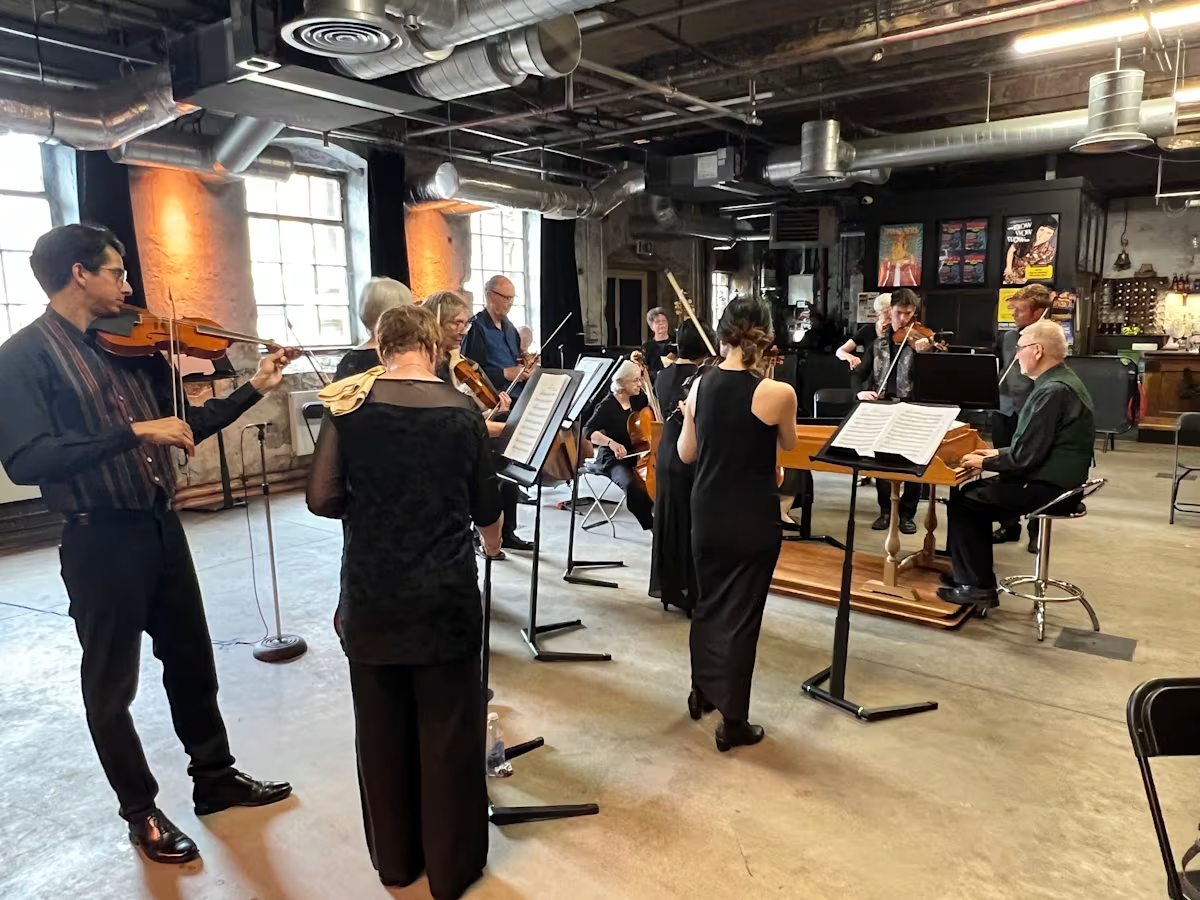
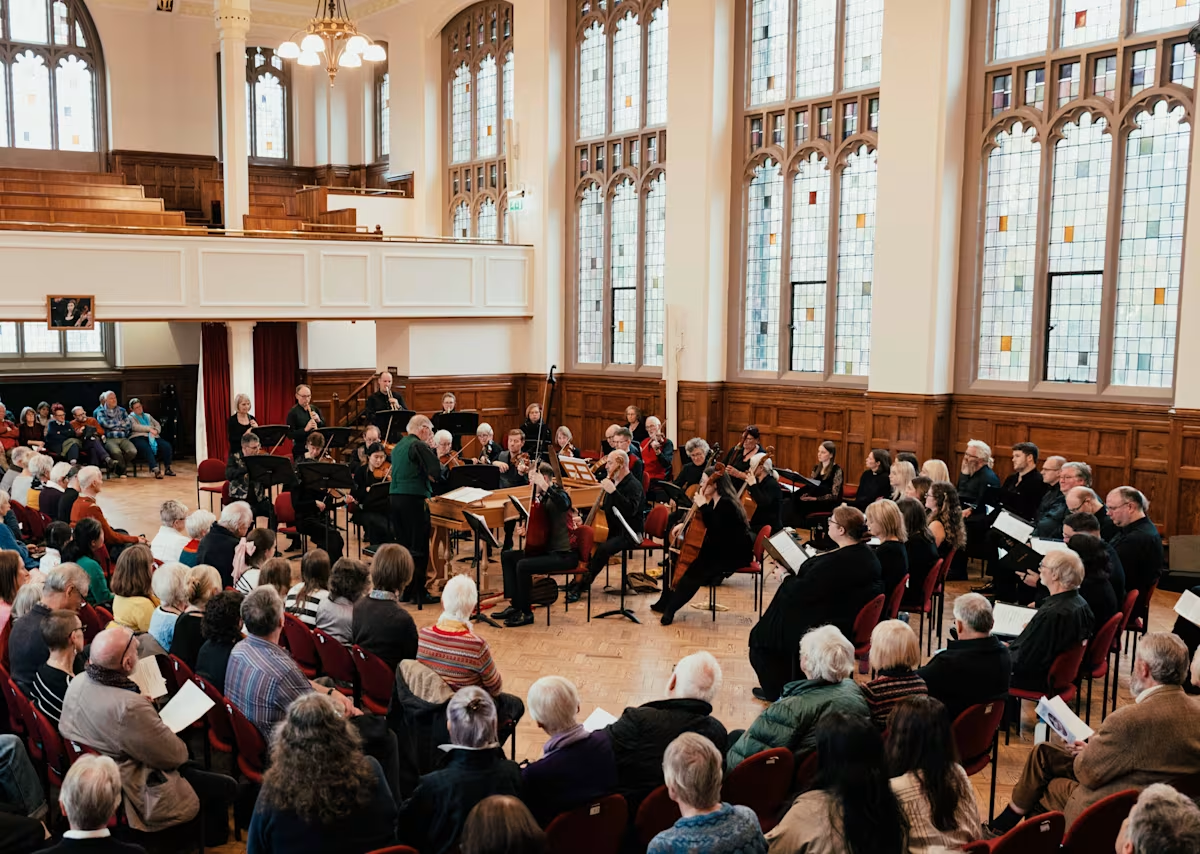
‘Our last concert, in November, consisted of three Odes to St Cecilia: Handel, Purcell and Boyce – the Boyce hasn't been performed in public since the 1730s,’ says Peter. ‘We like to mix the familiar and unfamiliar – like the chaconne from Grabu's Albion and Albanus in which we are pretty sure Purcell played the harpsichord. This autumn, for my 80th birthday, we’re doing coronation music, including the settings of My Heart is Inditing by Purcell and Handel’. It is part of a concert in the Clothworkers Centenary Hall on 15 November of ‘Music for State Occasions’, which also has William Croft’s moving Burial Service, used at every state funeral since he wrote it.
At 80, Peter Holman remains less a monument than a moving force, a musician-scholar for whom performance and enquiry have never been separate acts. If there is a conscience in the UK Early Music movement, it lies not in dogma, but in curiosity, and that, above all, is Holman’s enduring gift.
Leeds Baroque’s 2026 season starts on 1 March. To view the full programme, visit the ensemble’s Continuo Connect profile.
Share this
Keep reading

Celebrating 300 years of Academy of Ancient Music
Three hundred years after the first Academy of Ancient Music was founded, its modern namesake is preparing a season that looks far beyond commemoration.
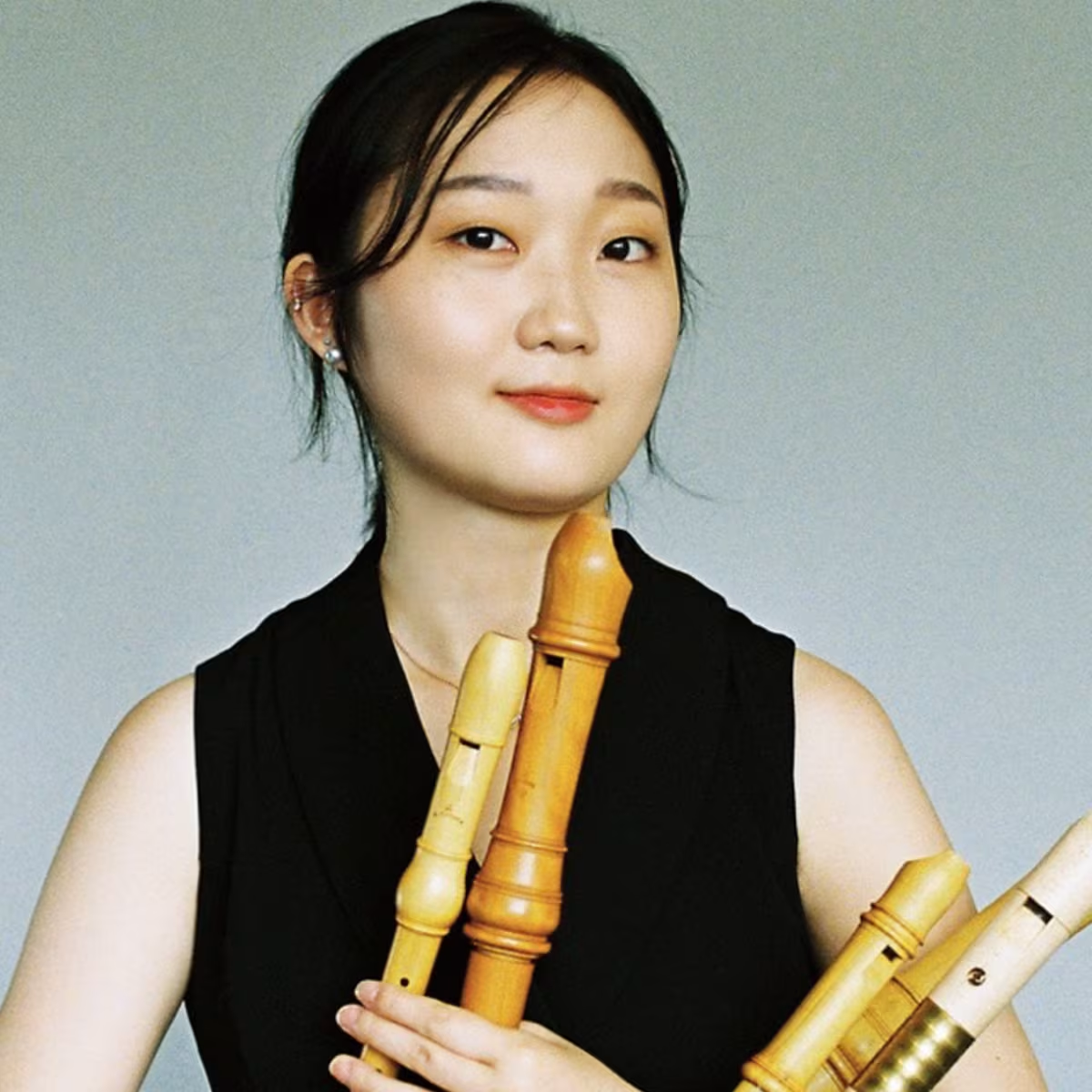
LIFEM 2026: Interview with Eun Sol Lee
The Early Music Shop caught up with Sol to find out more about her year since she won the competition, and what we have to look forward to in her performance at LIFEM this year...
The Best of Rachel Podger
This playlist celebrates 'the unsurpassed British glory of the baroque violin' (The Times) - that is of course Rachel Podger.