
Playlist
Playlist: Handel in London
Share this

FIRST PUBLISHED 21 FEB 2026
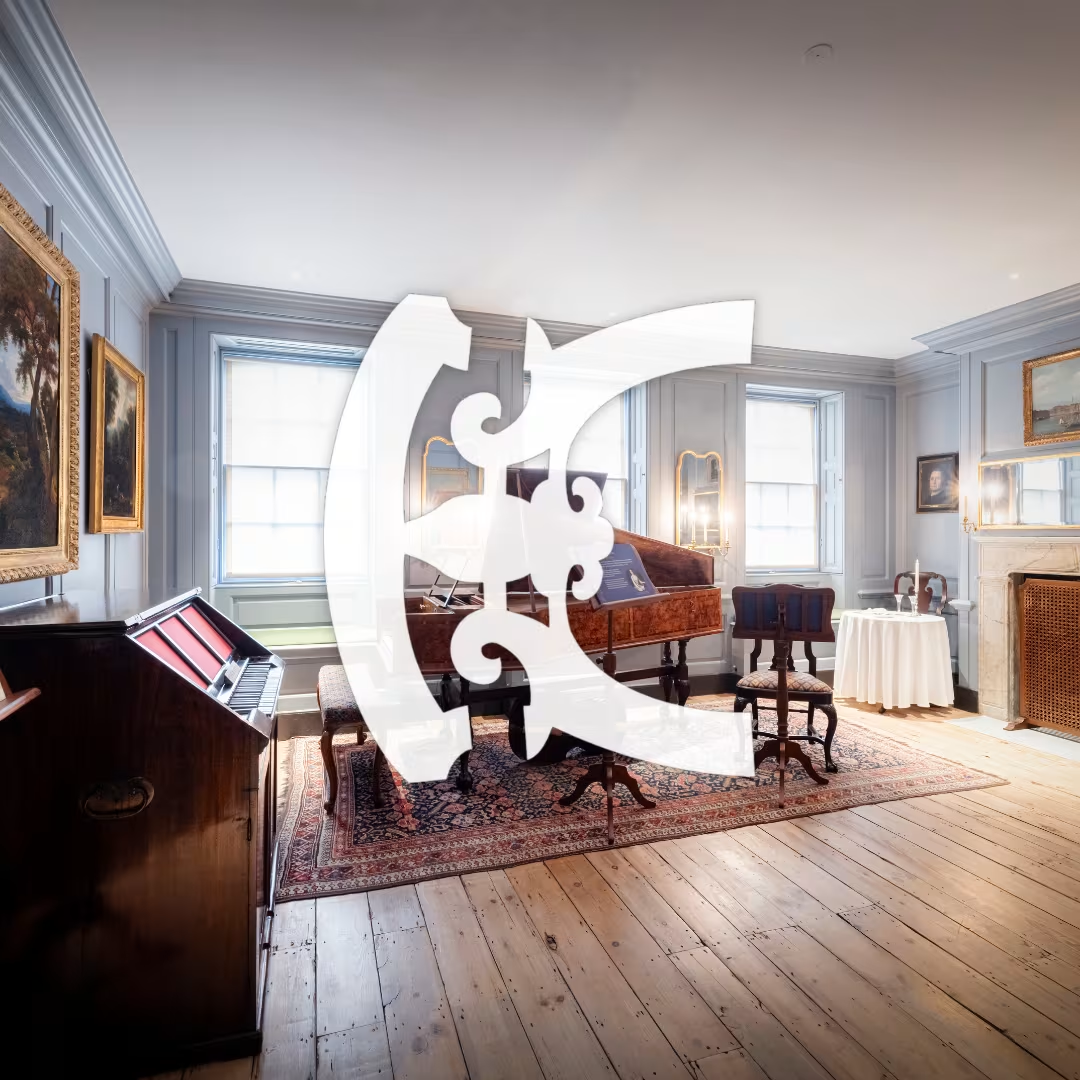
Complementing our feature, ‘Handel at home: life and music on Brook Street’, this playlist offers a journey through the life and work of George Frideric Handel from 1712, when he relocated to London, to his taking up permanent residence on Brook Street in 1723, through to his final works. The selected tracks highlight significant works or moments in his career, including his eventual shift from Italian opera to English oratorios, and his growing prominence within the British musical landscape.
We hope you enjoy tracing Handel’s musical evolution through this playlist, celebrating his legacy in London and his lasting influence on British music. And remember to explore the upcoming live performances of Handel’s music on Continuo Connect, to see where you can hear his masterpieces performed live.
TRACK LIST
1-3. Rinaldo, HWV 7a
Act I: Aria. ‘Augelletti’
Act I: Aria. ‘Cara sposa’
Act II: Aria. ‘Lascia ch’io pianga’
Miah Persson, Vivica Genaux, Freiburger Barockorchester, René Jacobs
Written in 1711, Rinaldo was the first Italian opera written specifically for London. Handel decided to settle permanently in London the following year, in 1712.
4. Ode for the Birthday of Queen Anne, HWV 74: ‘Eternal Source of Light Divine’ | Lea Desandre, Iestyn Davies, Jupiter Ensemble, Thomas Dunford
Composed in early 1713 for Queen Anne’s birthday, this work is the first known commission Handel received from the British Royal Family.
5. ‘Utrecht’ Te Deum, HWV 278: ‘We praise thee, O God’ | Christ Church Cathedral Choir, Oxford, Academy of Ancient Music, Simon Preston
Another royal commission from the same year is the ‘Utrecht’ Te Deum in celebration of the Treaty of Utrecht, which ended the 11-year War of the Spanish Succession.
6. Amadigi di Gaula, HWV 11: Act II: Aria. ‘Sussurrate, onde vezzose’ | Tim Mead, Early Opera Company, Christian Curnyn
Based on a medieval chivalric plot, Amadigi is the fifth opera written by Handel for the London stage, Amadigi was premiered at the King’s Theatre, Haymarket in May 1715.
7-8. Water Music Suite No. 2 in D, HWV 349
I. Allegro
II. Alla Hornpipe
The English Concert, Trevor Pinnock
Handel's famous set of three suites were written for a concert on a barge on the River Thames to entertain a royal cruise hosted by King George I on 17 July 1717.
9-10. Chandos Anthem No. 8 ‘O come let us sing unto the Lord’, HWV 253
I. Sonata. Largo - Allegro
II. ‘O come let us sing unto the Lord’
The Choir of Trinity College, Cambridge, Orchestra of the Age of Enlightenment, Stephen Layton
The Chandos Anthems were written between 1717 and 1718 while Handel was Composer-in-Residence at Cannons, the court of James Brydges, first Duke of Chandos from 1719.
11-12. Acis and Galatea, HWV 49
Act I: Duet. ‘Happy we!’
Act II: Trio. ‘The flocks shall leave the mountains’
Alan Ewing, Paul Agnew, Sophie Daneman, Les Arts Florissants, William Christie
Handel first wrote this work in the form of a one-act masque in 1718 for a performance at Cannons. He later transformed it into a three-act opera in 1732 in London.
13-14. Giulio Cesare in Egitto, HWV 17
Act I: ‘Va tacito’
Act III: ‘E pur cosi... Piangerò’
Barbara Schlick, Jennifer Larmore, Concerto Köln, René Jacobs
Giulio Cesare was written in 1724 for the Royal Academy of Music (the short-lived opera company) and was performed at the King’s Theatre, Haymarket. Its immense popularity led to multiple revivals in subsequent London opera seasons. The previous year, Handel had moved into his home on Brook Street, where he lived until his death in 1759.
15-16. Rodelinda, regina de’ Longobardi, HWV 19
Act I: Aria. ‘Sono i colpi della sorte’
Act I: ‘Confusa si miri’ | Tim Mead, Iestyn Davies, The English Concert, Harry Bicket
Written in 1725, Rodelinda is another popular work of Handel’s, receiving several performances and revivals.
17-18. Violin Sonata in D , Op. 1 No. 13, HWV 371
I. Affetuoso
II. Allegro
Rachel Podger, Brecon Baroque
Handel's first opus was written for the professional musicians of his London opera orchestra around 1732.
19-20. Trio Sonata No. 1 in B minor, Op. 2, No. 1, HWV 386
I. Andante – Adagio
II. Allegro ma non troppo
Academy of Ancient Music, Richard Egarr
Perhaps lesser known than Handel’s other instrumental sets such as Opp. 1 and 6, the second collection of works grouped under Op. 2 in 1733, nevertheless comprises remarkable and inventive set of trio sonatas.
21. Handel (arr. Mozart) Alexander’s Feast: ‘The many rend the skies’ | The Handel & Haydn Society, Christopher Hogwood
Alexander’s Feast is a musical ode from 1736, premiered at the Covent Garden Theatre in February that year. The version heard here is Mozart’s arrangement of the work dating from 1790 at the request of Baron Gottfried van Swieten, who had an extensive collection of manuscripts by Bach and Handel, among those by other composers.
22-23. Saul, HWV 53
Act I: Air. ‘Oh Lord whose mercies’
Act III: ‘Dead March’ (Symphony)
Harry Christophers & The Sixteen
Written in 1738, Saul is one of Handel’s many English-language oratorio. By this point, the composer’s Italian opera seasons were struggling financially to maintain the support they needed, and he tactfully turned his focus to English-language choral works instead.
24-25. Concerto grosso in G minor, Op. 6, No. 6, HWV 324
I. Larghetto e affetuoso
II. A tempo giusto
Simon Standage, Elizabeth Wilcock, Anthony Pleeth, The English Concert, Trevor Pinnock
Written to be played during performances of Handel’s oratorios and odes, the Opus 6 set was first published by John Walsh in London in 1739. Handel took the works of Corelli as a starting point with these compositions.
26-27. Messiah
Air. ‘I know that my redeemer liveth’
Air. ‘The trumpet shall sound’
Matthew Brook, Susan Hamilton, Dunedin Consort, John Butt
Dating from 1741, Handel’s most famous work was first performed in Dublin in 1742, and had its London premiere a year later. (Read our feature, ‘The infinite varieties of Handel's Messiah’)
28-29. Music for the Royal Fireworks, HWV 351
III. La paix. Largo alla siciliana
IV. La réjouissance
The English Concert, Trevor Pinnock
Commissioned by King George II for the Royal Fireworks display in Green Park in April 1749, this work remains one of the most popular and enduring pieces of celebratory music in the British orchestral repertoire.
30. Jephtha, HWV 70
Act III: Accompagnato. ‘A Father off’ring up’ – Air. ‘Waft her, Angels’
James Gilchrist, The Sixteen, Harry Christophers
Jephtha proved to be Handel's final oratorio and his last major composition, completed in 1751 despite the challenges posed by his severely deteriorating eyesight.
Explore the upcoming live performances of Handel’s music listed on Continuo Connect. Enjoy reading our features on Handel’s Messiah and the composer’s London residency on Brook Street.
Share this
Keep reading
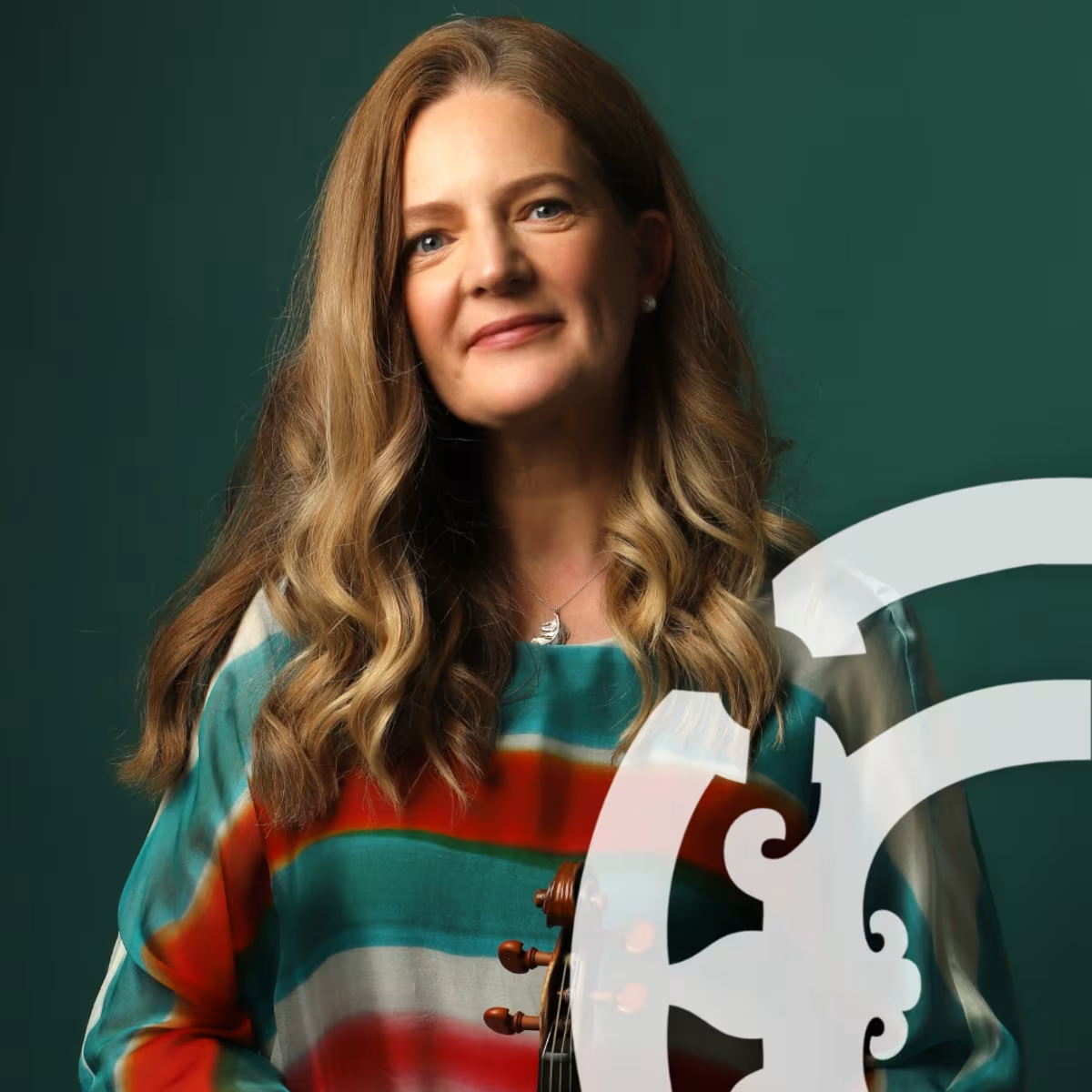
The Best of Rachel Podger
This playlist celebrates 'the unsurpassed British glory of the baroque violin' (The Times) - that is of course Rachel Podger.

In conversation: Samuel Ng
Continuo Connect catches up with Samuel Ng, cellist and gamba player with the newly formed Republic of Viols and Liturina.
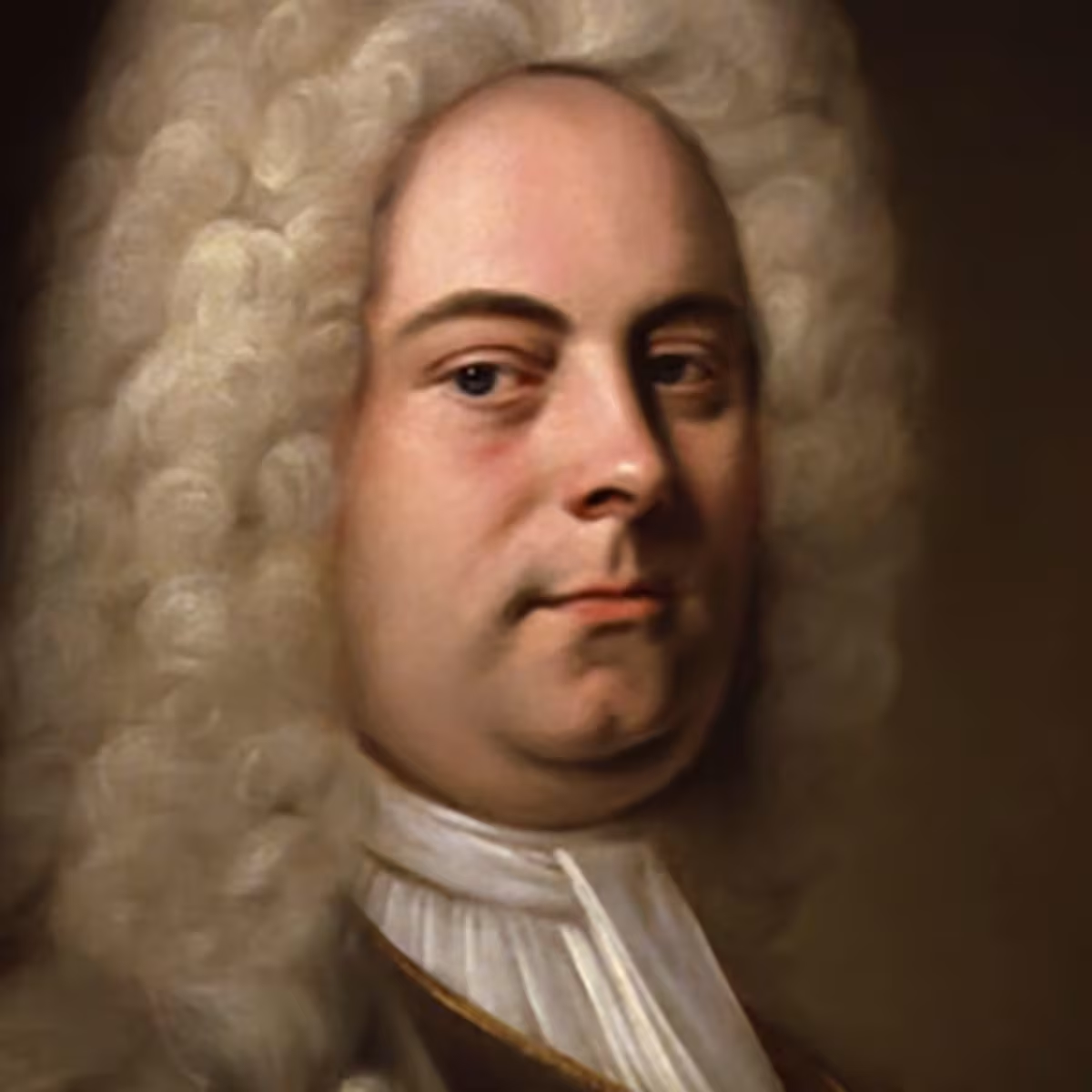
Handel’s Messiah – the Salisbury connection
There is an oddly persistent local story that a performance of Messiah was given in the chapel room over St Anne’s Gate when Handel stayed in Salisbury in 1739 with his friend James Harris of Malmesbury House in the close.