

Feature
Time-travel with dance
Introducing the Early Dance Circle
Share this

BY SHARON BUTLER | FIRST PUBLISHED 29 APR 2026
Since its founding in 1984, the Early Dance Circle (EDC) has championed the study, performance, and appreciation of historical dance across the UK. In celebration of this year’s International Dance Day (29 April), Sharon Butler, Secretary of the EDC invites Continuo Connect readers into this world, from Renaissance courts to Regency ballrooms, where musicians and dancers bring centuries of European culture vividly to life. Her piece explores the artistry, energy, and joy of Early Dance, showing how anyone can engage with this living heritage today.
𝄞 Why not accompany your reading with Continuo Connect’s Baroque Dances playlist?
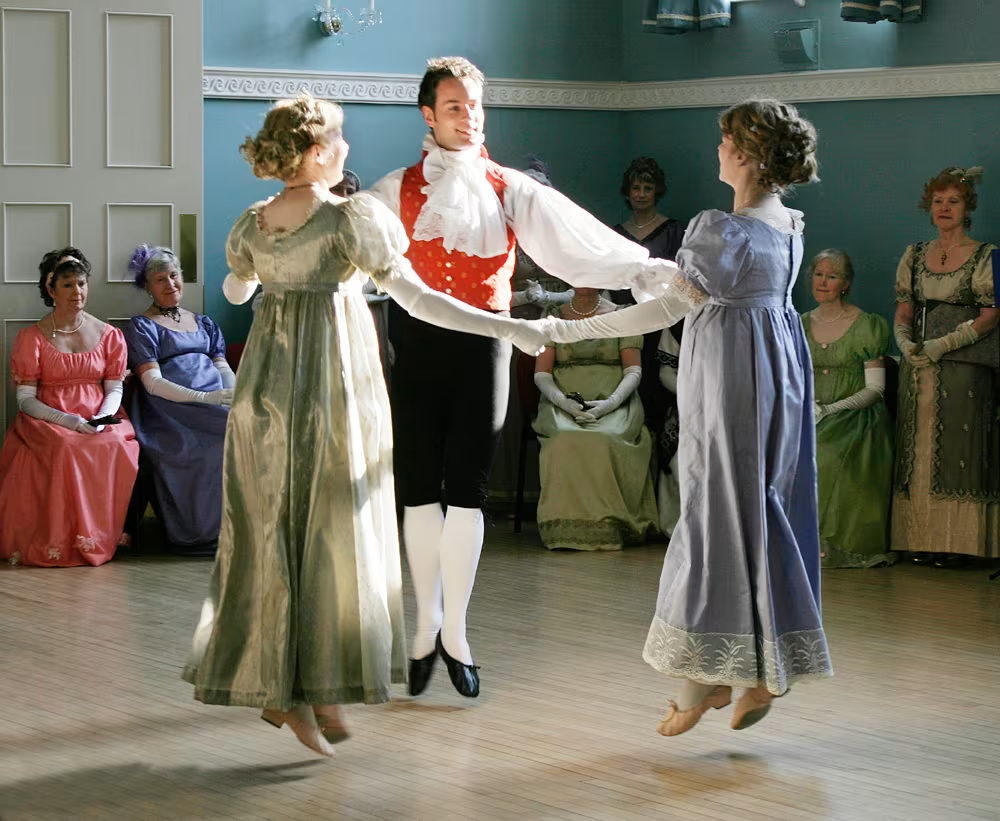
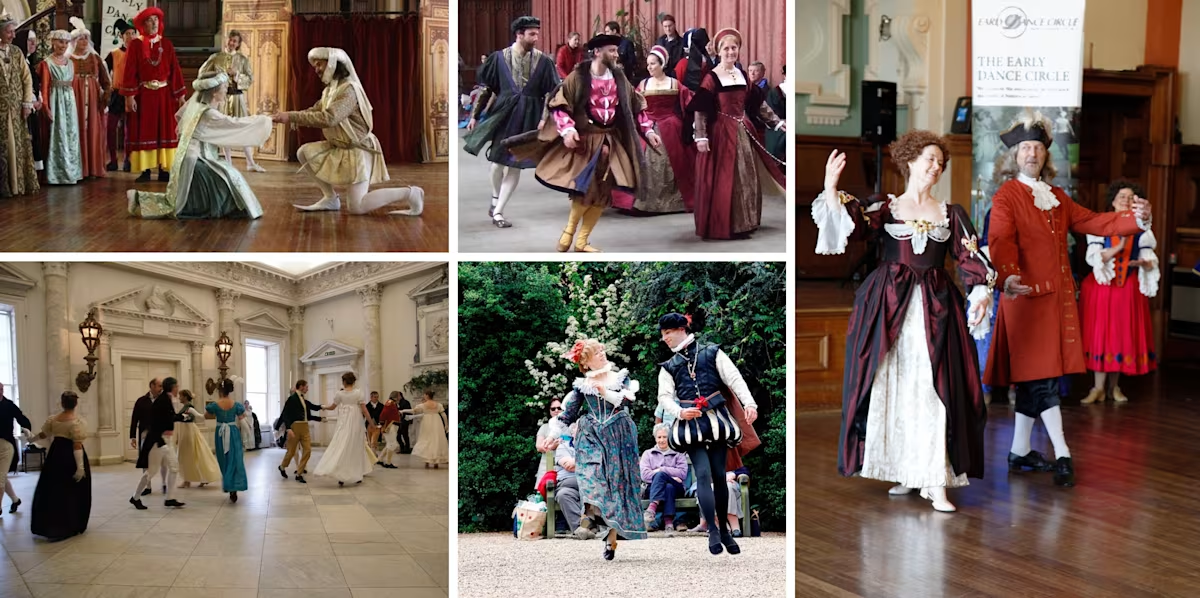
You may have seen us at historic properties, costumed as Burgundians or Medicis, laced up as Elizabethans, romping through an English Country Dance or elegantly swanning the Baroque. We love to recreate the dances of court and country house, tavern and theatre from across Western Europe. Some of us have danced for years, others come from backgrounds in history or literature, and many are musicians or fans of Early Music. While we enjoy the costumes and the sense of occasion, our dancing is grounded in careful research, drawing from detailed descriptions in original sources.
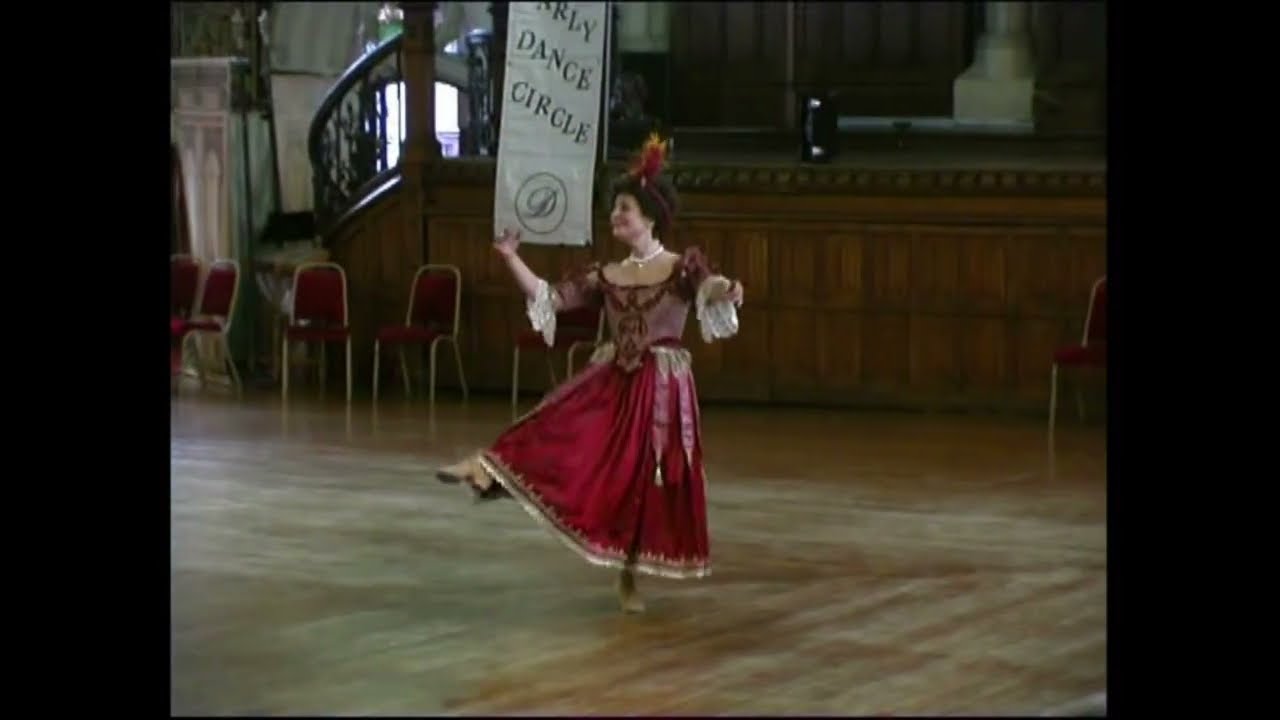 ▶
▶Barbara Segal dances a Passacaille choreographed in 1711 by the French dancing master Anthony L’Abbé to Lully’s Armide at an Early Dance Circle Festival.
The Early, or Historical, Dance Revival began in the UK during the mid-1950s. Many participants emerged from the burgeoning Early Music movement, which revealed the extent of European dance heritage. Because the study of dance had long focused on ballet, this revival required a fresh awareness of the broader historical repertoire. Pioneering work by Mabel Dolmetsch, Melusine Wood, Wendy Hilton and Belinda Quirey opened the field with distinctive approaches. Some of their work has since been refined by modern scholarship, but their contributions remain invaluable.
In a parallel to the Early Music Forums, Early Dance groups formed across the UK with a shared mission: to research and perform five centuries of Britain’s trans-European dance. In 1966, Peggy Dixon founded Nonsuch History and Dance, blending erudite research and lively spectacle. Jim Cartmell, with Marjorie Riley, founded Capriol Historical Dance and Musik Group, combining scrupulous research into both choreography and music with lively reenactments of courtly and social dances, including masques, feasts, and processions. Meanwhile, David Wilson worked with Capriol Cambridge on reconstructions, organised conferences, and produced landmark publications, such as his 101 Italian Dances and The Basse Dance Handbook.
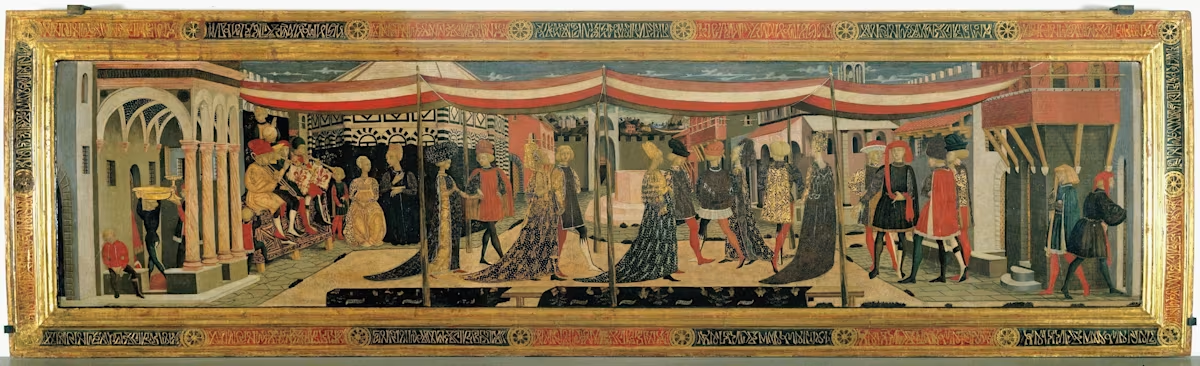
Scholarship has revealed that dance – from the 15th to the 20th century – was an integral part of life for people of all classes. Beyond being enjoyable and healthy exercise, dance developed skills applied to warfare, court etiquette, and diplomacy, while also carrying philosophical, religious, and even political significance within diplomatic encounters. Its role in human emotion – through courtship, social hierarchy, and expression – remains as compelling today as it was centuries ago. For a taste of the current research behind recovering Early Dance, you can get an idea of the history of dance through a period-by-period survey. The work of Margaret McGowan was particularly important, and new scholarship and new enthusiasms are constantly enlarging the field.
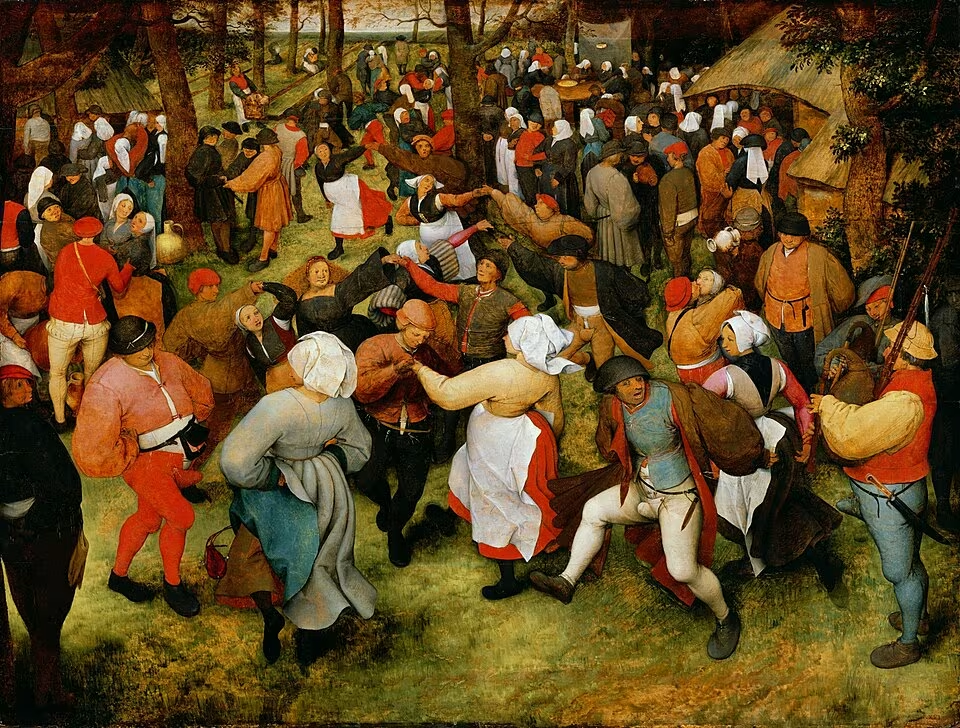
Early Dance belongs on the dance floor. It’s a fascinating world of physical challenge, historical insight, musical delight and what’s more, high fashion and good food. It offers a set of new art forms to be explored and inhabited today. These can offer new ways of looking at dance and music, opening up fresh possibilities for choreography and the relation between music and dance. This parallels how the rediscovery of architecture, art, and music since the mid-15th century has influenced the modern arts scene. Performances of dances from the Renaissance, Baroque, Regency, and Victorian periods offer audiences a chance to appreciate the intricacy, energy and sheer beauty of historical choreography.
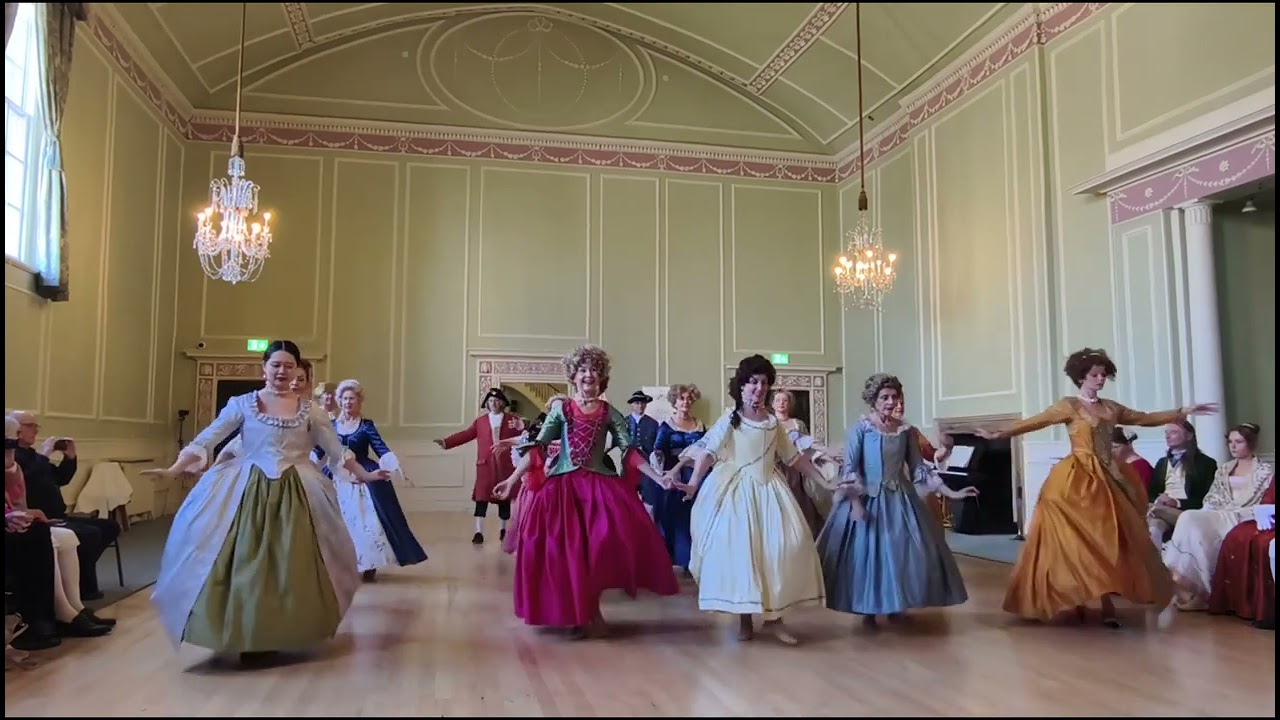
The Contretemps Academy dancing to Purcell's song Come ye sons of Art at the Early Dance Circle Festival in the Athenaeum at Bury St Edmunds in 2025. The dance was choreographed by Barbara Segal.
Because Early Dance is primarily social, and the repertoire is extremely varied and extensive, it provides flexible dancing opportunities. The athletic galliard offers virtuosity, but is balanced by the branle and the English country dance. Unlike modern dance whose practitioners often quit in their 30s, Early Dance offers many different ways to enjoy moving to music again. Musicians and dancers of all ages and skills can work together on learning and performing dances. Steps and figures flow, forming and reforming in beautiful patterns. Moving in concert with other dancers to Renaissance or Baroque music is deeply satisfying, even therapeutic. It can also be wonderful to weave in and out of intricate patterns in time to quick rhythms or act out the dramatic game-playing so much a part of some of the earliest dances we have.
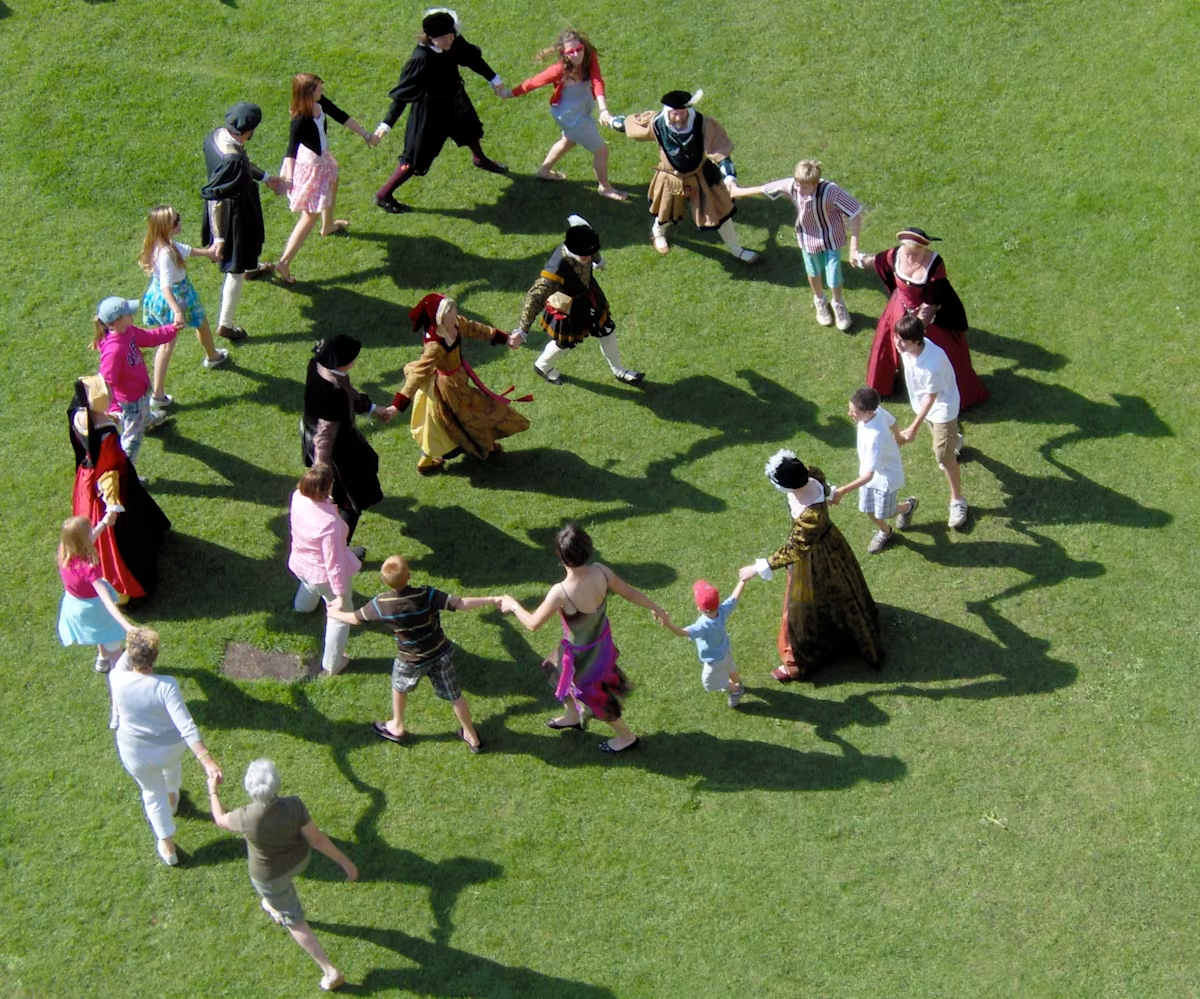
In the UK, two charities support the study, practice and appreciation of Early Dance, from the 15th century onwards. The Historical Dance Society(est. 1971) offers Summer Schools with different periods taught by expert tutors. The Early Dance Circle (est. 1984) acts as an umbrella organisation, connecting performance groups and scholars nationwide. The annual Early Dance Festival in Autumn and the EDC Biennial Conference in Spring bring together practitioners, academics and spectators from across the UK and Europe. Both the EDC and HDS offer bursaries to help acquaint dancers, researchers and musicians with what early dance has to offer.
For musicians, Early Dance offers unique opportunities. Performing dance music alongside live dancers illuminates the intricate relationship between rhythm, movement, and musical phrasing – insights that are not easy to gain from scores alone. Participating or even observing these dances can deepen appreciation for the art form and inspire new creative collaborations.
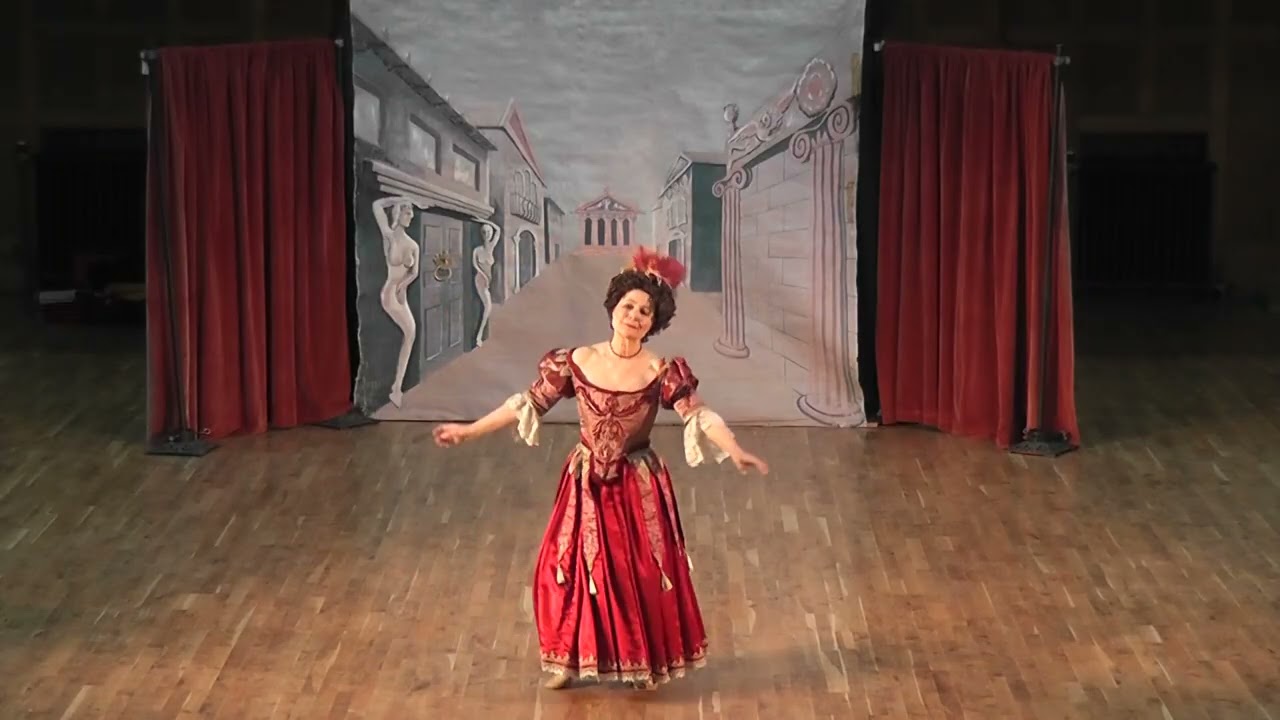 ▶
▶Barbara Segal dances Folie d’espagne pour femme to Corelli’s La folia Variations at the Chalemie Summer School
Across the UK, amateur and professional groups continue to research, teach, and perform Early Dance. Whether through watching, playing music for, or actively participating in these dances, there are countless ways to engage with this rich cultural heritage. With summer schools, festivals, and local groups accessible nationwide, the joys of Early Dance remain open to all.
PRACTICAL INFORMATION
Many groups of dancers (amateur and professional) study, practice and perform across the UK today. Finding groups and classes to dance with, or to play for, is easy. You can find more information on the Early Dance Circle website. Below are the details of the 2026 Summer Schools.
The Chalemie Summer School
6–12 July 2026, Uppingham School in Oakham, Rutland
Focusing on Early Music, Baroque Dance, Commedia, and Costume Making.
For more details contact barbara.segal@chalemie.co.uk.
Historical Dance Society Summer School 2026: Dancing in the ballrooms of 18th-century England and France
10–17 July, Bromsgrove School, West Midlands
Dancing in the Ballrooms of 18th Century England and France. Nicolle Klinkeberg for ‘La Belle Danse,’ Baroque from the Ballroom; Anne Daye for country dances, Cotillions and the Ballroom Minuet; and Ann Hinchliffe for English Country Dances (a weekend course).
The 35th International Annual Consort de Danse Baroque Summer School
24–27 August, Cardiff, Wales
For all levels, from the complete beginner to the professional dancer. Find out more UK Baroque Dance website.
Share this
Keep reading

Celebrating 300 years of Academy of Ancient Music
Three hundred years after the first Academy of Ancient Music was founded, its modern namesake is preparing a season that looks far beyond commemoration.
LIFEM 2026: Interview with Eun Sol Lee
The Early Music Shop caught up with Sol to find out more about her year since she won the competition, and what we have to look forward to in her performance at LIFEM this year...

JS Bach, and a cabinet of curiosities: Jorge Jiménez
Violinist, director and composer Jorge Jiménez talks to Simon Mundy about his latest album Curiosa: Lost & Found Tunes, his new Bach weekend in Ipswich, and his freelance career balancing life in rural Essex with regular work in Spain.