
Feature
Small beans, big notes: Robert Hollingworth and I Fagiolini
Share this

BY SIMON MUNDY | FIRST PUBLISHED 2 MAY 2026
𝄞 Why not accompany your reading with Continuo Connect’s I Fagiolini playlist?
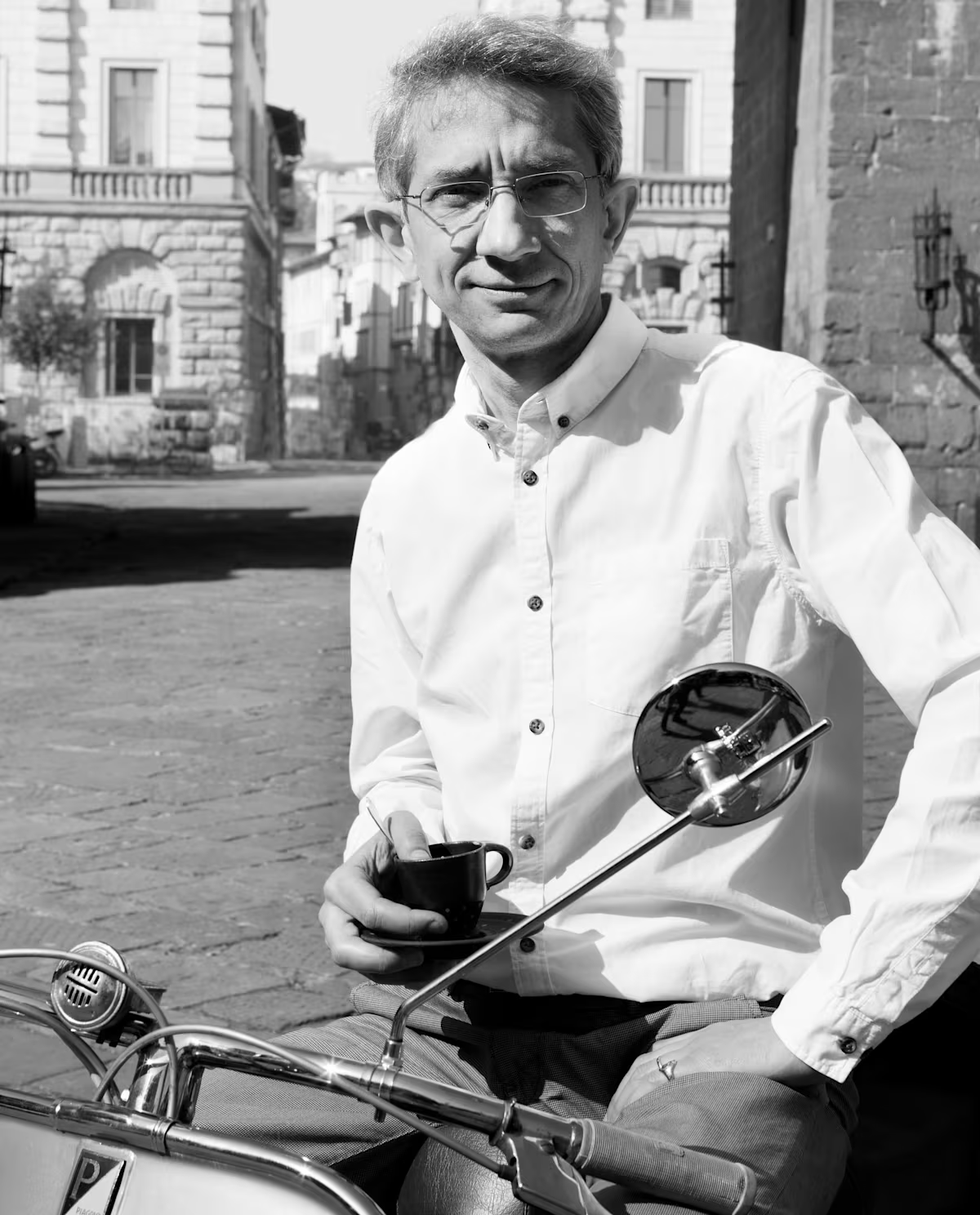
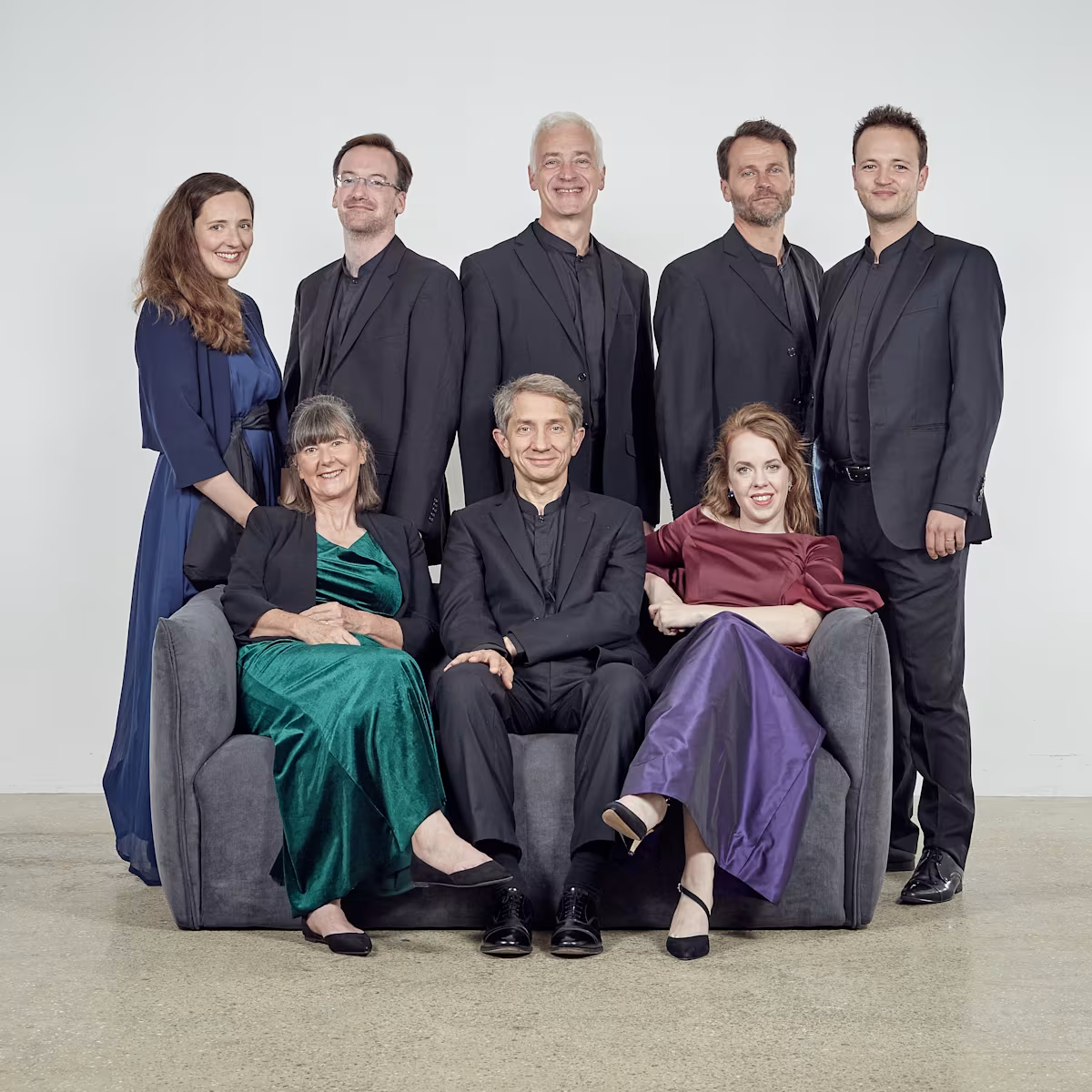
Talking to Robert Hollingworth is a scamper. There are so many different strands to his work: from festival direction, podcasting, academic teaching, making films, recording, to the matter of I Fagiolini, those small beans that have been fermenting nicely for the last 40 years. He is proud of the vocal group’s continuity, but puts it down to, ‘pure bloody-mindedness: the secret of longevity. My students tell me you need two of Money, Mates and Music for any gig to work. But, really, it’s the music, engaging with it and teasing meaning from all that’s going on. I try hard to unlock the music’s secrets on its own terms – something I also work on with my students at the University of York.’
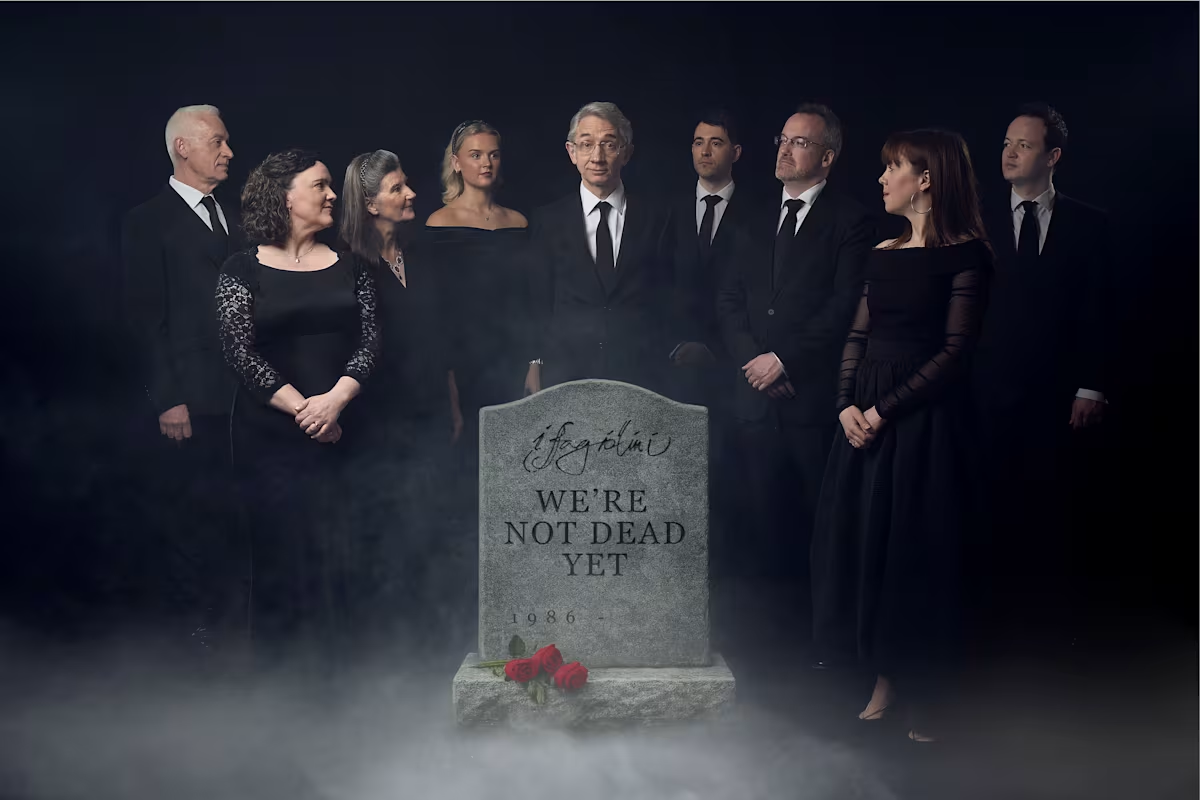
Most ensembles give themselves sensible descriptive names, linking them either to a great figure of the past or a place and time. Robert and his friends went for something with a satirical or at least self-deprecating edge: the Italian for ‘The Small Beans’. He told me, ‘I Fagiolini’s name came from a three-minute conversation before our first concert. At college then, in the 1980s, those of us interested in Early Music were dismissed as “the bean-eating, sandal-wearing vegetarians” (and I was!). The name really wasn’t meant to stick, but it seems to have!’ There are still some people who are not amused at the group’s wordplay, from ‘The Full Monteverdi’ to ‘Tallis in Wonderland’, but it underlined that 16th-century music had a social context, too, which is now lost. Robert’s tongue-in-cheek attitude to marketing is nicely emphasised by the title of I Fagiolini’s 40th-anniversary programme – We’re not Dead Yet.
That social context is inherent not only in the music I Fagiolini sings, but in Robert’s approach and selection of voices. ‘The heart of what we do is a cappella unconducted. The nature of consort music is that it’s about the interplay of parts. That music was all for small domestic rooms or perhaps slightly larger ones at court. It was about sharing. It’s a real challenge now to deal with large spaces and audiences a long way from the stage.’
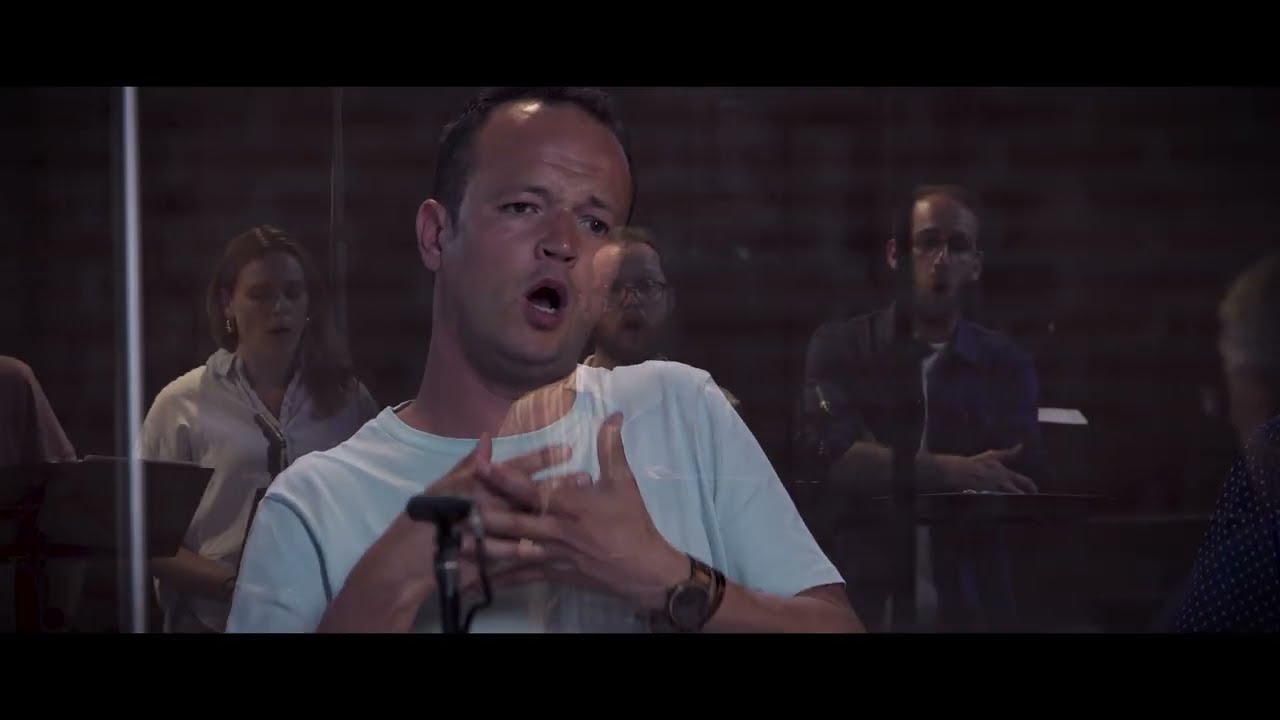 ▶
▶Orazio Benevoli: ‘Et incarnatus est’ from Missa Dum complerentur (Credo) | I Fagiolini
Performance is all very well and is, naturally, the culmination of the music-making, but for Robert, ‘the real highlights are the rehearsals. That’s when you find something – elucidate a moment, a quarter of a second, understand the acoustic layout and the craft, like in Monteverdi. If you’ve spent your life in music you will know why it works.’ It is that craftsmanship in the composer’s process that he values above all other qualities.
I Fagiolini’s cast of singers has changed over time, but is as stable as can be expected, given the frenetic careers of the singers. ‘Getting musicians together is half my work,’ says Robert. ‘On my gravestone will be written “working on availability”.’ At the moment, when he can catch them, he is enjoying exploring new avenues with baritone Eamonn Dougan (who is also Associate Director of The Sixteen) and tenor Nicholas Mulroy. With them both, Robert has been making a hugely wide-ranging series of podcasts, Choral Chihuahua. When he and I spoke, he was about to make Episode 99 (below), talking to dietician/singer Kate Powell: ‘This one will be on food and singing’.
I Fagiolini must surely be the first Early Music group to have associated so closely with a film company. The output is eclectic, not to say mildly bizarre. There is, for example, Goosed!, an ‘utterly bonkers’ take on Giovanni Croce’s Venetian masque, Il gioca dell'oca (1595); or The Full Monteverdi (2007), puns entirely intended, and Brexit Train, with Robert and founder soprano member of I Fagiolini, Anna Markland (who was also, back in 1982, the first pianist to win BBC Young Musician of the Year). Where Robert’s sympathies lie in the Brexit debate is clear: ‘I’m now a French citizen’.
He sees making films as an important way of reaching people who might be put off by some of the solemnities of classical music. ‘Money is always a problem and we’ve never actually been commissioned to do what we do – but we realised that film is important – so much of the social context for the music is visual – though ten minutes of film costs the same as making two CDs!’
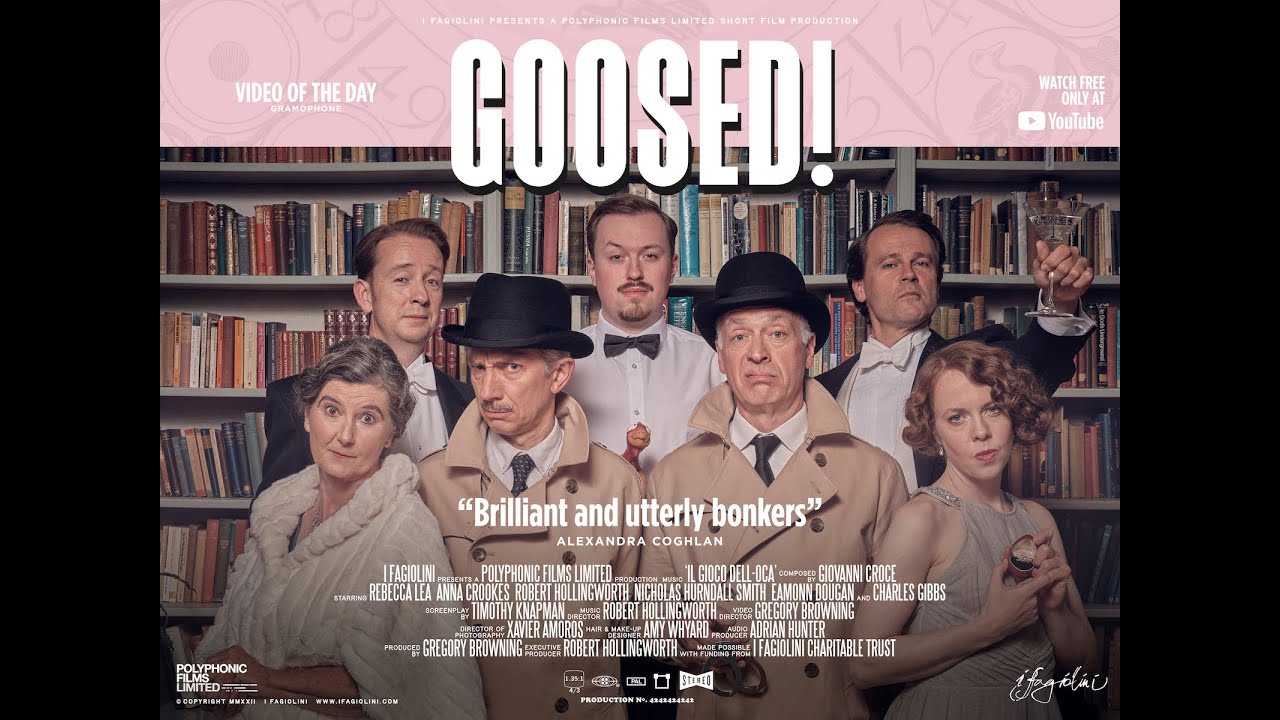 ▶
▶Clouseau meets Cluedo in Goosed!, the latest short music film from vocal ensemble I Fagiolini based on Giovanni Croce’s Venetian masque, Il gioca dell’oca (1595). Published by Giovanni Croce in Venice, 1595, the masque shows six characters playing the Game of The Goose – a board game still popular in much of Europe. The film features a print of a 1598 Italian version from the British Library. A forlorn Count is having a soirée at his country seat but is surprised by some uninvited guests. They play The Game of the Goose. Starring I Fagiolini, written by Timothy Knapman and produced by Polyphonic Films.
Alongside the 40th-anniversary celebrations, Robert has two festivals occupying him this spring. In Kent, in the village of Boughton Aluph, between Ashford and Canterbury in the valley of the River Stour, is Stour Music Festival (19-28 June), which has always had an extraordinary line-up of performers, given its rurality, ‘in a tiny village church up a lane,’ as Robert puts it. ‘All the directors [Alfred Deller, who started the festival in 1962, his son Mark, and now Robert] have been countertenors, though it can’t quite be the same with me in charge. Mark asked me to take it over from 2020. I’m not a Deller, but I’ve been made very welcome. It’s my seventh festival this year.’ In the programme, ‘we have a Polish harpsichordist, Maciej Skrzeczkowski, playing John Bull’ (20 June). There’s also a recital of Dowland and his contemporaries from soprano Ruby Hughes and lutenist Jonas Lindberg (19 June), Robert’s University of York choir, The 24, with Manchester Baroque performing Handel’s Coronation Anthems (28 June), which will also tour to The North. Monteverdi’s 1610 Vespers, sung one to a part, is a highlight (26 June), which has already been recorded by I Fagiolini, and will be released on the CORO label (4 September).
 ▶
▶Released during the Monteverdi 450 anniversary year, I Fagiolini's album, 1612 Italian Vespers, served to balance the usual bias in favour of the 1610 Vespers. Launched initially in 2012, I Fagiolini re-released the album in 2025.
That can also be heard earlier (17 May) as the final concert at the biennial Fairest Isle Festival, of which Robert is also Artistic Director, being held for three days on the Isle of Wight (15–17 May). ‘It’s really Melissa Scott’s project – she’s a great lover of Early Music and former trustee of I Fagiolini. I find at this stage of life, it’s almost less about what you do than who you do it with. In the Isle of Wight, Soprano Ruby Hughes (this time joined by lutenist Sergio Bucheli) sings Dowland and Purcell in Newport Methodist Church (15 May): a daring performer who risks such dangerous vocal colours.’ Before that, the festival begins in the museum of a Roman villa with violinist Kinga Ujszászi and theorbo player Kristiina Watt (two afternoon performances on 15 May). There is also a lecture on gin by Sarah Hyndman (16 May), and Nicholas Mulroy’s fascination with Latin American music continues with his band Cubaroque’s new programme, Havana Nights (16 May).
Apart from these two festivals, I Fagiolini will tour the 1610 Vespers to York Early Music Festival (3 July), and London’s Kings Place (18 September) where they hold a mini-residency with performances also including Dido & Aeneas (31 May). Their 40th-anniversary tour, We’re not Dead Yet, includes further dates in Wareham, Pershore, Bath, Sedbergh and Norfolk.
40 years on, there’s no ‘bean there, done that’. With Robert’s wit, energy, and a constant flow of invention in good supply, I Fagiolini continues to redefine Early Music with ever-fresh vitality and imagination.
Visit I Fagiolini's Continuo Connect profile to view the group’s upcoming UK performances.
Share this
Keep reading
Exploring the golden age of the ‘City of Dreams’
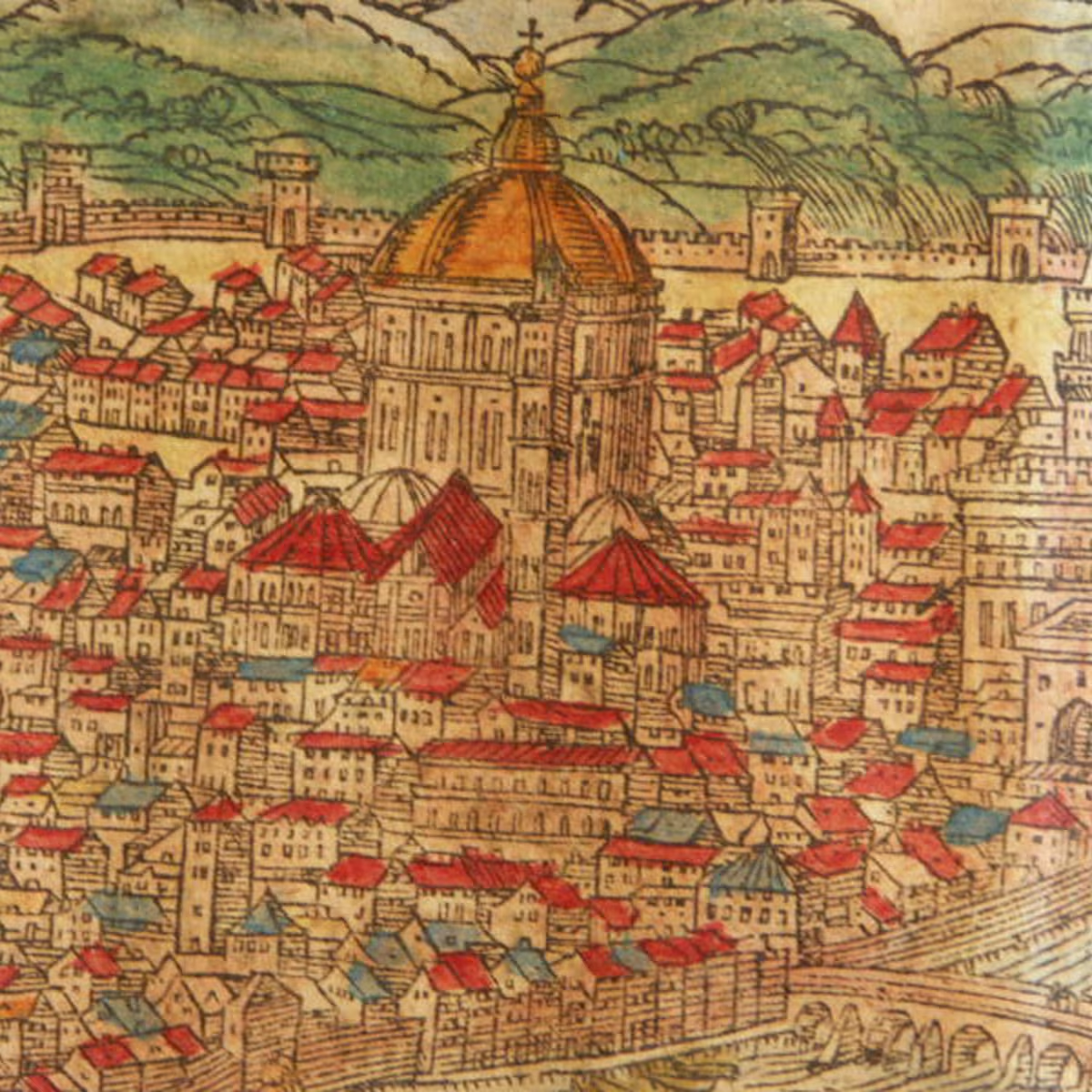
‘City of Dreams’ is an exploration of two centuries of Renaissance Florence at Brighton Early Music Festival. We spoke to Oliver Webber, founder of Monteverdi String Band, and writer Saria Steyl about how the project came together.
LIFEM 2026: Interview with Eun Sol Lee
The Early Music Shop caught up with Sol to find out more about her year since she won the competition, and what we have to look forward to in her performance at LIFEM this year...
The soundtrack of imagination: David Yardley and Green Dragon Guild of London
Medieval countertenor David Yardley, Artistic Director of Green Dragon Guild of London, discusses Medieval music, Southwark’s layered history, and how imagination and meticulous research meet in performance in our latest podcast.