

Recording
A German In Venice
Heinrich Schütz
Share this


David de Winter tenor
The Brook Street Band
Rachel Harris, Kathryn Parry violin
Tatty Theo cello
Carolyn Gibley harpsichord, organ
Lynda Sayce theorbo, lute
Lisete da Silva Bull, Emily Bannister recorder
One of the key German composers before Bach with more than 500 surviving individual pieces, Heinrich Schütz wrote mainly church music, and is credited with bringing the Italian style to Germany and continuing its evolution from the Renaissance into the early Baroque. Although he lived most of his long life in Germany, in his twenties Schütz made two visits to Venice. The first was between 1609 and 1613 when he was taught by Giovanni Gabrieli; and the second in the late 1620s to meet and possibly study under Monteverdi. The two trips greatly influenced Schütz’s music as he absorbed and began to combine the ornate and theatrical Venetian style with the more understated Lutheran tradition in which he grew up.
This album explores his solo cantatas alongside examples of the brilliant and virtuosic Venetian style instrumental music.
The album is available to buy here and on all major streaming services.

This project was supported by a grant from Continuo Foundation
Supported by Continuo Foundation
Share this
Keep reading
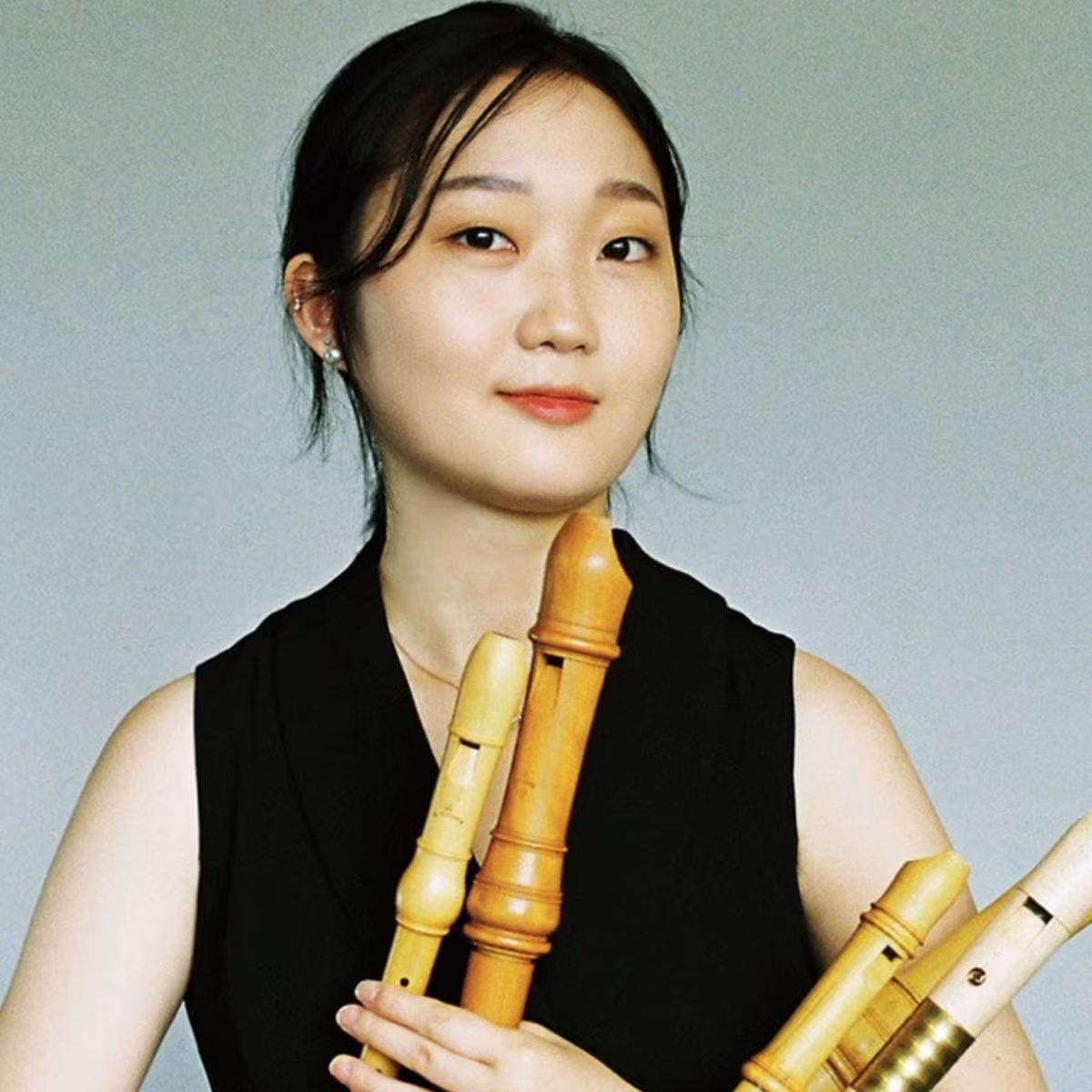
LIFEM 2026: Interview with Eun Sol Lee
The Early Music Shop caught up with Sol to find out more about her year since she won the competition, and what we have to look forward to in her performance at LIFEM this year...

Exploring the golden age of the ‘City of Dreams’
‘City of Dreams’ is an exploration of two centuries of Renaissance Florence at Brighton Early Music Festival. We spoke to Oliver Webber, founder of Monteverdi String Band, and writer Saria Steyl about how the project came together.

The soundtrack of imagination: David Yardley and Green Dragon Guild of London
Medieval countertenor David Yardley, Artistic Director of Green Dragon Guild of London, discusses Medieval music, Southwark’s layered history, and how imagination and meticulous research meet in performance in our latest podcast.