
Feature
De Paris à Glasgow: Héloïse Bernard in song
Share this

BY SIMON MUNDY | FIRST PUBLISHED 29 MAR 2026
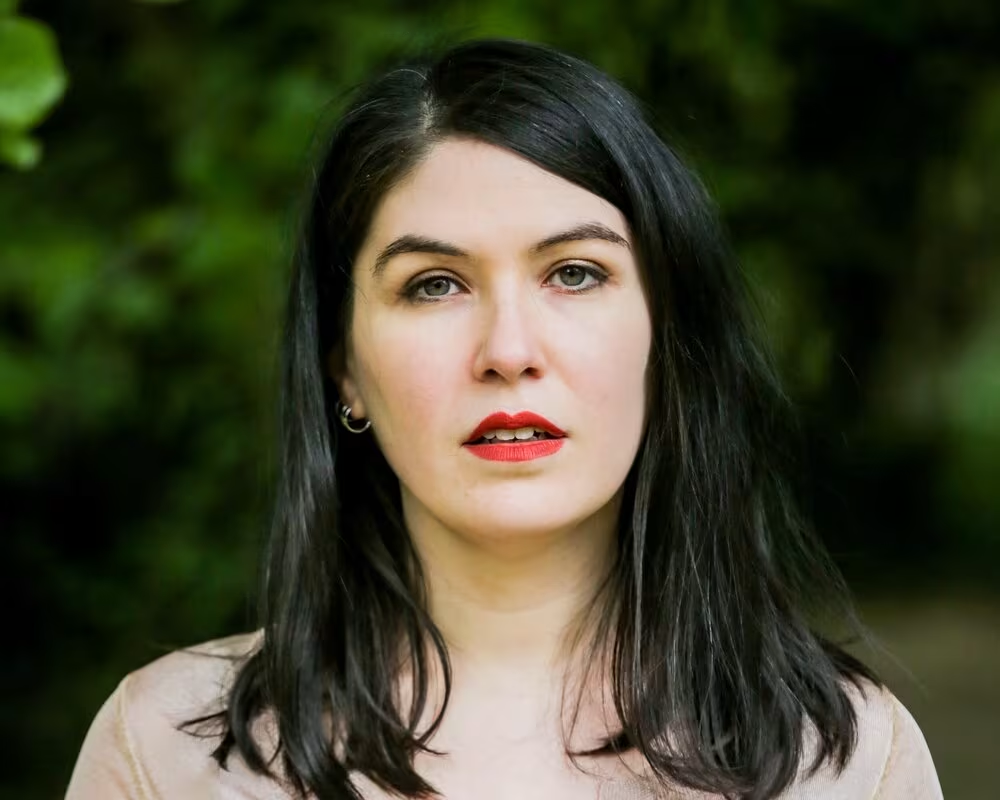
To find a French soprano an integral part of Glasgow is somehow warmly gratifying – I don’t know why; after all, the centre of Scotland has a vibrant music scene. Still, it would feel more usual to find a singer from Scotland moving to Paris rather than the other way round. Héloïse Bernard explained that she did wander Europe a little before she settled. ‘I only began singing lessons after getting my master’s degree in French literature. After studying in city conservatories in Paris, I went to Rotterdam for a year but it didn’t correspond to what I needed. There I met an Estonian singer, and she suggested I go to Tallinn to finish my undergraduate study, which I did. I had Estonian language lessons every evening at Tallinn University, which the people there appreciated. After I received my Bachelor's degree in the Estonian Academy of Music and Drama, I moved to Glasgow with my partner who had been offered a bursary to study piano at the Royal Conservatoire of Scotland.’ As a duo, José Javier Ucendo and Héloïse Bernard have performed together at the Oxford Lieder Festival.
Once she arrived in Scotland, Bernard entered the Masters course at the Royal Conservatoire where she studied with Wilma MacDougall. There she also, ‘started coaching French, helping my classmates. Culturally, I feel very French and love my language – though my mother is American, she made her life in France, and feels more European.’ Bernard graduated eight years ago, but Glasgow is now firmly her base.
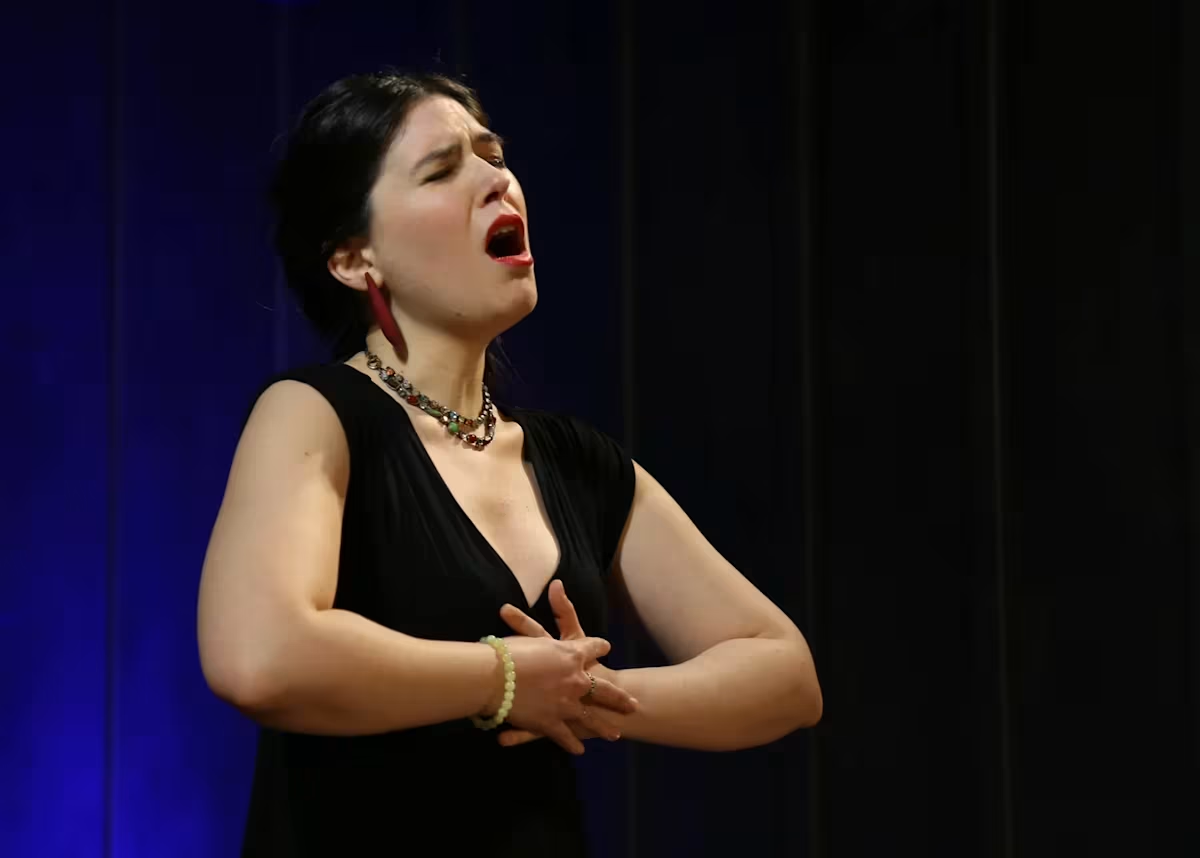
‘[Héloïse Bernard], as Juno’s servant Iris, forges riveting moments from modest material, such as “Thither Flora the Fair”. In this brief chaconne, Bernard drapes each stanza in increasingly gorgeous embellishments, dropping dramatically into chest register for her last verse.’ – Berta Joncus, BBC Music Magazine
Unlike many who launch into a musical career, she had already spent years in France studying language, literature and drama. ‘I started acting before singing – I did drama since I was a child, and sang on stage always. In acting, one develops a certain relationship with the body, which is slightly different in singing. At the moment, I mainly perform as a concert singer, and I would love to do more on stage.’ While she is coming to be known as an Early Music specialist, this was not completely her intention. ‘It just happens that I feel at ease around Baroque, but I am singing Lehar’s The Merry Widow this summer. I’m often told my voice has a young quality to it, which I never tried to fight. It felt very important to follow the voice wherever it led me.’
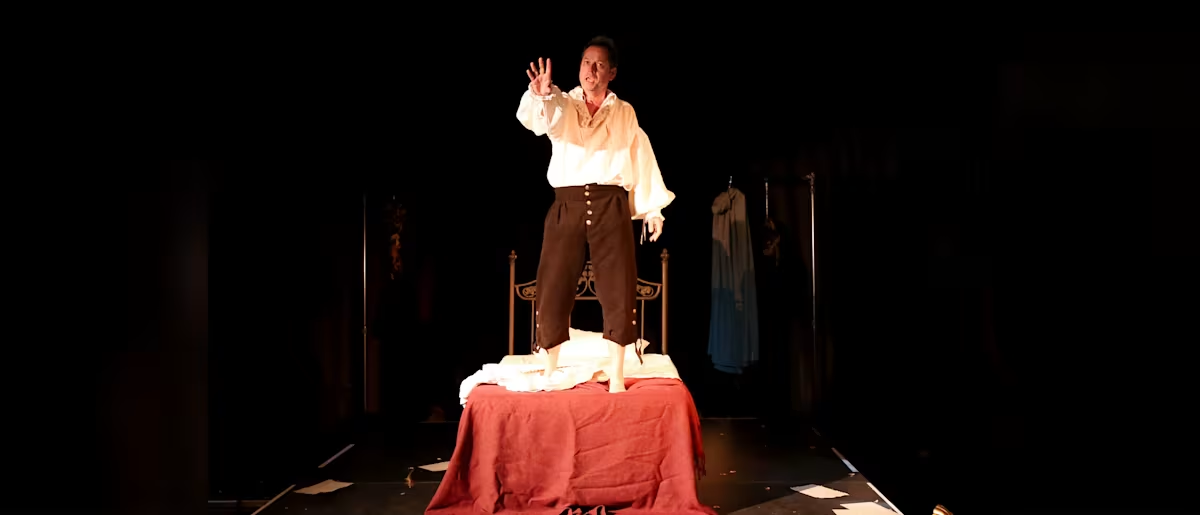
Her voice and acting will be on show this year when she tours in Purcell – The Musical, a concert play written by Clare Norburn and directed by Nicholas Renton, in which Purcell looks back at his life and music from his death bed. ‘I’m “the other woman”. I’m given the lines of Letitia Cross’ [who was the original singer for ‘I attempt from love’s sickness’, featured in the composer’s unfinished opera, The Indian Queen]. Bernard also sings ‘From Rosy Bowers’, the last song Purcell wrote which, given the otherworldly nature of Norburn’s play, fits well, because it was first heard in a production of Don Quixote. ‘What’s important about this tour,’ Bernard says, ‘is that these songs from the plays are seldom heard in a dramatic context.’ The show also features part of a duet between two wives in the rarely-performed The Canterbury Guests, for which Purcell wrote the music.
Héloïse Bernard and the Linarol Consort perform ‘Mijn hert altijd heeft verlanghen’ by Franco-Flemish composer, Pierre de la Rue? (cl. 1452–1518)
Another biographical project touring this season (and appearing on record) is Epitaph for a Green Lover, with the Linarol Consort of Viols, which tells the story of the remarkable Margaret of Austria, who ruled what is now Belgium and the Netherlands for nearly 20 years, until 1530, from her palace in Mechelen. The music is taken from her own manuscripts. The CD launch concert will take place at the Early Voices Festival in Llantwit Major, near Cardiff, with further dates lined up from September onwards. Both the recording and the accompanying album launch tour have received grants from Continuo Foundation.
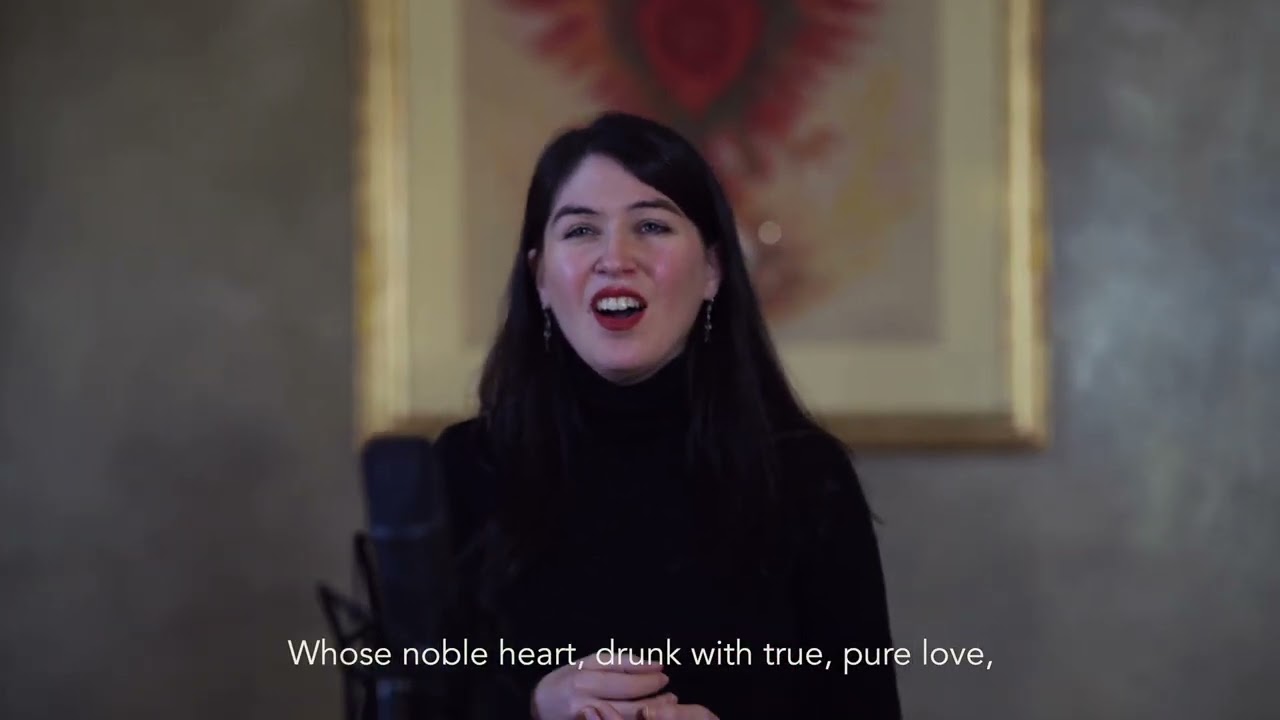 ▶
▶Héloïse Bernard and the Linarol Consort perform ‘Soubz ce tumbel’ by Franco-Flemish composer, Pierre de la Rue? (cl.1452–1518)
Earlier in March, Héloïse Bernard performed a programme with lutenist Eric Thomas built from the Songs and Fancies, published by John Forbes in Aberdeen in 1682, many of them in Scots, the hybrid language sitting between Scottish Gaelic and English, championed first by King James IV, and later Robert Burns. ‘With Eric, we have also started working on more mediaeval repertoire, based on music from the Hundred Years’ War.’
‘What I love most in performing is not the production of sound itself but story telling; the contact I make with the audience’s eyes, the pleasure I get when I make them laugh with a sound; to witness them close their eyes and listen to the beauty we create together on stage with my colleagues – the actual physical pleasure of melting into the sound of viols, all of us losing our ego in a piece which only works when all of us are equal. This is what good polyphony creates.’
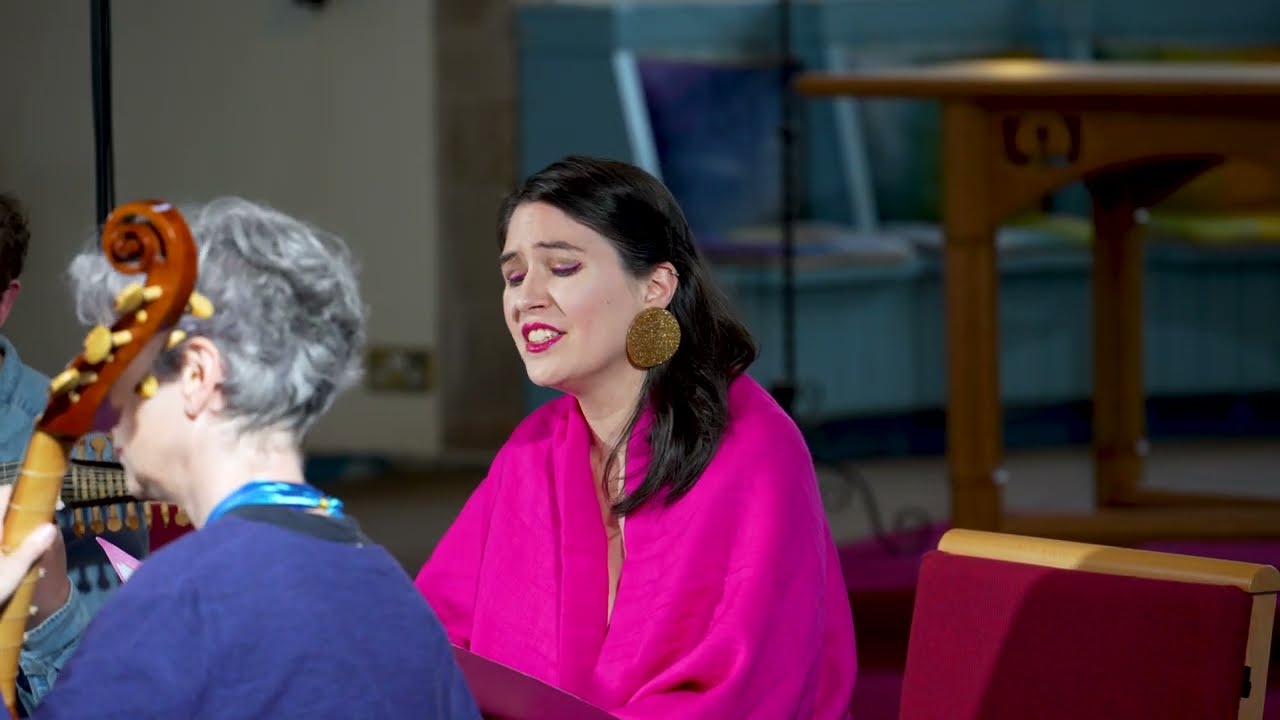 ▶
▶Spinacino Consort, led by lutenist Eric Thomas, is among the ensembles with whom Héloïse Bernard has collaborated. Here they perform ‘Vous perdez temps’, a French chanson by Claudin de Sermisy (1490–1562), intabulated by Jean-Paul Paladin (fl. 1540–1560), lutenist to Mary Queen of Scots.
Bernard enjoys collaboration across all genres. Contemporary Scottish composer Electra Perivolaris ‘has now written two song cycles for me, which is a true gift! The initial song cycle is Les heures grecques, setting to music some of the poems by my friend Guillaume Decourt, who is enjoying quite a successful career as a poet in France – or as successful as one can be today as a poet! One of his books has just been translated into English. This was composed in 2018. The more recent cycle, Isola – Electra wrote with her father. John Perivolaris is a photographer from the Isle of Arran but of Greek descent and the themes of islands, isolation, migration, run through his work. Isola started as a visual work by John, mainly done during the pandemic. He then wrote poetry in relation to his images, and Electra decided to turn it into a song cycle. This premiered in Aberdeen in 2025 at the Sound Festival.’
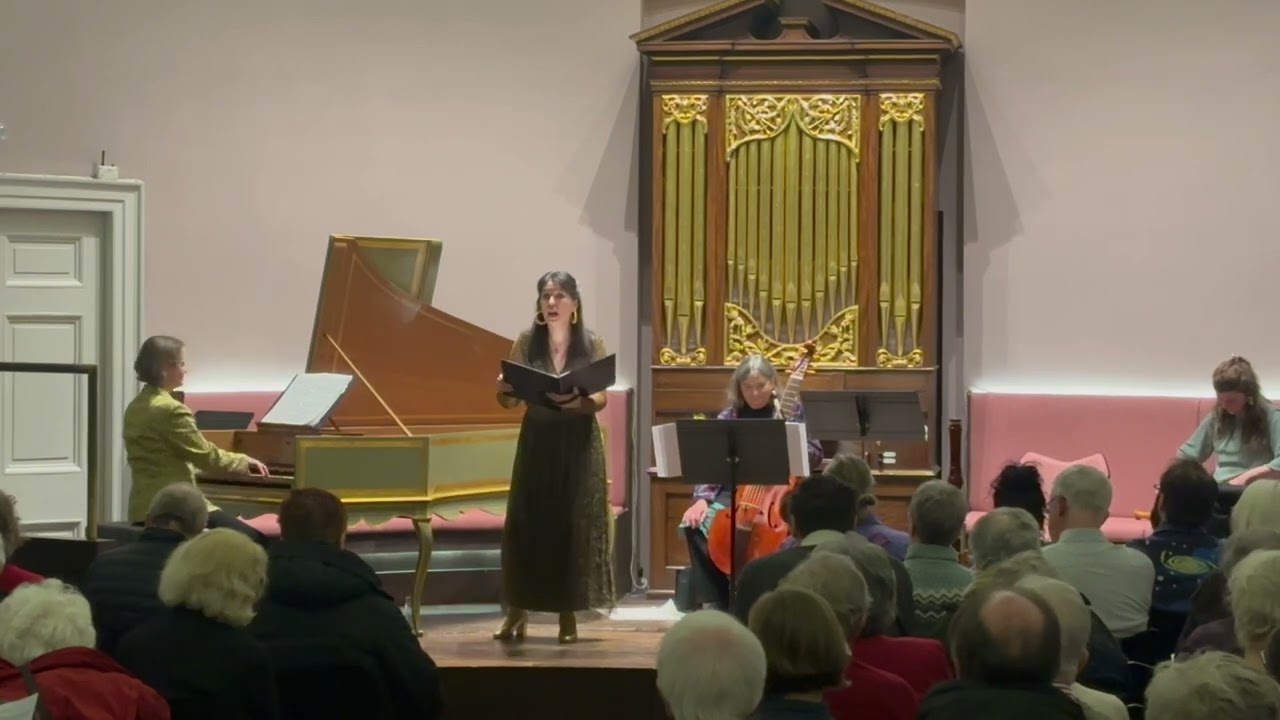 ▶
▶Belesama performs ‘¡Cucú, cucú!’, a villancico by Juan del Encina (1468–1529/30) as part of their ‘Baroque Ménagerie’ programme in Edinburgh.
With harpsichordist Jan Waterfield, ‘a fantastic musician who contributed to building my confidence as a singer,’ and recorder player Annemarie Klein, both based in Scotland, she has started the ensemble Belesama. ‘We're just choosing music we want to play. We start with a theme, an idea, a poem, and develop a programme around it without limiting ourselves to an era, a language or a style. This gives us great freedom in the construction of our recitals, and somehow we make it work. We are in the process of programming concerts in the 2027 season, including a Baroque Ménagerie, a full recital on Madness, and many more ideas in the works.’
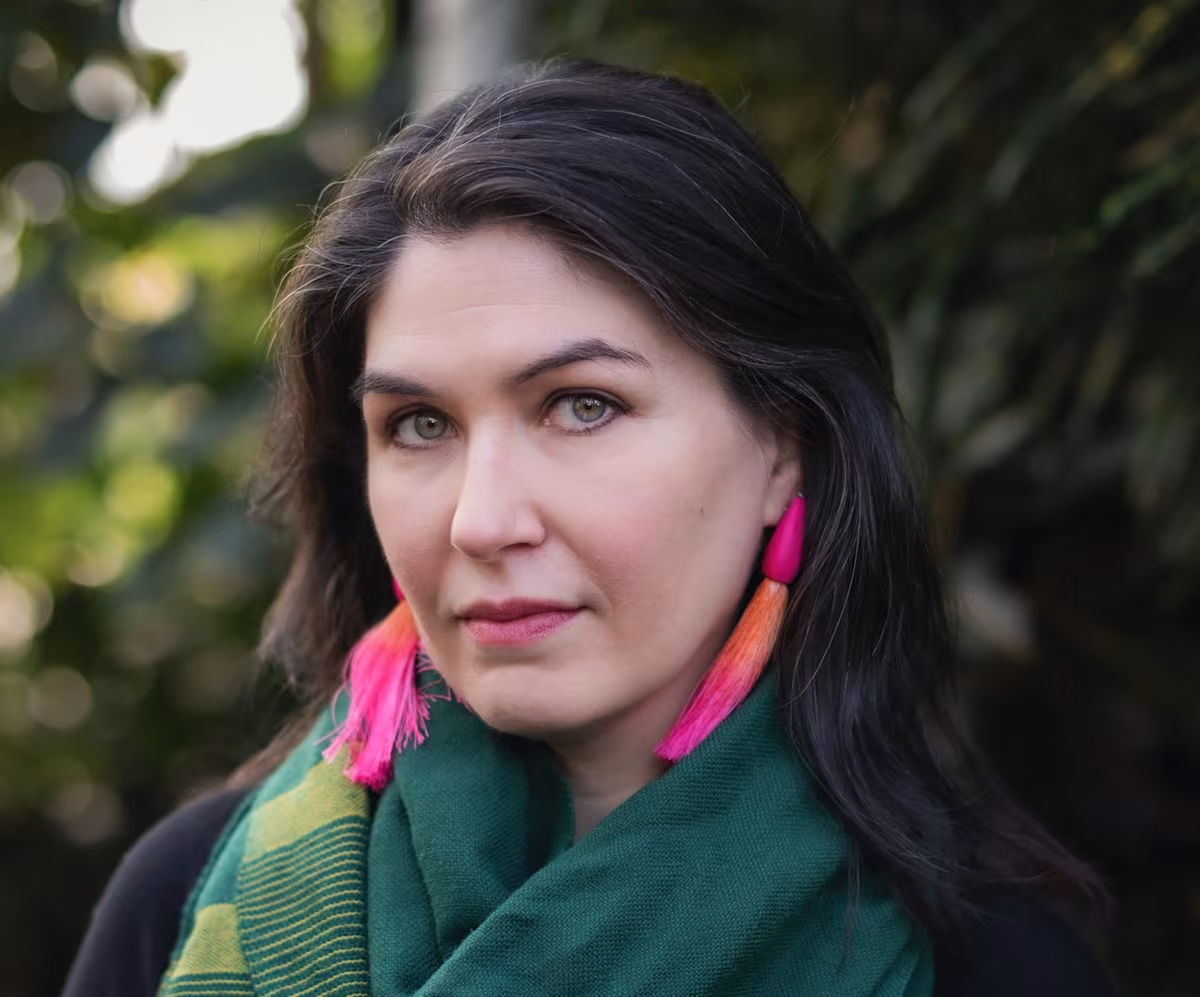
For all the variety of her projects – from Purcell to contemporary song, from Scots repertoire to Renaissance polyphony – a clear thread runs through Héloïse Bernard’s work: storytelling as a shared, living experience. Whether performing in an intimate consort or on the festival stage, she brings a distinctly personal intensity to her music-making. It is perhaps this combination – of French upbringing, a European journey and a life now rooted in Glasgow – that gives her singing its distinctive voice.
Share this
Keep reading
From kitchen to cathedral: the accidental art of festival-making
Rachel Podger, a Continuo Foundation Patron, has spent two decades creating a festival as open-hearted and inquisitive as her own music-making. She tells Ashutosh Khandekar how the Brecon Baroque Festival evolved almost by chance.
LIFEM 2026: Interview with Eun Sol Lee
The Early Music Shop caught up with Sol to find out more about her year since she won the competition, and what we have to look forward to in her performance at LIFEM this year...
Playlist: Continuo Patrons
A playlist of tracks by Continuo Foundation Patrons Mary Bevan, Emma Kirkby, Rachel Podger and Ashley Solomon in celebration of the UN International Day of Charity.